
Translating Neuroscience into Architecture While Advancing Sustainable Lab Design
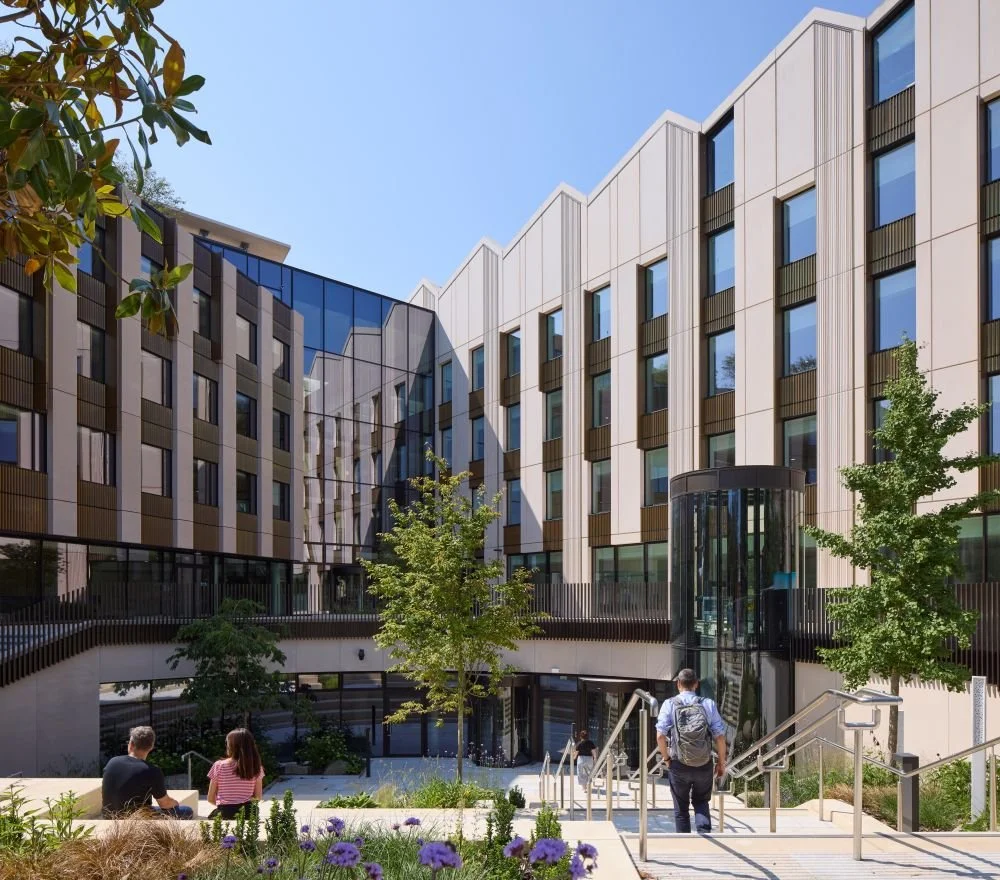
View of the Scoop and the façade of the Life and Mind Building. Image: Richard Chivers
When the University of Oxford opened its new Life and Mind Building (LaMB), the 269,000-sf facility immediately stood out not only for its scale, but for the deeper integration of science, sustainability, and architectural expression embedded in its design.
Designed by NBBJ, the facility brings together experimental psychology, biology, zoology, and plant sciences under one roof, replacing fragmented departmental spaces with a unified, purpose-built research environment. The project highlights how technical performance, long-term institutional identity, building envelope design, and user engagement can be closely aligned to shape both the function and character of a major research facility.
The project team includes Oxford University Development (client/development manager), Legal & General (delivery partner), Arup (project manager), Arcadis (cost consultant), NBBJ (architect and lead designer; lab planning), Ramboll UK (structural engineer; façade engineer), Hoare Lea (building services engineer; acoustic consultant), Fira (landscape architect), Purcell (heritage consultant), Hepburn Associates (catering consultant), M‑Safe/Tetra Tech (principal designer), Arup/Tetra Tech (CDM coordinator), Sweco (approved building inspector), SB Labs (lab equipment/furniture providers), Wates (main contractor), and SES (MEP sub-contractor).
Turning scientific data into durable architecture
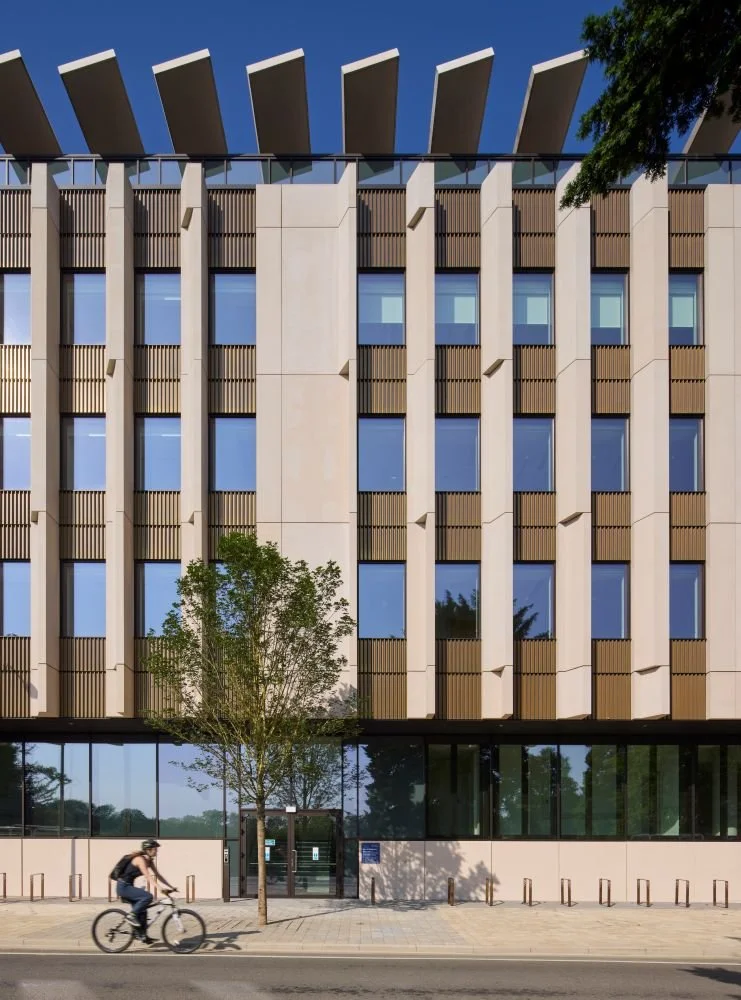
The Life and Mind Building’s façade combines brass cladding with fiberglass-reinforced concrete (GRC) panels to create a striking visual identity. Image: Richard Chivers
Perhaps the building’s most recognizable feature is its rippling concrete façade—a sculptural surface derived directly from a brainwave scan. While visually distinctive, the feature also demonstrates how symbolic architectural gestures can be translated into practical, buildable systems.
“The starting point was a two-second MEG brainwave scan provided by one of the researchers, Dr. Sage Boettcher, while she contemplated research to be done in the future building,” says Darius Umrigar, principal at NBBJ. “Rather than simply abstracting it, we studied its geometry and translated the data into a rationalized surface that could be repeated and manufactured efficiently. The key was moving from an organic form to a controlled system of precast panels with carefully calibrated curvature.”
The key lesson for design teams lies in balancing conceptual ambition with constructability. Rather than creating bespoke, one-off sculptural elements that would drive up cost and complexity, the design team rationalized the geometry into modular precast panels. Early collaboration with contractors and manufacturers ensured the façade could be efficiently produced, transported, and installed while maintaining durability.
“What appears fluid is in fact highly disciplined—a modular system that delivers expressive architecture within the constraints of program, durability, and budget,” Umrigar says.
This approach demonstrates how even highly expressive architectural concepts can be realized using standardized, repeatable systems—a critical strategy for controlling costs on large institutional laboratory projects.
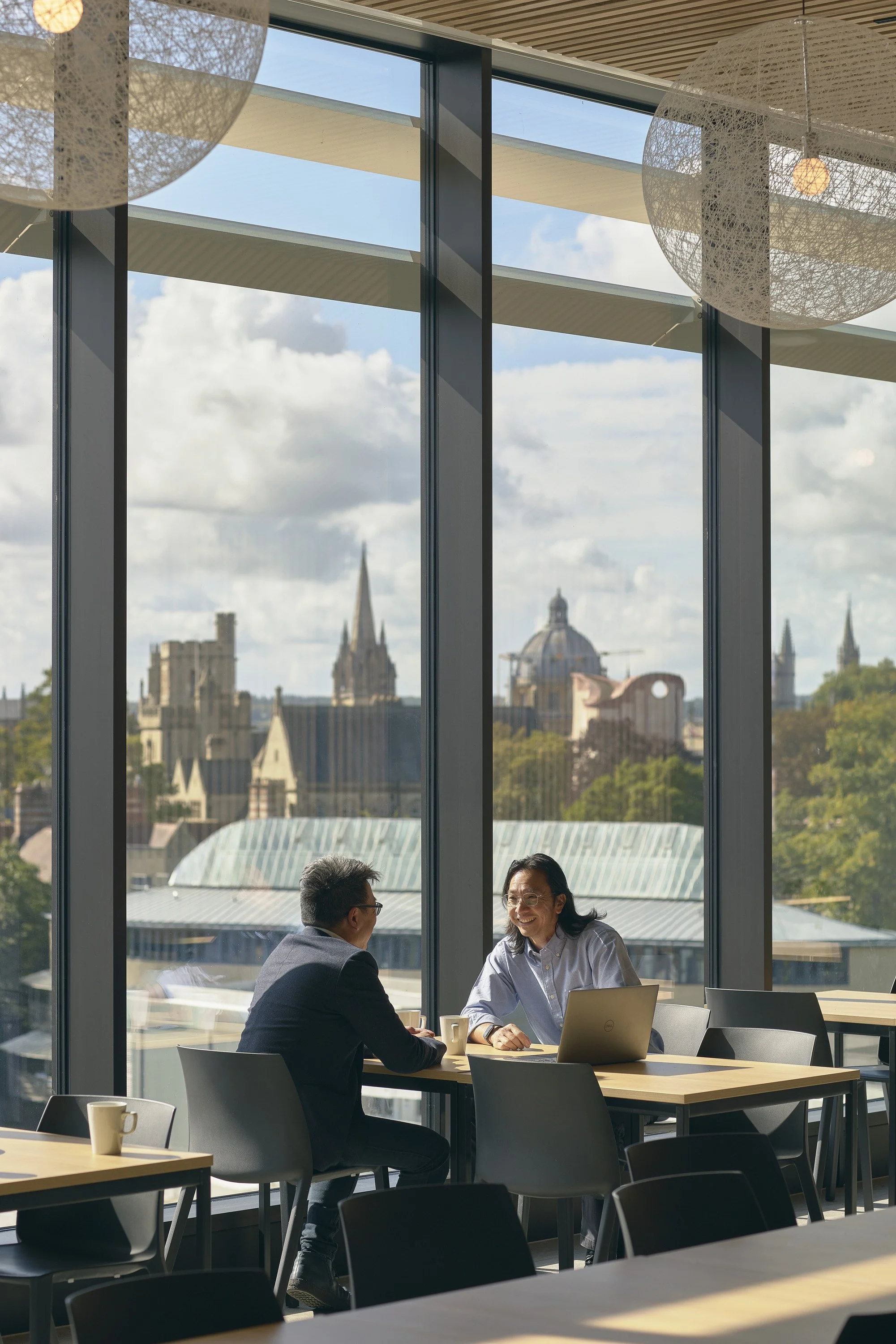
View of the Oxford skyline from the Life and Mind Building. Image: Ty Cole
Designing for longevity in a historic context
Longevity was a central driver of material selection and detailing. Situated within Oxford’s historic campus as an environment defined by centuries-old stone buildings, the Life and Mind Building needed to balance contemporary expression with timeless durability.
“Material choice was guided by thermal performance, longevity and context,” says Umrigar. “Oxford’s historic campus is defined by permanence and material depth, historically using local stone for long life and low maintenance.”
The façade combines precast concrete, stone, and metal, each selected for durability, performance, and contextual integration.
“We have designed a building that would not date quickly or require excessive maintenance,” Umrigar says. “Each material was selected for robustness, ability to weather well, and age confidently within its surroundings. The aim was calm and timeless resilience, rather than short-term visual effect.”
This emphasis on durable materials reflects a lifecycle-driven approach in which minimizing maintenance and replacement needs helps reduce operational costs and disruption over the building’s lifespan.
A fabric-first approach to energy performance
Laboratory buildings are among the most energy-intensive facility types due to ventilation requirements, equipment loads, and strict environmental control standards. Rather than relying solely on mechanical systems to compensate for energy loss, the Life and Mind Building prioritizes a “fabric-first” design strategy, optimizing the building envelope to reduce demand at the source.
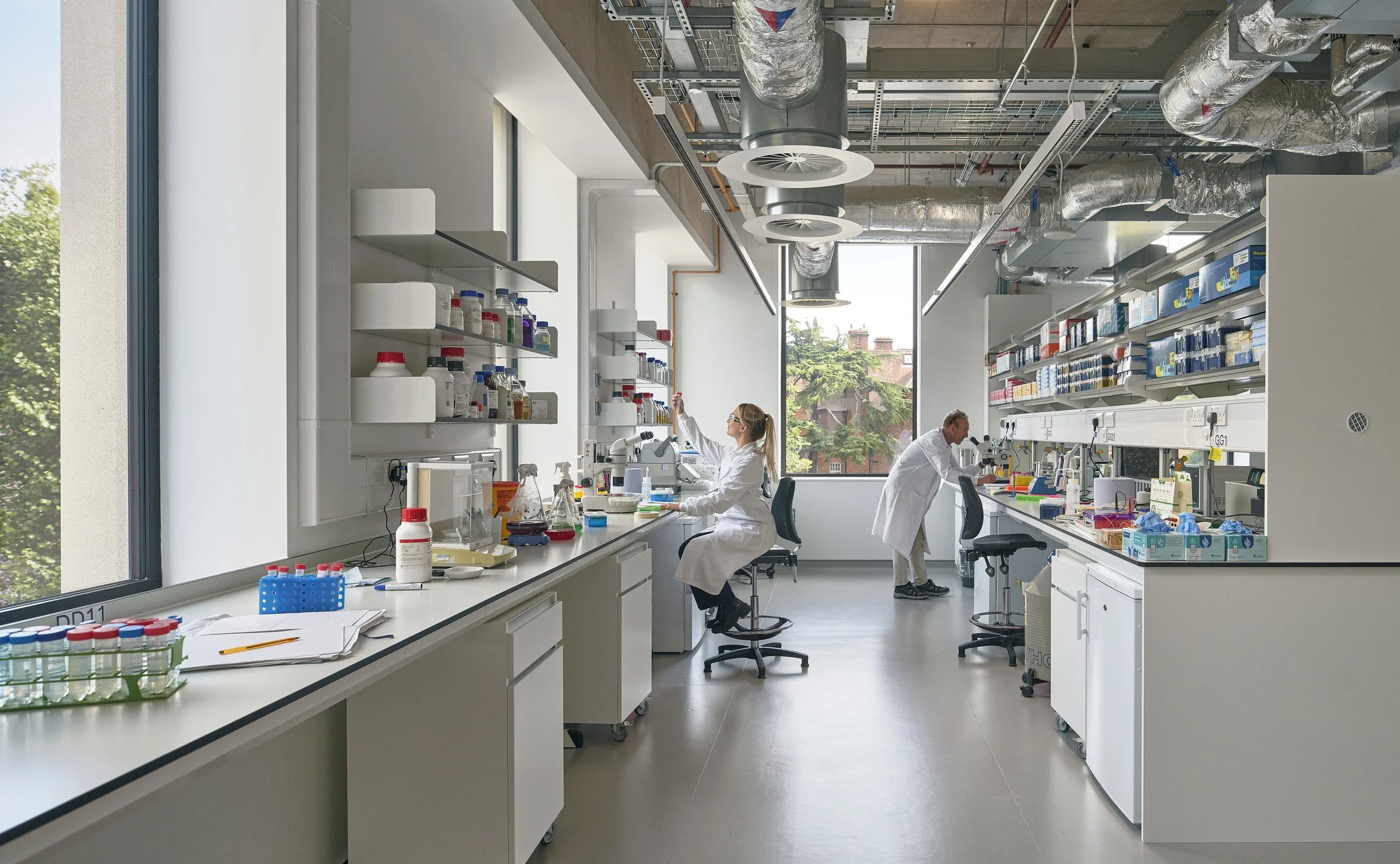
Inside a state-of-the-art research lab. Image: Ty Cole
“The facade is not just a beautiful building envelope—it is a high-performance environmental system and a core part of the building’s fabric-first sustainability strategy,” says Umrigar.
The envelope incorporates deep insulation, triple glazing, and airtight construction, significantly reducing heat loss and cooling loads. These measures helped the building achieve an EPC A rating and projected operational energy use of approximately 190 kWh/m²/year, excluding on-site solar generation.
“By reducing energy loads at the envelope, the design team could optimize the scale and performance of building services, lowering carbon emissions while supporting stringent laboratory environmental requirements,” Umrigar says.
This approach underscores how prioritizing envelope performance early in the design process can reduce overall energy demand, allowing mechanical systems to be more efficiently sized while lowering both initial construction and long-term operational costs.
“The lesson for other lab projects is clear: prioritizing the envelope early—before laboratory systems are engineered—creates opportunities to right-size mechanical systems and achieve meaningful carbon reductions without compromising scientific capability,” says Umrigar.
Optimizing mechanical systems through demand reduction
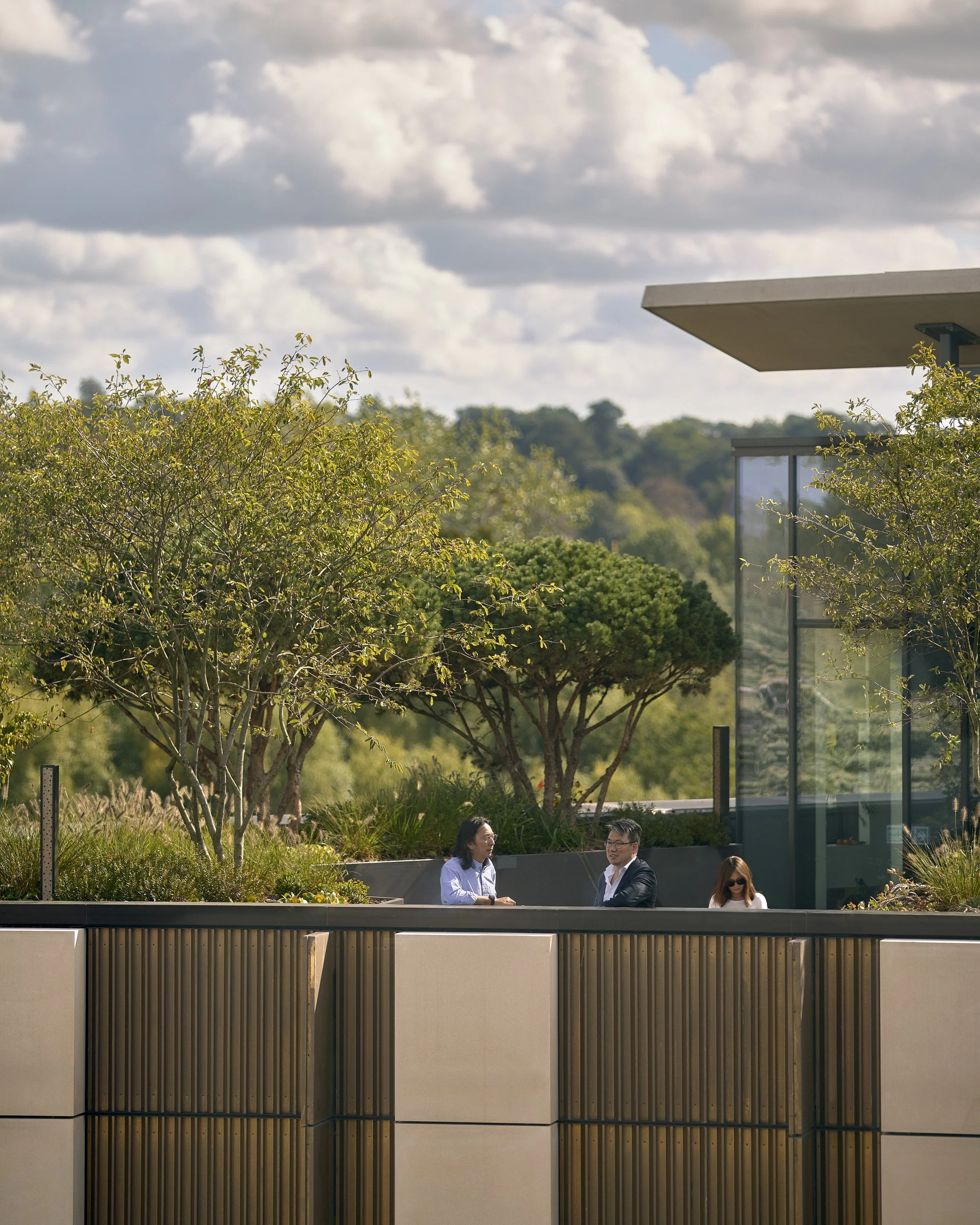
A biodiverse roof terrace brings nature into the building. Image: Ty Cole
Beyond envelope performance, the building integrates several complementary engineering strategies to reduce operational energy use while maintaining strict laboratory environmental conditions.
“In addition to the high-performance façade, we have incorporated adaptive ventilation systems, air-source heat pumps and rooftop solar PV generation,” says Umrigar.
Critically, the team worked closely with engineers and researchers to avoid oversizing mechanical systems, which is a common inefficiency in laboratory design.
“We worked with engineers and users to right-size ventilation systems, optimize air change rates and ensure systems respond to occupancy and actual need rather than worst-case assumptions,” Umrigar explains.
This evidence-based approach helped reduce projected operational energy consumption to roughly 40 percent below UK Net Zero Carbon targets for laboratories.
“Energy reduction in laboratories is not achieved through a single innovation but through consistent, evidence-based decisions across the building,” Umrigar says.
Shared laboratory facilities also reduce duplication of energy-intensive equipment, improving utilization and efficiency.
Daylighting and spatial organization as performance drivers
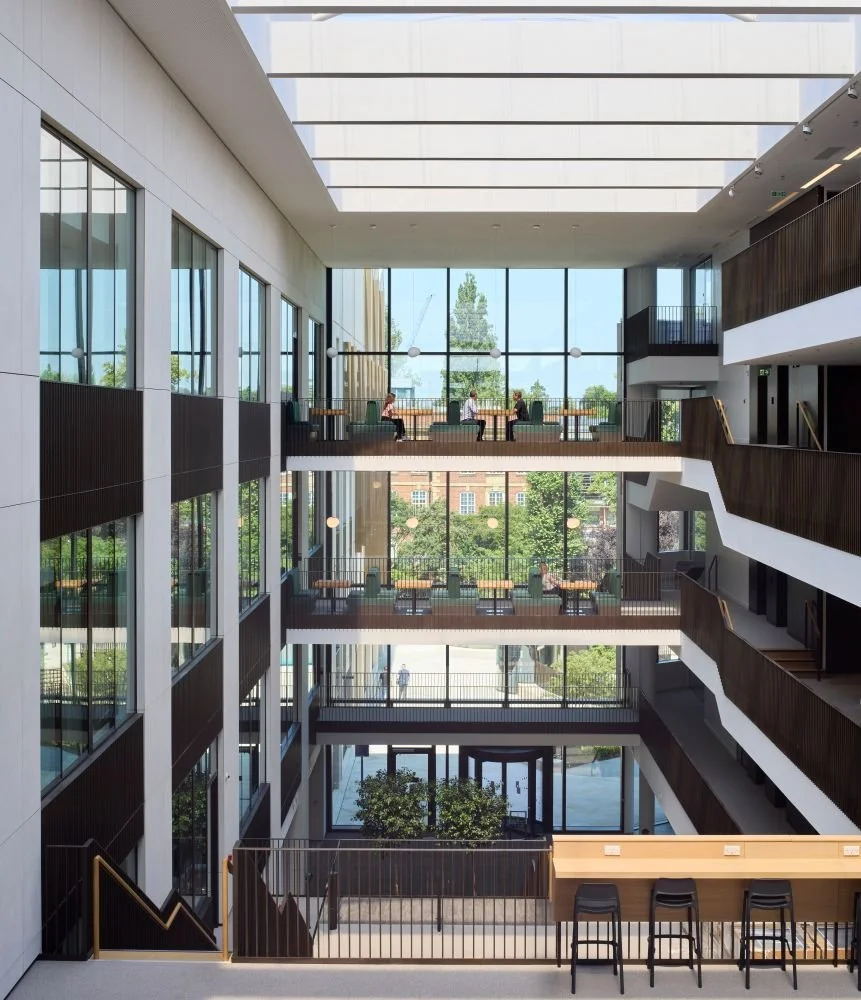
The light-filled atrium brings people together to meet, socialize and share ideas. Image: Richard Chivers
While laboratory environments are often associated with enclosed, mechanically controlled spaces, the Life and Mind Building demonstrates how daylighting and spatial design can enhance both energy performance and occupant wellbeing.
“The building was planned around a stepped central atrium that channels daylight deep into the interior,” says Umrigar. “Terraced floors, internal bridges, and open collaboration areas ensure researchers are never more than one level from planted outdoor space.”
Solar orientation and massing were carefully calibrated to balance daylight access with thermal control.
“We organized laboratories and office areas to receive controlled, consistent light while protecting them from overheating,” Umrigar says.
This strategy reduces reliance on artificial lighting while improving the daily experience of occupants, an increasingly important design consideration as institutions compete to attract and retain top research talent.
“The extensive daylighting strategy reduced reliance on artificial lighting and improved wellbeing, particularly important for researchers who often work long hours,” Umrigar says.
User engagement as a foundation for long-term success
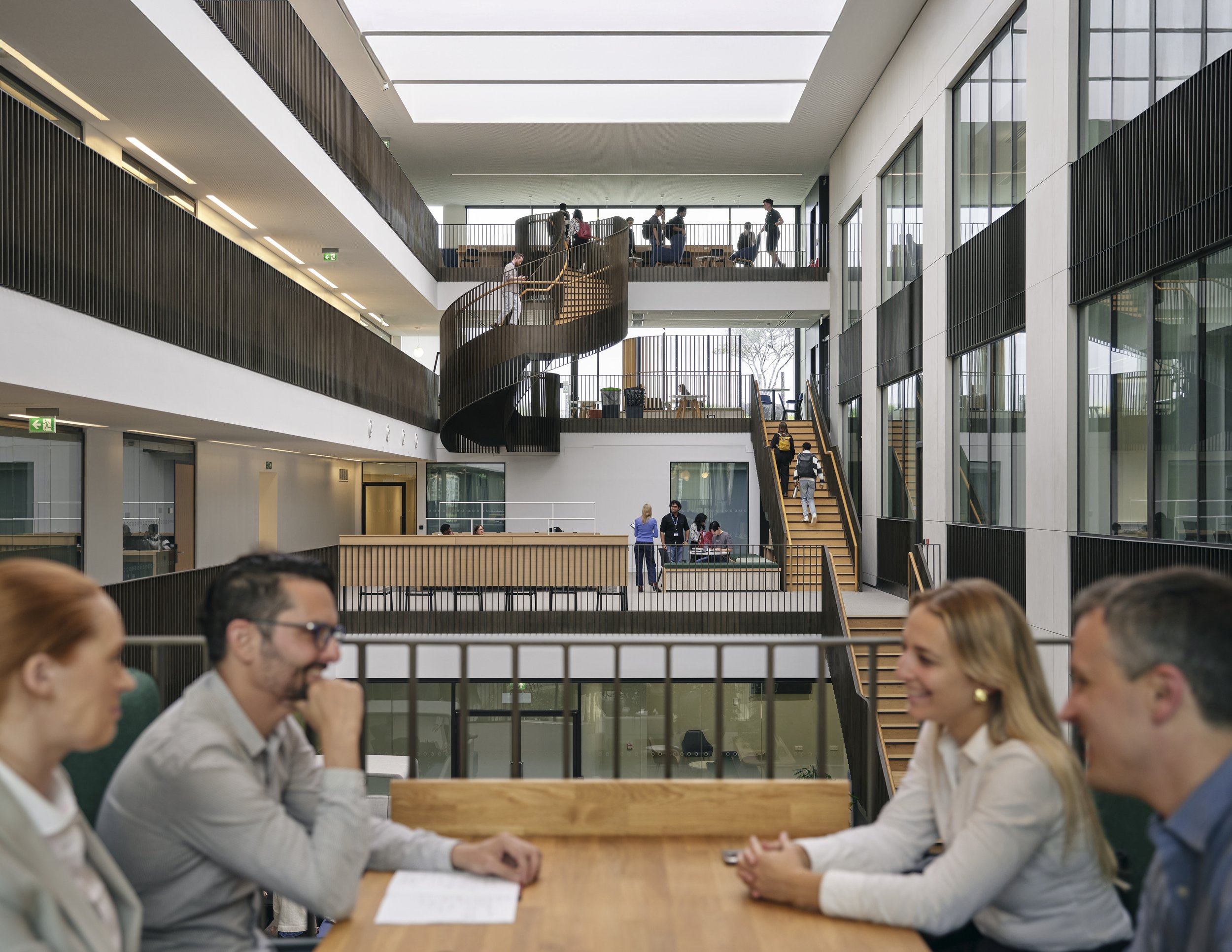
Interconnecting terraces inside the Life and Mind Building. Image: Ty Cole
One of the project’s most significant strengths was its deep engagement with researchers throughout the design process. This collaboration influenced both functional and symbolic aspects of the building.
“The project was shaped by intensive collaboration between NBBJ, researchers, and departmental collaboration,” Umrigar says. “Experimental Psychology leadership directly influenced the façade concept, leading to the decision to embed a brainwave into the façade design.”
Beyond aesthetics, user input helped shape laboratory flexibility, environmental specifications, and spatial organization.
“Both departments, Biology and EP, contributed to long-term flexibility goals, ensuring the lab block could accommodate future research growth and evolving methodologies,” Umrigar says.
User collaboration also strengthened institutional ownership of the facility.
“The brain scan created a powerful shared story,” says Umrigar. “It grounded the architecture in the research itself, making the building feel specific to its community. This symbolic gesture strengthened user connection to the project whilst the collaboration fostered ownership.”
This collaborative process helped ensure the building’s functional requirements were closely aligned with real research needs while strengthening a sense of ownership and connection among its users over time.
Designing for flexibility and future adaptation
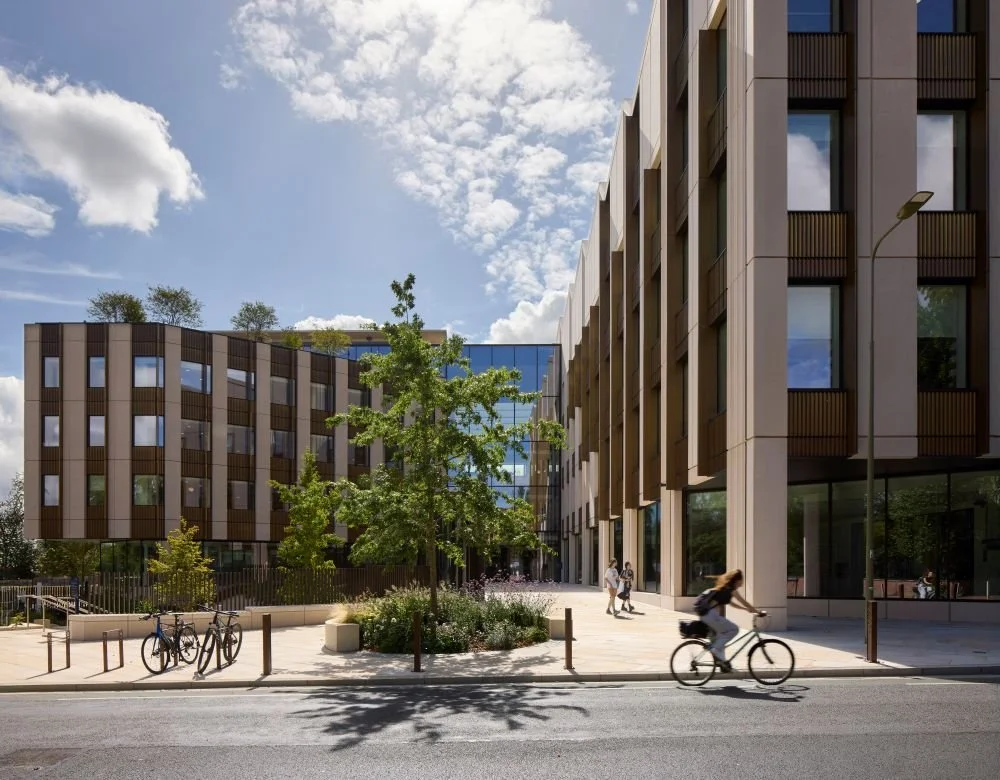
View across the plaza towards the main entrance. Image: Richard Chivers
Laboratory buildings must accommodate evolving technologies, research methodologies, and equipment requirements. The Life and Mind Building incorporates flexibility at multiple levels.
Shared laboratory infrastructure reduces redundancy while enabling efficient resource allocation. Modular planning allows research zones to evolve without major structural modifications.
“Shared laboratory facilities reduce duplicated equipment loads and spaces are designed for flexibility so that high-energy research zones can evolve without requiring carbon-intensive retrofits,” says Umrigar.
Early collaboration between architects, engineers, and researchers ensured infrastructure systems aligned with realistic operational requirements rather than theoretical maximum loads.
“We would replicate the early commitment to a ‘fabric-first’ approach; the use of Design for Manufacture and Assembly (DfMA) principles for construction efficiency, performance, and reduced waste,” says Umrigar.
Prefabricated precast panels allowed precise fabrication, reduced on-site construction time, and improved installation quality—benefits increasingly relevant as construction labor shortages and cost pressures continue to impact lab projects globally.
Establishing a new benchmark for laboratory design
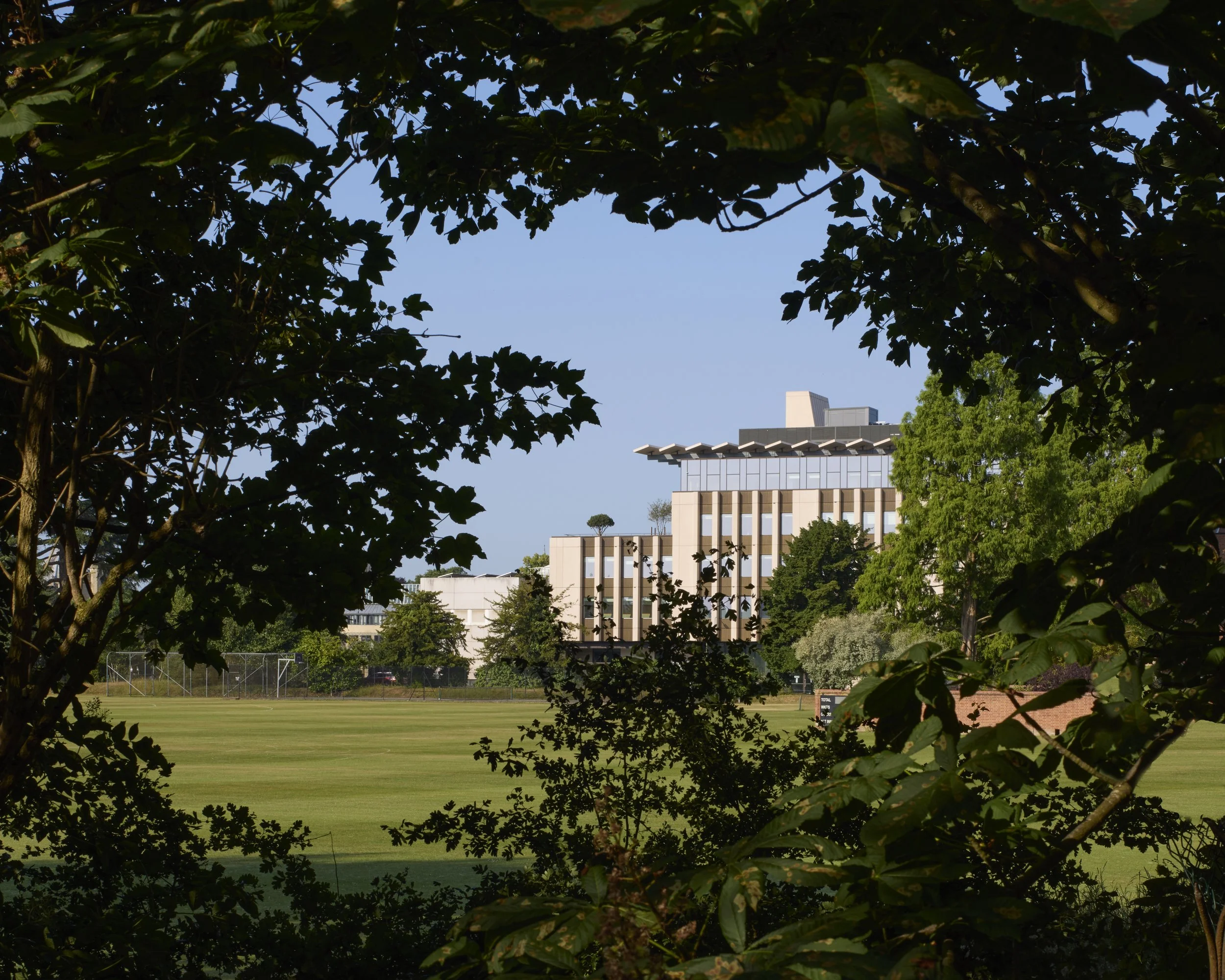
View of the Life and Mind Building from the University Parks . Image: Richard Chivers
Ultimately, the Life and Mind Building demonstrates how laboratory architecture can simultaneously address sustainability, functionality, and institutional identity. Its success lies not in a single breakthrough innovation, but in the integration of multiple strategies—envelope optimization, user collaboration, modular construction, daylighting, and flexible planning.
The project also underscores the value of long-term thinking in laboratory design. By prioritizing durability, adaptability, and energy efficiency from the outset, the design team created a facility capable of supporting evolving research needs for decades while minimizing operational costs and environmental impact. In doing so, the Life and Mind Building establishes a compelling model for the next generation of academic research facilities—one that integrates scientific purpose, environmental responsibility, and enduring architectural value into a single cohesive framework.