
Sustainability by Design: L’Oréal’s Prize-Winning Research Hub
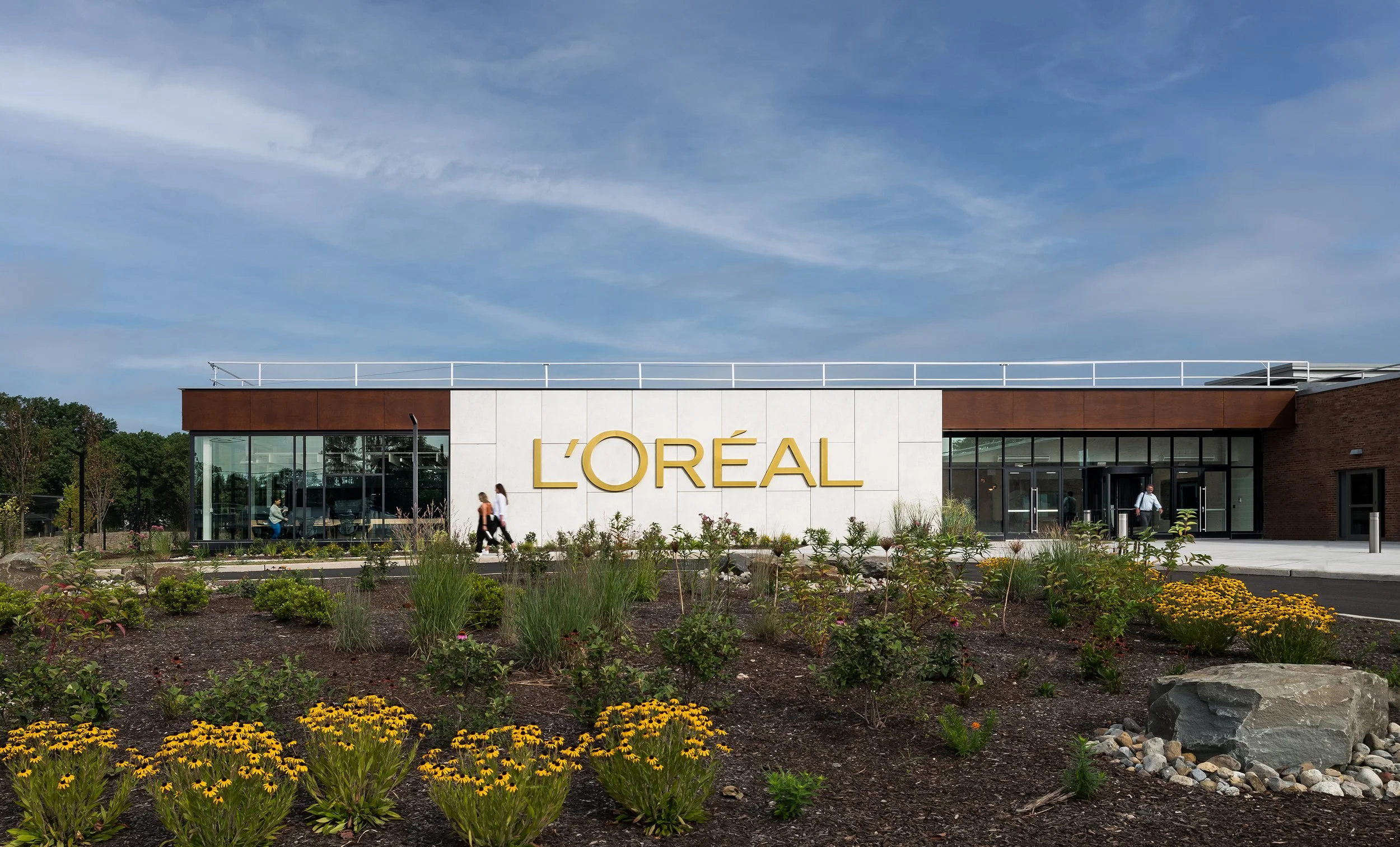
L’Oréal Groupe’s North America Research & Innovation Center in Clark, NJ—a $159 million transformation of a fragmented campus into a unified, state-of-the-art hub—earned a 2026 Design Excellence Award for advancing sustainable, science-driven innovation from lab to market. Image: © Paul Burk Photography
In the competitive landscape of the global beauty industry, innovation is the primary currency. For L’Oréal Groupe, the a prominent global beauty player, this innovation is rooted in a 115-year legacy of scientific excellence. To maintain this leadership, the company recently completed its largest-ever investment in a Research and Innovation (R&I) facility: the North America Research & Innovation Center in Clark, NJ. This $159 million redevelopment project transforms a fragmented campus into a unified, state-of-the-art hub designed to accelerate the journey from scientific discovery to retail shelf.
The L’Oréal North American Research & Innovation Center was honored with the Excellence in Sustainable Design prize in the 2026 Design Excellence Awards. Representatives accepted the award at the Lab Design Conference in Orlando, FL, in May 2026 and shared insights into the project with the conference audience.
The project was submitted to the Design Excellence Awards competition by S/L/A/M Architects, Landscape Architects & Engineers, P.C. (architect, landscape architect, structural engineer). The project team also included Watchdog (owner’s project manager), Bohler Engineering (civil engineer), SNC-Lavalin Inc. (mechanical, electrical, plumbing engineers—phase 1), AKF Engineers LLP (now WSP; mechanical, electrical, plumbing engineers—phase 2), Atelier Ten (sustainability consultants), Green Struxure (sustainability consultants), Lightcraft (AKF Group) (lighting consultant), Convergent Technologies Design Group (acoustics), Crabtree McGrath Associates (foodservice consultant), Gilbane Building Company (general contractors—phase 1), and Structure Tone (general contractors—phase 2).
A vision of unified innovation
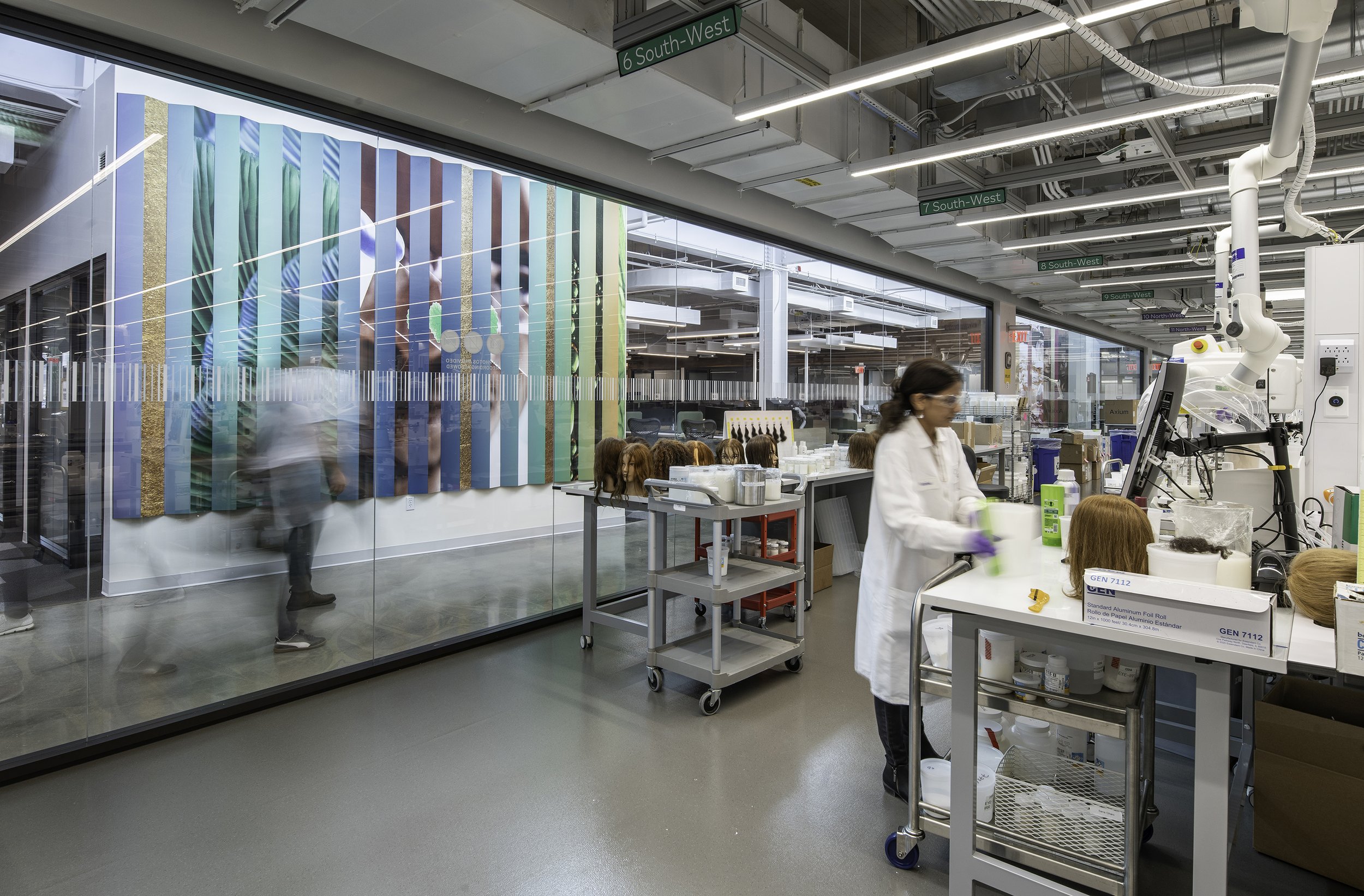
The L’Oréal North America Research & Innovation Center unifies over 600 scientists under one roof, integrating an end-to-end innovation model with a LEED Platinum–level regenerative design strategy powered by large-scale solar generation and AI-driven energy management. Image: Flex Formulation Development Lab | © Paul Burk Photography
Before this transformation, L’Oréal’s scientific teams in New Jersey were spread across five separate, function-specific buildings. This physical separation created silos that hindered the speed of collaboration. The new 257,185-sf facility consolidates over 600 scientists and experts under one roof, creating an "end-to-end" innovation model.
The center encompasses every stage of the product lifecycle: advanced research on breakthrough ingredients, early-stage formulation, and scale-up production in a 16,000-square-foot "demi-grand" mini-factory. This proximity is purposeful, as it creates flows that encourage people to interact.
The R&I Center is more than a technical marvel; it is a benchmark for regenerative design. Developed to meet the rigorous standards of LEED Platinum certification, the project serves as a physical manifestation of the "L’Oréal for the Future" corporate sustainability program.
At the heart of the facility’s environmental strategy is a massive solar installation. An array of 10,000 solar panels—capable of powering 350 average homes—supplies approximately 70 percent of the site's energy needs at peak consumption. This is bolstered by 85,200 sf of photovoltaic canopies over the parking areas, which generate 1,500 MWh annually while reducing the heat island effect.
To manage this renewable power, the team implemented a BMS and Microgrid platform. This system uses an AI-powered dispatch system to forecast solar production and market prices, optimizing energy use and cost efficiency. The result is a 70 percent reduction in site energy and a 45.8 percent annual energy cost savings compared to the industry baseline.
Decarbonization and electrification
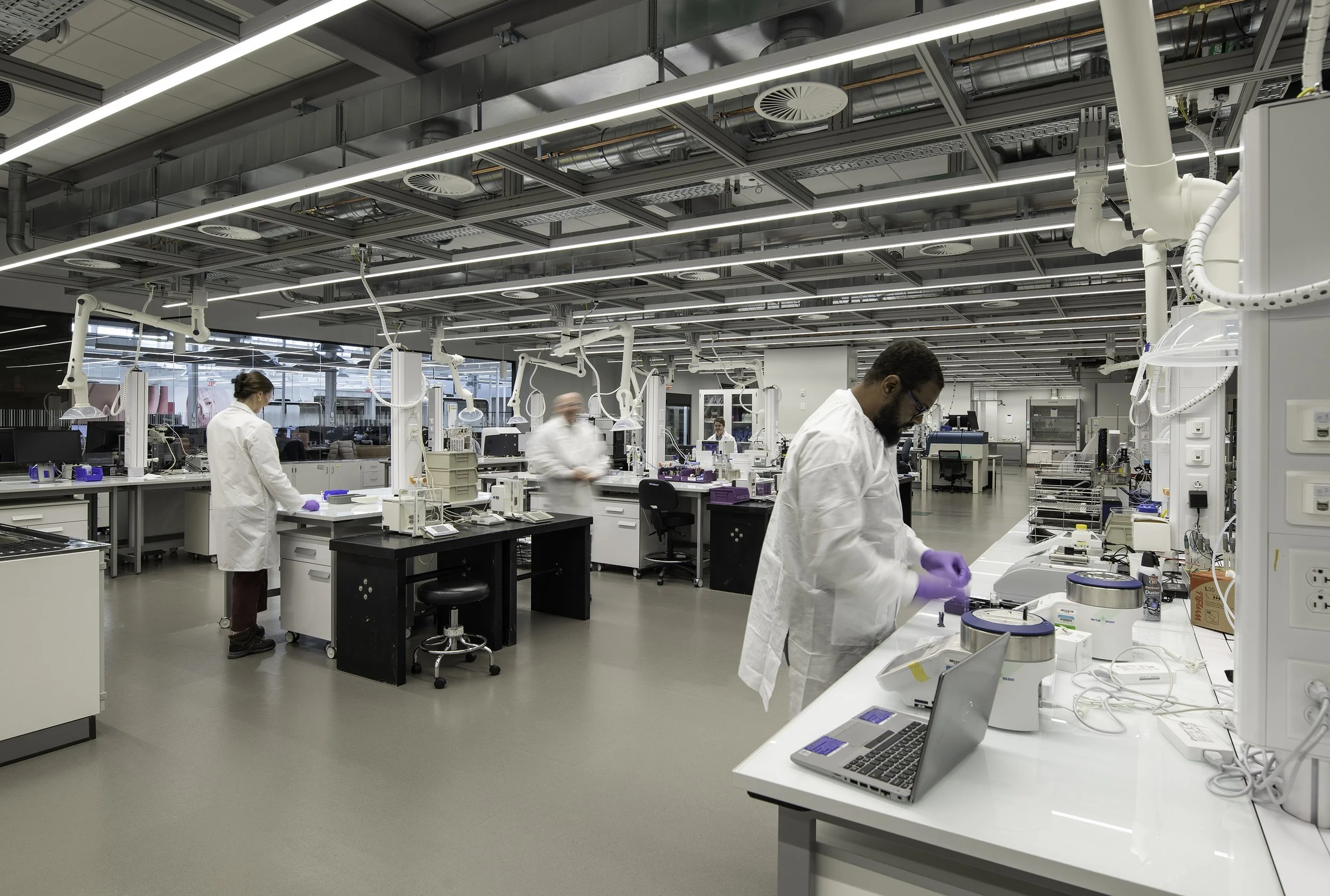
To eliminate fossil fuels, the facility uses air-cooled heat recovery chillers and air-to-water heat pumps to reduce energy and water use, while ruling out hydrogen fuel cells due to scale, safety, and cost constraints. Image: Flex Formulation Development Lab | © Paul Burk Photography
A critical sustainability goal was the avoidance of fossil fuels. The project team decided to install air-cooled heat recovery modular chillers and air-to-water heat pumps to provide heating and cooling. Robert F. Pulito, AIA, president emeritus/principal/architect of S/L/A/M Architects, says, “One of the sustainability goals of the project was the avoidance of fossil fuels resulting in the decision to install air-cooled heat recovery modular chillers.” This choice also served as a major water-saving strategy, as the system does not require a cooling tower, leading to significant reductions in water consumption.
While the team pushed the boundaries of technology, they also remained grounded in practical feasibility. During the planning stages, they explored emerging technologies like hydrogen fuel cells. However, they concluded that “the scale of a laboratory facility required a significant volume of hydrogen. Storing that quantity on site posed challenges in cost, space, and safety infrastructure, making it economically impractical.”
Mass timber: a technical and aesthetic breakthrough
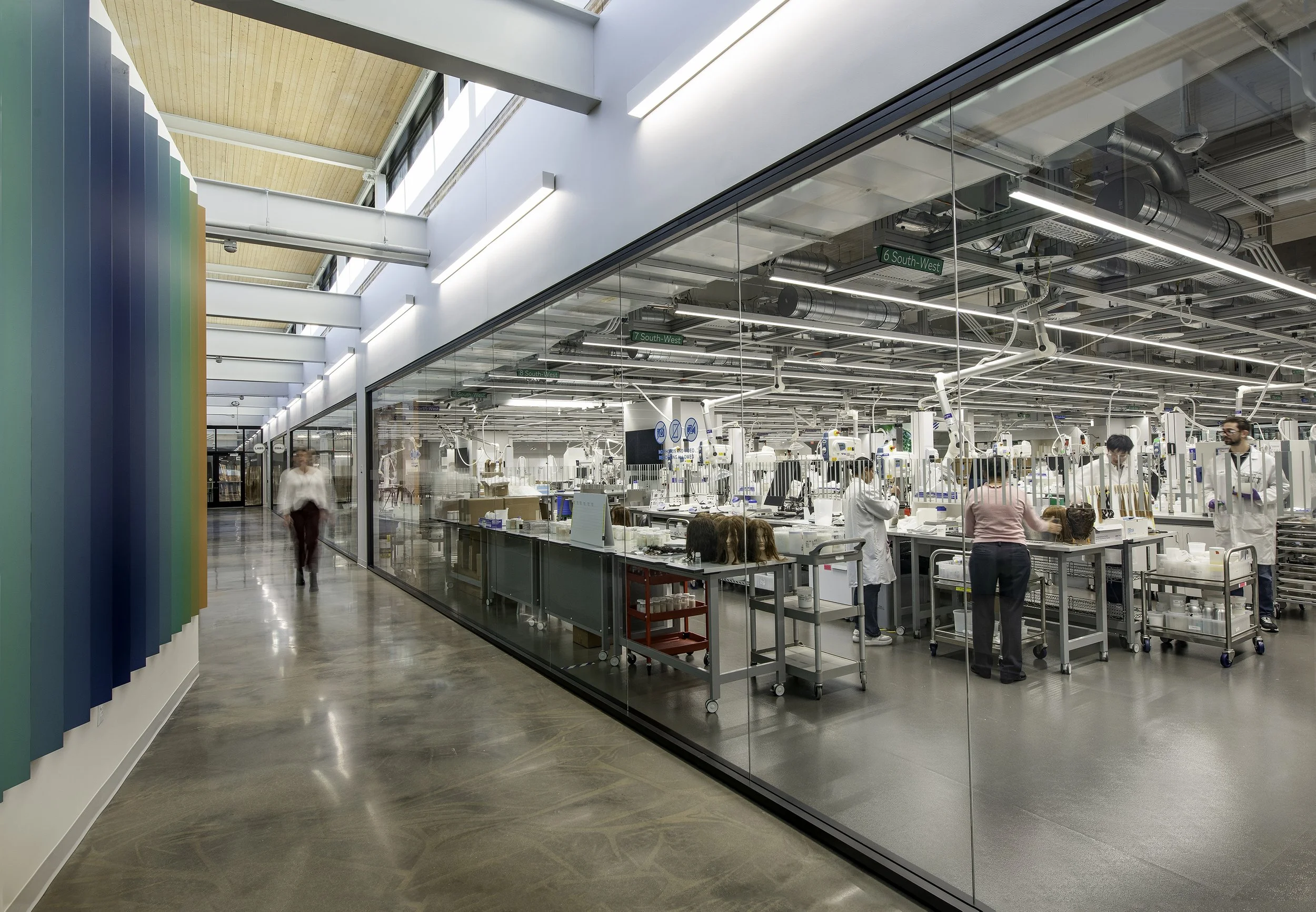
Natural light reaches the interior of the flex lab through clerestory windows and transparent partitions. Image: © Paul Burk Photography
One of the most distinctive features of the construction is the extensive use of Cross Laminated Timber (CLT). Spanning 89,845 square feet, the CLT decking serves as a renewable alternative to carbon-intensive steel and concrete.
The decision to use CLT was driven by both engineering requirements and L’Oréal’s brand identity. Pulito explains, “The decision to use CLT on this project came from the clients desire to transform a highly technical process-oriented building into a human-focused, warm, and inviting environment that displays its sustainable features.”
Beyond the aesthetic of the wood, CLT provided the structural capacity to support a potential future second floor while being lightweight enough to reduce foundation costs. Furthermore, using CLT saved over 2.3 million kilograms of CO2 emissions—the equivalent of taking 798 cars off the road for a year.
Human-centered design and wellness
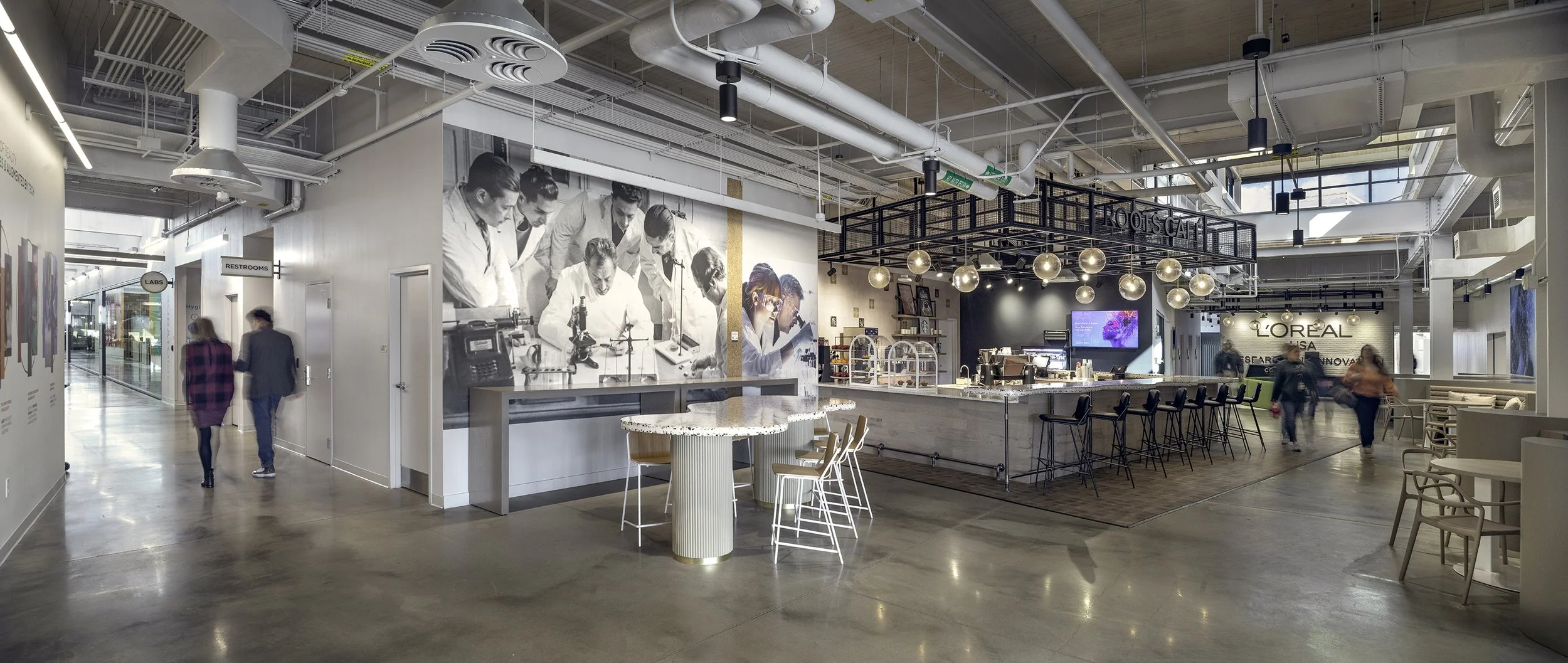
The L’Oréal workplace fosters connection and community through a Paris-inspired espresso café and a flexible, acoustically tuned cafeteria designed to encourage daily interaction, informal collaboration, and cross-team engagement. Image: © Paul Burk Photography
L’Oréal’s mission to “create the beauty that moves the world” extends to the daily experience of its employees. The center is designed to prioritize biophilia and wellness, moving away from the “cold” feel of traditional laboratories.
The facility achieved a goal of providing 100 percent access to daylight in all regularly occupied spaces. This was accomplished through skylights, restored clerestories in the original 1960s building, and transparent interior partitions that allow light to penetrate deep into the research labs.
The campus restoration turned a brownfield site into a thriving ecosystem. The landscape features over 100 native plants, an eco-retention pond for stormwater management, and even bat houses and bee hives to support local biodiversity. Employees can interact with this nature through walking trails and “Victory Gardens”—employee-led fruit and vegetable gardens inspired by the Garden State's history.
Where design sparks collaboration
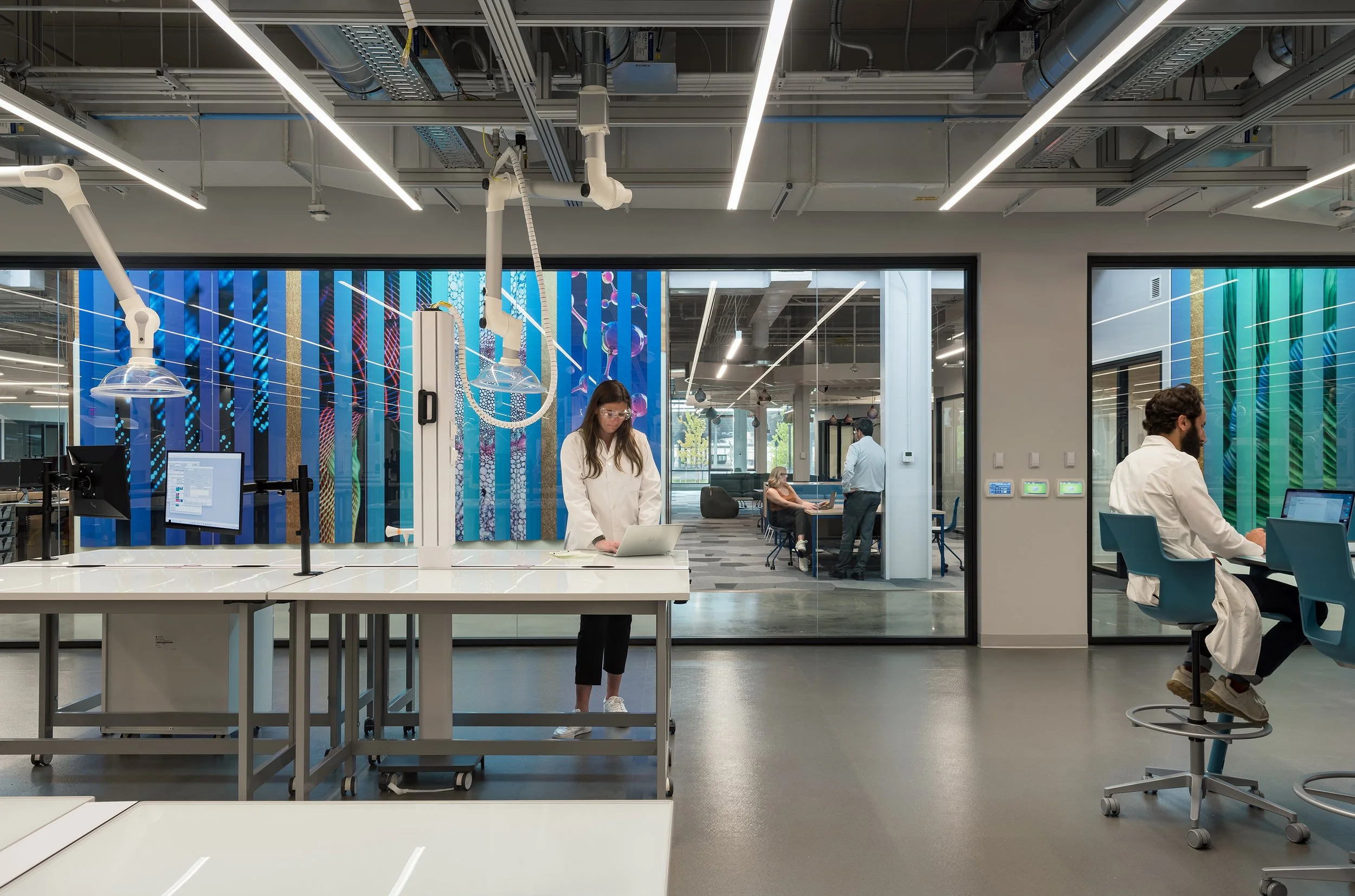
A single-floor, human-centered layout at the L’Oréal North America Research & Innovation Center fosters cross-disciplinary “casual collisions” through shared communal hubs, while early project alignment enabled a seamless integration of sustainability, performance, and design ambition into a unified innovation environment. Image: Flex Formulation Development Lab | © Paul Burk Photography
The interior layout is a single-floor concept intended to facilitate cross-pollination between scientific disciplines. Amenities like the espresso café, a tradition from L’Oréal’s Paris roots, and a vibrant cafeteria serve as communal hubs. These spaces are highly utilized, fostering what the team calls “casual collisions.” Pulito says, “Colleague utilization of the lab and office space, the impact that the facility has had on sick time, and the use of the social and community spaces such as the café and cafeteria” are key metrics by which L’Oréal measures the project's success.
The L’Oréal North America Research & Innovation Center represents a new paradigm for industrial architecture. By harmonizing technical lab requirements with ambitious sustainability targets and human-centric design, the project team has created a facility that is as efficient as it is inspiring.
For other organizations aiming for similar high-performance facilities, the project offers a clear lesson: alignment must happen early. “Sustainability took shape from day one,” Pulito emphasizes. “In an early visioning workshop, the owner, design team, consultants, and contractors aligned around clear goals, metrics, and high ambitions. Because everyone was at the table, sustainability became a shared priority, not an afterthought.”
This center ensures that as L’Oréal continues to invent the future of beauty, it does so in a way that respects the beauty of the planet itself.