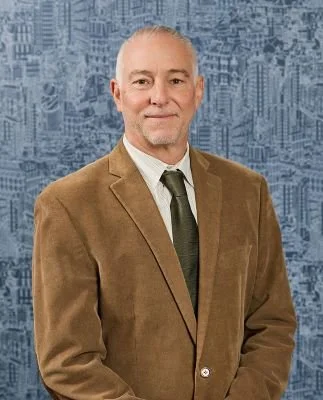
Ed Richert, PE, LEED AP, director—engineering services with Precis Engineering + Architecture
Ed Richert, PE, LEED AP, has joined the Cary, NC office of Precis Engineering + Architecture as director—engineering services. Lab Design spoke with Ed about the importance of early collaboration in laboratory planning, lessons learned from complex engineering projects, and his passion for skiing (both water and snow).
Q: What first sparked your interest in engineering, and what led you to the field you’re in today?
A: I grew up riding dirt bikes, skateboarding, surfing, and waterskiing. I was always curious about the science behind the design of things—how did they determine how many bolts to use, how many threads per inch, how much torque? How did they decide on the shape of the waterski or the surfboard? What was the science behind all this? Once I was exposed to calculus, physics, and thermodynamics, I knew that engineering—applying science and mathematics to design and problem solving—was what I was born to do.
Q: What do you enjoy most about working on laboratory or life sciences projects?
A: Shortly after 9/11, I was involved with the design and construction of a fast-tracked US Department of Defense (DOD) smallpox vaccine filling facility in Baltimore, MD. This was a BSL-3 sterile fill facility that would be used to produce millions of smallpox vaccine doses for the US government to stockpile in preparation for a possible biological terrorist attack. The project was designed, constructed, and qualified in four months. Fast forward about 20 years, during Operation Warp Speed, I was involved with another fast-tracked project to ramp up production capacity of a well-known drug vial supplier to the major vaccine manufacturers. I am very grateful to have had the opportunity to work on many projects that were tangibly related to improving public health. What I now enjoy the most is finding ways to bring that same attention, dedication, enthusiasm, and determination to every project regardless of the size or client.
Q: What’s one of the more interesting or challenging engineering problems you’ve encountered in your work, and how did you approach it?
A: One of the most challenging engineering problems I have faced was the design and construction of a high-rise office building smoke-control system. This was one of those projects where everyone was asking, ‘Can we do this?’ and we should have been asking, ‘Should we do this?’ The building was 13 stories tall with four stair towers and five elevators, an interior parking deck, and a four-story atrium. Two stair towers and three elevators opened to both the occupied building space and the open parking deck. One elevator went to the roof. Complicating the design even further was an open floor plan with no space for elevator lobbies. The cherry on top—three changes to the relevant building codes in three consecutive code cycles. The design was so complicated virtually none of the people constructing it really knew how it was supposed to work. Finishing this project involved weeks of control system tuning, testing, and adjusting; countless meetings with code officials and the fire marshal; and final approval of an alternate means of compliance with the city. The only winning approach to a project like this is sticking with it through thick and thin and not giving up, even when it looks impossible and everyone is saying it will never work.
Q: What’s one thing you wish more people understood about the role engineers play in designing and building laboratory facilities?
A: In graduate school, I worked for one of the country’s leading researchers in the field of machine learning—what we now call AI. We worked on modeling the processes that engineers use to design. Regardless of how we modeled these processes, one thing remained constant—design is iterative. Designers create, evaluate the performance of that creation, improve the design using data, and then repeat the cycle. What our research discovered was that not all initial designs converge on a good final design. So, my advice to owners is do not rush to an early solution. Try to avoid locking into an early design that limits you down the road. I am most amused by the engineering firm that shows up to the interview with a beautifully crafted design solution before the project has even been awarded. We can take a page from the construction industry’s Last Planner System playbook. Wait until the last possible minute to finalize key decisions so that you are always working with the latest and best information available.
Q: How do you approach balancing factors such as safety, performance, cost, efficiency, and long-term maintainability when making engineering decisions?
A: Fortunately, we have very strong regulatory bodies such as OSHA, the FDA, the EPA, the EU, and others that do the difficult work of collecting and analyzing vast amounts of data and setting minimum standards for safety and the environment. Other associations such as NFPA, IEEE, ASHRAE, ASPE, ISPE, JPA, and others do well in providing industry guidance and informing the building codes. Safety and protection of the environment are non-negotiable. I find factors such as cost, performance, efficiency, and maintainability are essentially a discussion about cost of ownership. From there, it is a conversation about owner priorities—schedule versus cost, sustainability versus cost, first cost versus life-cycle cost, and other competing factors.
Q: What’s a common challenge or oversight you see on laboratory projects that could be avoided with better planning or communication?
A: A common challenge I find on laboratory projects is getting all the right people in the room at the same time during initial lab planning. Between 2009 and 2012, I had the privilege to serve as mechanical engineer of record for the design and construction of the new North Carolina State Laboratory of Public Health. This 250,000-sf facility included virtually every flavor of laboratory you will find in the public health arena, including chemistry, microbiology, virology, toxicology, newborn screening, BSL-2, 3, and BSL-4, rabies testing, TB testing, and epidemiology. For each lab, there were lab staff, the lab owner, facility representatives, specialists, and representatives of the funding agency. Getting all parties to the table early in the lab planning phase is critical to gain consensus on key design criteria, scope, budget, and schedule and to ensure material quantities and utilities align with the overall design of the facility.
Q: How do you see new technologies, including AI, automation, modeling, or other digital tools, changing the way engineers work?
A: When I started working as a mechanical designer, half of our drawings were still hand drafted. You had an engineer, a designer, and a draftsman. Today, engineers think in Revit, Cadworx, and Plant3D and we almost never put anything on paper. Modeling the built environment in virtual space has been the standard for many years and producing construction documents from the model is a routine exercise. In the last 15 years, a major change that I have seen in the industry brought about by advances in building modeling is the shift of construction coordination away from the contractor and toward the engineer. It appears this is a positive change creating better construction quality and improved value. In terms of AI taking the engineer’s place, I believe the basic human desire to create and be creative will not allow AI to perform any amount of engineering design that humans do not want it to perform. I believe AI will become an integral part of engineering design, but it will remain a tool for creative human engineers to do bigger and better things in the future.
Q: What’s one piece of advice or lesson you’ve picked up from another engineer that has stayed with you?
A: This advice is applicable to almost every situation and line of business—if you do not take care of your client, someone else will.
Q: What do you think makes someone a good engineer beyond having strong technical skills?
A: A good engineer can’t put a problem down or walk away from it until they solve it. It will keep them up at night and will consume them until a solution is found. A good engineer will not be satisfied until they believe they fully understand the problem, have considered all options for a solution, have arrived at a sound solution, and can explain in excruciating detail every aspect of the problem and how they solved it.
Q: What’s something you’ve learned in your career that has changed the way you approach engineering problems?
A: I have learned that when things go south, it is rarely because good engineers and good engineering firms got the wrong answer. It is usually because they answered the wrong question. Now, I stress taking the proper time to define the problem and resist the urge to jump to a solution.
Q: If you weren’t an engineer, what career do you think you might have pursued?
A: I think I was born an engineer and became a professional engineer because I really enjoyed and was good at designing things. Had I not become a design engineer, I think I would have stayed in the university setting as a research professor.
Q: What’s a hobby, interest, or activity you enjoy outside of work?
A: My favorite hobby is waterskiing. I try to do it as much as I can for fun and to stay physically fit.
Q: What’s something you could talk about for hours that has absolutely nothing to do with engineering?
A: My family; I love talking about my wife and kids and all the exciting things they are doing.
Q: What’s your favorite building or structure, lab-related or otherwise, and what do you like about it?
A: The Hoover Dam—I love that it was designed and constructed long before computer aided design and continues to be a major producer of renewable energy. I really love the creative solution the project manager came up with to cool the curing concrete. They cast water piping into the concrete that was used to flow cooling water during the curing and then the piping served as the reinforcement for the final reinforced concrete structure. It was a very creative solution to cooling the concrete while it cured but also served a dual purpose as the steel reinforcement.
Q: What’s something you’re looking forward to, either personally or professionally?
A: I look forward to the 2030 Winter Olympics. It always gets us in the mood for snow skiing.