
NSWC Indian Head Unveils State-of-the-Art Explosives Lab
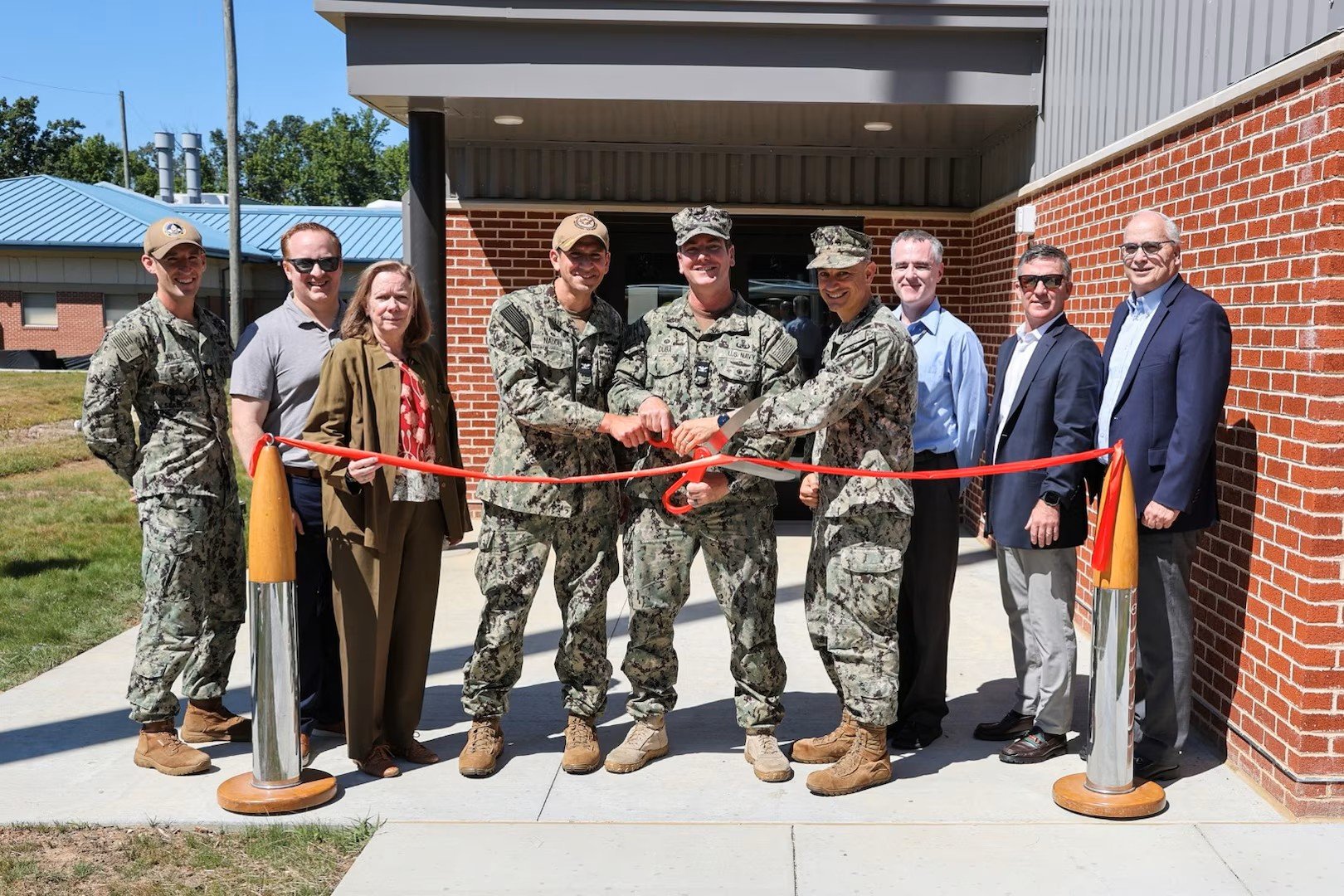
The newly opened Advanced Energetic Research Laboratory Complex features specialized infrastructure for ordnance and explosives development. Image: Courtesy of Naval Surface Warfare Center Indian Head Division
Editor's Note: The modernization of federal and defense research infrastructure presents unique challenges, particularly when balancing strict safety protocols with cutting-edge scientific requirements. This new facility at Indian Head highlights a broader industry shift toward highly specialized, climate-controlled laboratory spaces designed to handle volatile materials. For lab architects and facility managers, the project underscores the critical role that precise environmental and vibration controls play in accelerating modern R&D timelines.
The Naval Surface Warfare Center Indian Head Division has officially opened its new 21,000-sf Advanced Energetic Research Laboratory Complex in Maryland. This state-of-the-art facility marks a critical pivot away from legacy infrastructure toward highly controlled environments tailored for molecular-level chemical synthesis and weapons research.
Overcoming the constraints of aging infrastructure
Building modern research facilities for defense applications requires a deep understanding of legacy limitations. Prior to this opening, critical research at the site was restricted by an outdated facility that lacked the structural flexibility required for modern scientific instrumentation. Legacy lab spaces often suffer from systemic infrastructure degradation—such as fluctuating utility baselines and inadequate spatial layouts—which directly hinder high-sensitivity testing.
The newly constructed facility addresses these long-standing operational bottlenecks by expanding the physical footprint and integrating robust engineering controls. Developed in collaboration with the Naval Facilities Engineering Systems Command (NAVFAC) Washington, the complex provides the foundational infrastructure required to scale up small-scale mixing of advanced explosives and propellants safely.
“We know that world-class talent requires world-class infrastructure,” NAVFAC Washington Executive Officer Capt. Christopher Archer said in a news release. “For too long, the critical work done here at the DoW’s Energetics Center of Excellence was constrained by a 66-year-old facility. The equipment required for modern research, development, test and evaluation cannot function at its full potential without precise temperature, humidity and vibration controls. As the facility degraded, it forced workarounds that delayed critical advancements. The Advanced Energetic Research Lab Complex solves that problem.”
Critical environmental controls for energetics R&D
For facility managers and lab planners, the core engineering achievement of the complex lies in its advanced environmental mitigation systems. Energetic materials research demands incredibly tight tolerances for ambient temperature and relative humidity, as minor environmental fluctuations can compromise chemical stability or skew analytical data. Additionally, specialized structural detailing was required to mitigate ambient vibrations, ensuring that sensitive molecular diagnostics and high-resolution imaging tools operate without interference.
Integrating these systems requires a close adherence to strict safety and building codes, such as the NFPA 45 standard for laboratories using chemicals. Modern laboratory design must isolate hazardous processes while maintaining an energy-efficient laboratory environmental control system that manages heavy air-change requirements. The new complex successfully unifies these demands, featuring enhanced scalable mixing capabilities and modernized analytical support zones.
Engineering for high-stakes containment and synthesis
Designing a laboratory of this nature requires a strict separation of workflows to ensure safe operational sequencing. The facility's floor plan is optimized to support advanced capabilities in chemical synthesis, formulation development, and integrated advanced diagnostics. This strategic layout ensures that volatile chemical processing areas are structurally segregated from administrative and low-risk analytical zones, maximizing safety without disrupting the collaborative workflow.
By establishing a purpose-built environment, the facility eliminates the inefficient operational workarounds that frequently plague older, retrofitted buildings. Implementing dedicated air-handling units, blast-resistant construction, and specialized architectural casework allows researchers to safely push the boundaries of joint weapon systems development.
“This building is the culmination of more than a decade of rigorous planning and execution,” NSWC IHD Commanding Officer Captain Steve Duba said during his opening remarks. “The Advanced Energetics Research Laboratory Complex will focus on the development of novel materials and formulations, providing the Navy a capability and capacity not readily reproduced anywhere else. With this addition, NSWC IHD will continue operating as one of the largest energetic materials research and development activities in the Department of War [DoW].”
Navigating design under strict OpSec
Designing and constructing facilities for energetic materials requires balancing advanced engineering needs with strict federal classification guidelines. Because of these unique constraints, specific project blueprints, equipment models, and structural mitigation strategies remain protected.
"Due to operational security policies, we cannot disclose specific details regarding the planning, design, requirements, equipment, user feedback and challenges/lessons learned to make our command’s new Advanced Energetic Research Laboratory Complex operational," according to an official statement provided to Lab Design News by NSWC IHD. "Our primary priority is the safety of our personnel and the security of NSWC Indian Head Division’s mission. This state-of-the-art facility was more than 10 years in the making, and we are very happy with the results and the RDT&E capabilities that it will provide our command."
Future-proofing federal research facilities
The successful completion of this complex illustrates the growing national momentum behind modern infrastructure upgrades within the federal laboratory sector. As research methodologies evolve toward computational modeling and high-throughput automated synthesis, the physical laboratory must remain adaptable. This project serves as a blueprint for balancing specialized defense criteria with the flexible, modular lab planning principles dominant in commercial sector design.
Ultimately, the facility bridges the gap between basic chemical theory and applied field deployment. By optimizing the physical environment, the command is well-positioned to maintain its leadership in ordnance and explosives management for decades to come.
“This new laboratory complex empowers NSWC IHD to fully enact our ‘Molecule to Mission’ mindset—allowing us to take bold concepts, push them through rigorous development and transition them directly into the hands of the warfighter,” Duba said. “Inside these walls, Indian Head will ensure its century-long legacy of innovation continues well into the future.”
References
Naval Surface Warfare Center Indian Head Division (NSWC IHD) Public Affairs. "World-Class Advanced Energetic Research Lab Complex Opens at NSWC IHD." Released June 24, 2026.
National Fire Protection Association. NFPA 45: Standard on Fire Protection for Laboratories Using Chemicals.