
Modernizing a Mid-Century Lab for Current Research
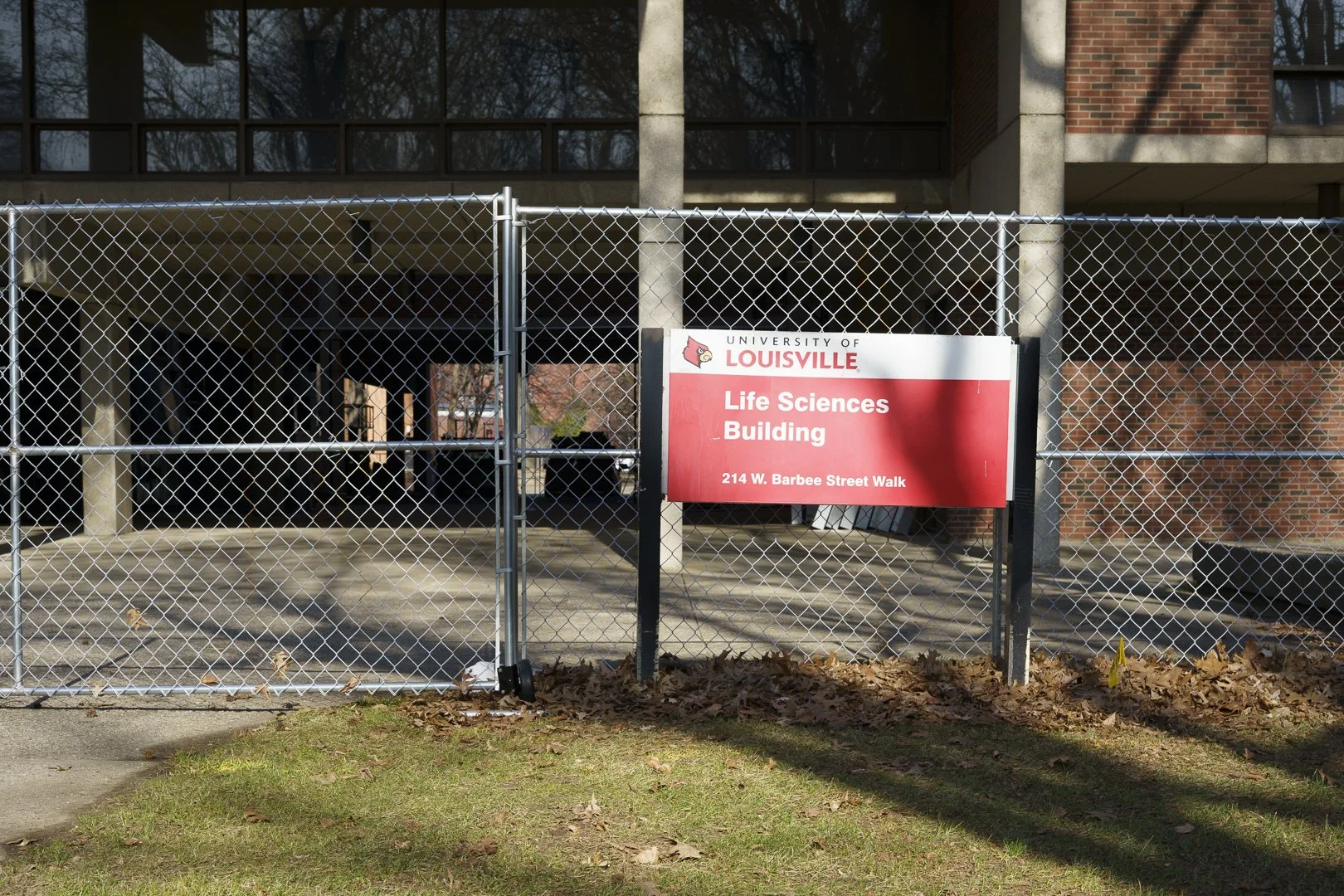
The perimeter of the Life Sciences Building on the Belknap campus is fenced off due to construction, Jan. 7, 2026. Image: Jai’Michael Anderson / The Louisville Cardinal
When University of Louisville students returned to campus in January 2026, they were greeted by a construction fence encircling the 1969-era Life Sciences Building.
The closure, scheduled to last through December 2026, marks the most significant overhaul of the facility in its history—a comprehensive modernization of mechanical, electrical, plumbing, and safety systems designed to secure the building’s role in research and instruction for decades to come.
The project highlights what happens when aging infrastructure meets modern research demands, and the level of proactive planning required to prevent system failures from bringing operations to a standstill.
Replacing systems at the end of life
According to Kevin Schulte, chief engineer at the university, the driving force behind the renovation was simple but urgent: “The mechanical systems were at the end of useful life. Reliable and efficient control of space temperature and airflow and electrical service were becoming major concerns.”
Decades-old infrastructure had begun to show its age in tangible ways. “Piping was corroded. Control valves were failing to operate properly. The electrical switchgear was obsolete. The building lighting was old inefficient fluorescent tube,” Schulte explains.
In a laboratory environment, those issues are more than maintenance headaches. Unreliable airflow affects fume hood performance and containment. Electrical instability threatens sensitive research equipment. Corroded piping and failing valves can compromise environmental control in spaces where precision is critical.
“Since the original systems were at the end of life, the primary goal was to replace them with modern efficient systems that would require less intensive repair work and offer much improved efficiency and safety,” Schulte says.
The renovation includes complete upgrades to HVAC systems, electrical switchgear, lighting, and life-safety components. The university also plans to install a new roof in July 2026. Students returning after project completion will see new ceiling tiles, LED lighting, and updated flooring, visible signals of deeper infrastructure transformation above the ceiling plane.
Deferred maintenance in research buildings carries significant operational risk. Proactively replacing aging systems rather than waiting for failure can help avoid costly downtime, particularly when replacement parts for legacy equipment are no longer available.
Safety and compliance as design drivers
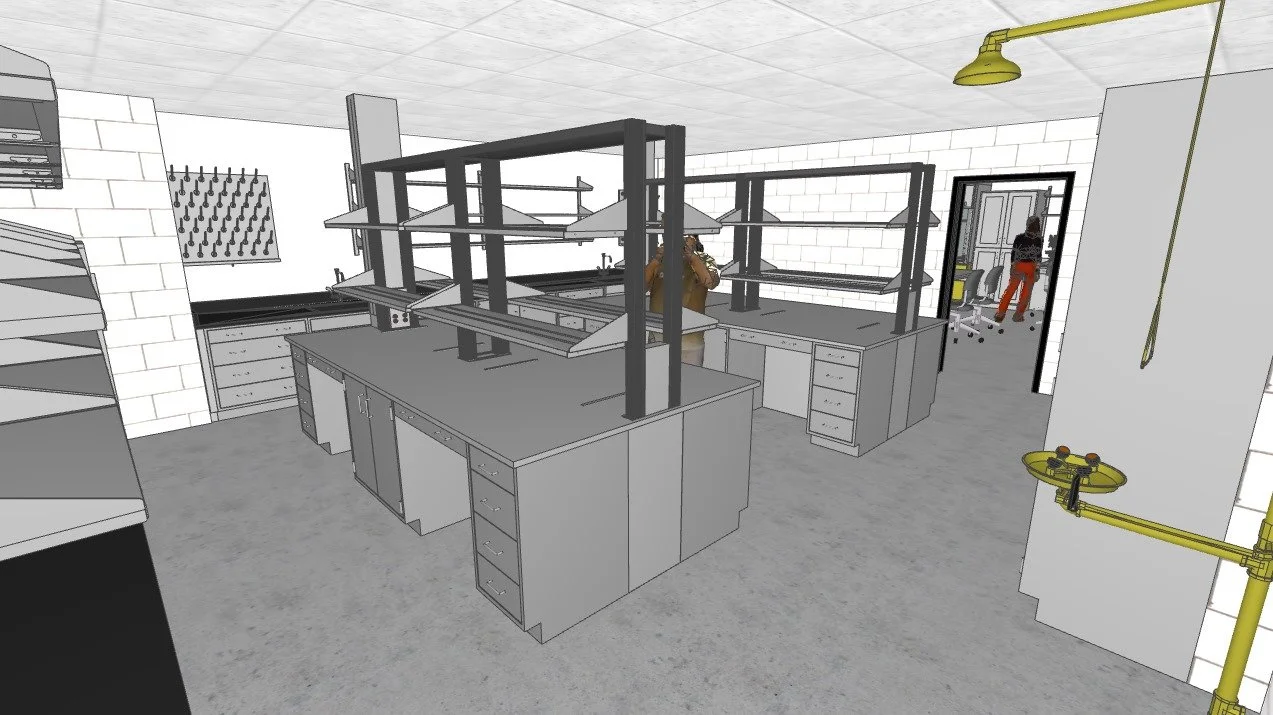
Safety upgrades—including new fume hoods, lab safety showers, modern electrical switchgear, and a high-performance HVAC system—are central to the renovation, improving air quality, temperature control, and overall lab safety. Image: Courtesy of the University of Louisville
Beyond mechanical reliability, safety deficiencies in the original building had become increasingly difficult to ignore. According to Biology Department leadership, the labs lacked key environmental health and safety features.
Schulte emphasizes that safety improvements are integral to the project scope. “New fume hoods are being installed. New lab safety shower showers are being installed. And with the new HVAC system the buildings air quality and temperature control are anticipated to be much better.”
He also notes the importance of coordinated system upgrades: “Modern electrical switchgear provides safety with regards to use of power within the building. New air handling systems provide critical temperature regulation and efficient use of ventilation. New lighting improves the efficiency and lighting levels needed. New fume hoods and safety showers improve the lab user’s environment to allow them to effectively research as needed.”
These improvements reflect a broader industry shift: lab renovations are no longer about aesthetic refreshes but about aligning facilities with contemporary safety codes, ADA requirements, and environmental health standards.
In fact, the Life Sciences Building received ADA-compliant upgrades in summer 2025, addressing longstanding accessibility limitations. Prior to these improvements, accessible routes and facilities were minimal and fragmented. Incorporating accessibility into a systems-focused renovation underscores an important principle for institutions: modernization should be holistic. Mechanical renewal is an opportunity to address life safety, accessibility, and code compliance in one coordinated effort rather than through piecemeal fixes.
The complexity of relocation
While the technical upgrades are significant, the human logistics of the project may be even more instructive for peer institutions.
Renovating a heavily used academic lab building required relocating 33 faculty members, multiple research labs, and entire departments across two campuses. Biology and psychology operations were distributed across nine buildings to keep instruction and research running during construction.
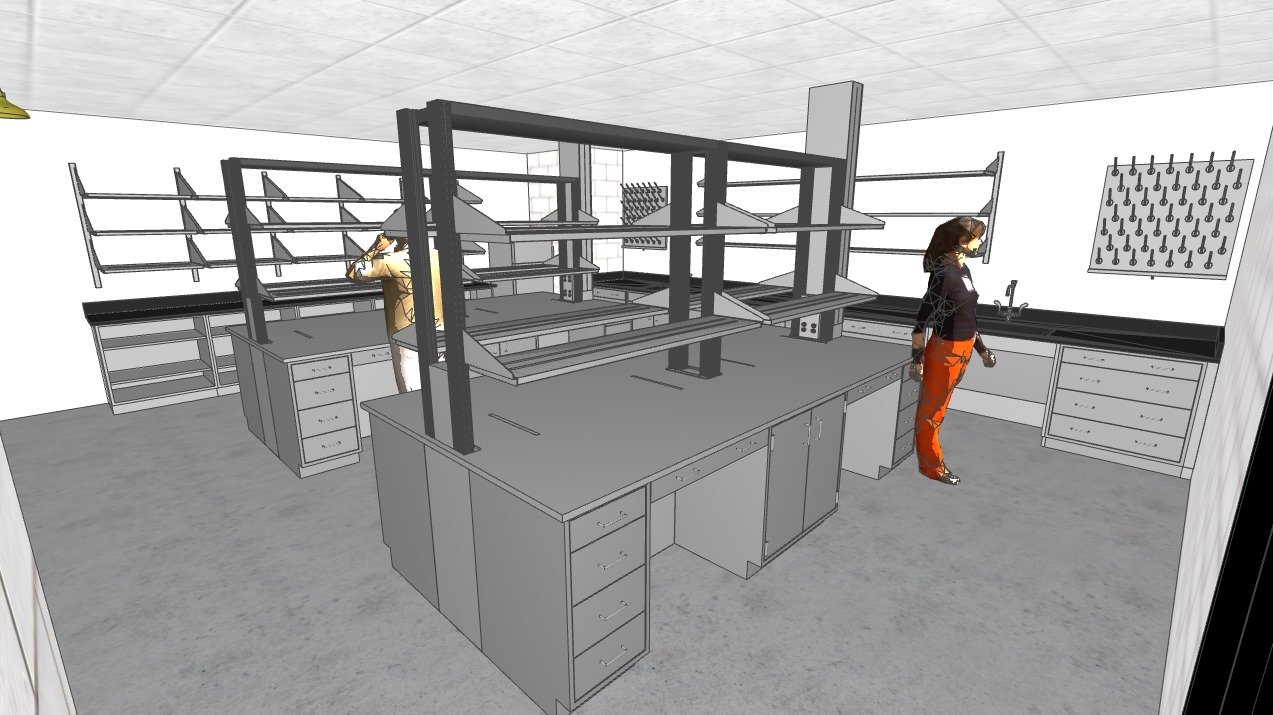
The renovation required relocating 33 faculty members and multiple research labs across nine buildings and two campuses to maintain instruction and research continuity during construction. Image: Courtesy of the University of Louisville
“Temporary relocations were a necessity to allow the contractor to complete the needed work,” Schulte says. “UPDC worked extensively with the faculty to determine the best alternative location for the needs of their research and students. Alternative labs were located across campus and teaching class spaces were located as near the Life Sciences building as possible.”
Relocation was not simply a matter of moving desks. Lab environments involve hazardous chemicals, specialized equipment, and in some cases living organisms. Environmental health and safety regulations dictated strict handling and transport procedures, adding layers of coordination.
Schulte acknowledges the planning intensity required: “It is easy to assume that renovation projects can be completed in short order. There are more planning and adjustments to schedule that happen than most people realize. The time needed to find temporary spaces for people, the logistics needed to move them all start to add up.”
The experience highlights the importance of early stakeholder engagement and a well-defined swing-space strategy. Temporary accommodations must consider ventilation requirements, power density, and research continuity, not just available square footage.
Designing for performance and flexibility
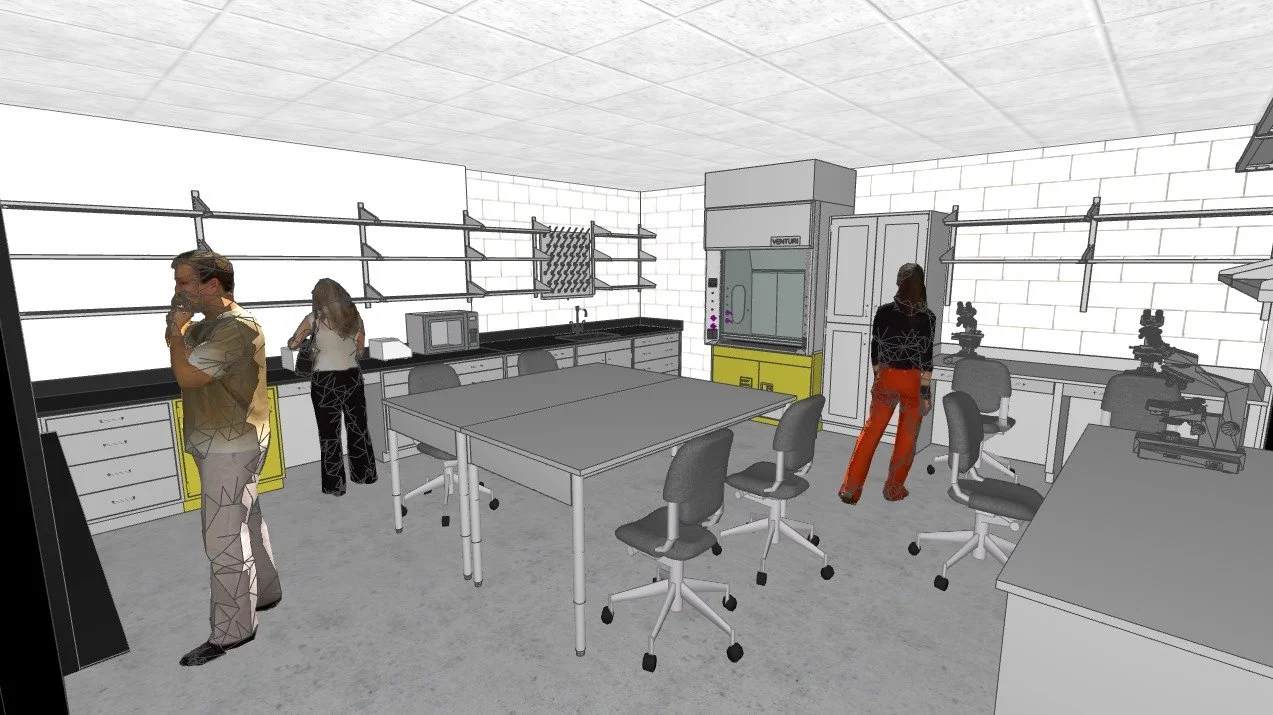
Drawing on insights from recently renovated campus facilities—including updated chemistry labs and fume hoods in the engineering building—the team applied proven concepts to the new mechanical systems, while incorporating faculty and staff input to ensure the redesigned labs align with current and future research needs. Image: Courtesy of the University of Louisville
The renovation team did not work in isolation. Concepts from other recently upgraded campus facilities informed the Life Sciences Building improvements. Schulte notes that “The newly renovated chemistry labs and the fume hoods within the new engineering building were utilized for concepts on how new Life Science labs would need to operate with the new mechanical systems.”
This cross-pollination reflects a best practice for higher education institutions: treat each renovation as a prototype for the next. Lessons learned in one building (whether about fume hood airflow, lighting levels, or energy performance) can streamline decision-making and reduce risk in future projects.
Faculty and staff were also involved in shaping lab functionality. “Faculty and staff provided needed input on what type of research the labs are to be set up for,” Schulte says.
The project underscores the importance of aligning technical performance with programmatic realities, ensuring that lab casework, hood counts, and ventilation rates reflect evolving research needs rather than default standards alone.
Looking ahead, the university anticipates long-term returns on its investment. “With these improvements, we anticipate the building will serve its intended use for the next 20 to 30 years. The systems being installed should allow for flexibility and minor change of use for the spaces to accommodate different program needs,” Schulte says.
Flexibility is increasingly critical in life sciences facilities, where research funding, faculty recruitment, and teaching modalities evolve rapidly. Designing mechanical and electrical infrastructure with surplus capacity and adaptable zoning can reduce the cost and disruption of future reconfigurations.
Lessons for the field
Several lessons emerge from the Life Sciences Building renovation:
Address end-of-life systems proactively. Waiting for catastrophic failure in research facilities can jeopardize safety and continuity.
Integrate safety and accessibility into infrastructure upgrades. Major MEP overhauls create an opportunity to achieve code compliance and improve user experience simultaneously.
Plan relocation as a project in itself. Temporary swing space requires detailed logistical coordination and early stakeholder involvement.
Leverage campus precedents. Applying insights from similar lab renovations can reduce uncertainty and optimize system performance.
Design for adaptability. Mechanical and electrical systems should anticipate evolving research needs over a 20–30-year horizon.
As construction continues through December 2026, the fenced perimeter may symbolize disruption for students and faculty. But for facilities leaders and lab professionals nationwide, the project represents something more enduring: a reminder that modern science depends as much on resilient infrastructure as it does on research talent.