
Laboratories Need an Identity Layer for Their Building Records
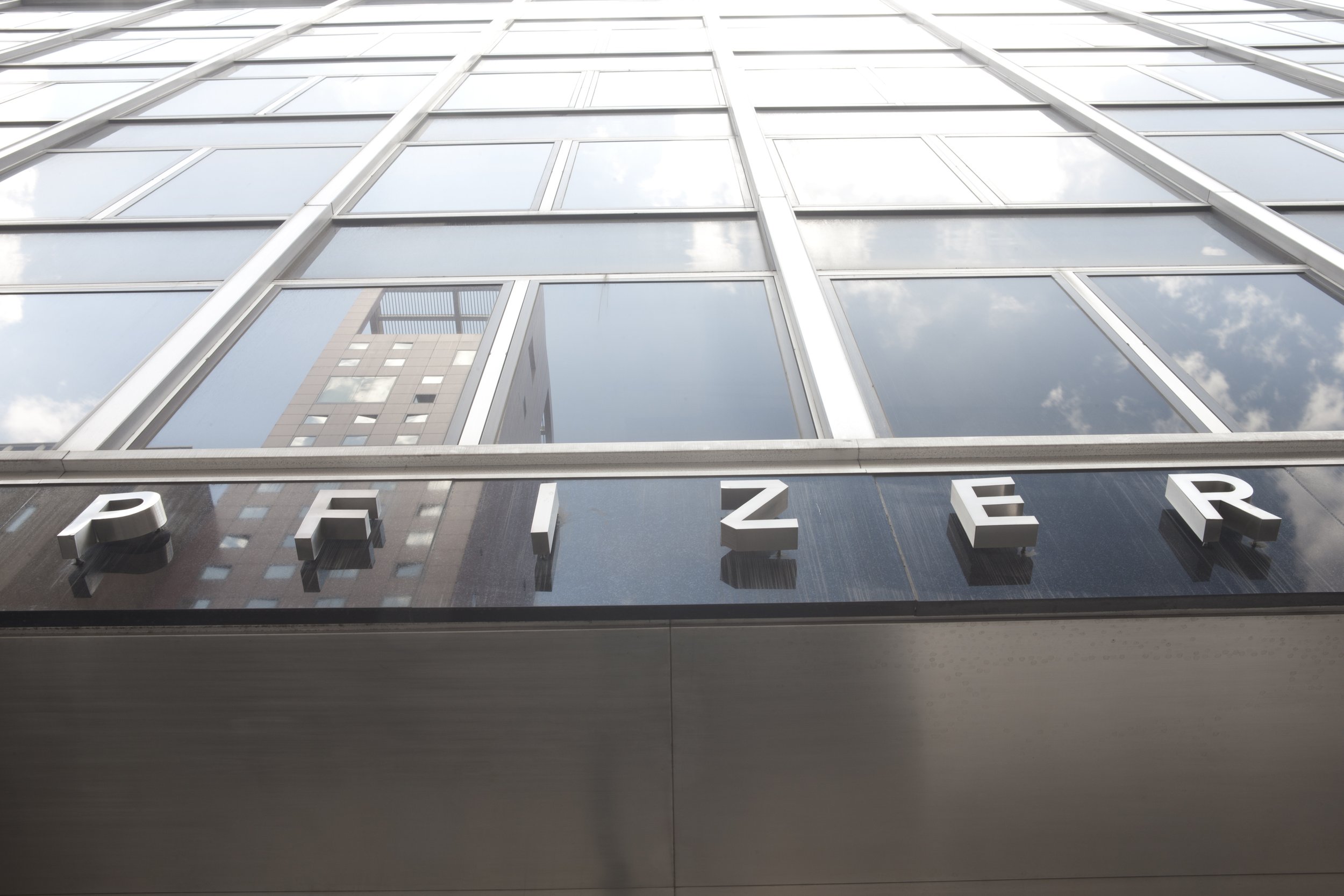
A structural failure during the conversion of Manhattan's former Pfizer headquarters highlights how gaps in records continuity can obscure critical building history, underscoring the need for persistent asset tracking throughout a laboratory's lifecycle.
When two steel columns buckled during the conversion of the former Pfizer headquarters in Manhattan, investigators discovered a missing reinforcement plate that had never reached the columns. This revealed a deeper issue than mere documentation failure: a breakdown in records continuity where history is lost when tracking links break.
For laboratory facilities, this risk is amplified by frequent renovations, equipment swaps, and management changes over time. Addressing this requires more than just another document repository, it demands a persistent identity that connects every inspection, permit, and piece of equipment to the exact physical space throughout its entire operating life.
Documentation answers the wrong question
Even labs with disciplined document management run into this failure mode. A document repository can answer what records exist on file. It cannot answer what has happened to a specific bench, hood, or exhaust run across years of changes.
A recent industry analysis of facility continuity found that as veteran facility managers retire, change jobs, or move on, decades of undocumented building knowledge often leave with them, since that knowledge frequently lives in someone's head rather than in a system. The same analysis cited IFMA projections that more than 45 percent of facility management professionals worldwide will retire within the next decade, a wave that will test institutional memory in labs as much as anywhere else.
That is the same failure described two different ways. Whether the loss shows up as a retiring facilities director who carried undocumented hood modifications out the door, or a records system that cannot say what a ventilation run can support after years of alterations, the cause is identical. Nothing in these systems persistently follows the physical lab. The record lives with the software, the vendor, or the employee, never with the space.
What compliance and emergency response actually require
This is where the stakes sharpen for lab owners, designers, and facility managers. In the event of a chemical release, equipment failure, or inspection finding, engineers, code officials, and insurers need a reliable, continuous chain of custody for every material change made to a lab space, traceable back to who made it, when, and under what code cycle. A binder handed off at turnover cannot provide it.
The same need extends to routine compliance. Fire marshals verifying exhaust and fume hood performance, accreditation bodies reviewing biosafety certifications, insurance adjusters evaluating a claim, and building officials issuing permits for the next renovation all depend on the same continuous history of a lab space: what it is, what it can support, and what has changed since it was last inspected.
Consider trying to trace a piece of equipment's maintenance history if the numbering system changed every time the lab was renovated or the facility changed hands. That kind of gap slows every future project and adds risk to every inspection.
A survey that is measuring something deeper
Viewed this way, recent survey findings on facility leader confidence are not really measuring documentation quality. They are measuring identity fragmentation. Many facility leaders describe only partial confidence in accessing critical building information when it matters most, with one respondent noting plainly that their organization lacks a reliable system, and another describing an ongoing struggle to capture and retain critical knowledge.
Low confidence in complete and accessible records is exactly what should be expected in an industry where every renovation, ownership change, and software migration creates another chance for the connective thread between a lab space and its history to snap.
The layer the industry never standardized
Over the past several decades, the built environment has standardized layer after layer of how infrastructure gets built and managed. CAD standardized design. BIM standardized information. GIS standardized location. Laboratory information management systems and EHS platforms standardized safety and compliance data. Digital twins are now standardizing representation.
What none of those layers ever standardized is identity, a persistent, portable reference that follows a piece of lab infrastructure across every one of those systems and throughout its lifecycle. Each new platform generation has improved how information about a space is captured, but none has solved for what happens to that information once the platform, the vendor, or the employee who understood it moves on. A digital twin of a lab cannot remain continuous if the identity of the physical space it represents is not continuous.
That distinction is worth stating plainly. Interoperability tells systems how to exchange information. Identity tells systems what they are exchanging information about. The industry has spent decades perfecting the first problem while leaving the second largely unaddressed.
Practical lessons for lab facilities
A few habits can close much of this gap. Assign a persistent identifier to critical lab systems, fume hoods, exhaust runs, gas manifolds, and major equipment, and carry it forward through every renovation and ownership change. Require renovation and commissioning records to reference the same identifiers used in permitting and inspection files, so an investigator can trace one thread rather than reconciling several disconnected systems. Build handoff protocols between outgoing and incoming facility managers that transfer records tied to the space itself, not just to the person who kept them.
A different question to ask
The Pfizer conversion proves that continuity fails not from poor documentation, but from a lack of persistent identity across changes in equipment, software, and ownership. Because every party exchanging lab data currently lacks a shared way to identify what it describes, the most productive question is why documentation fails to carry that identity through renovations and transitions. Ultimately, just as the built world has standardized facility information, the next essential standard for laboratories will not be another data format, but persistent identity itself.