
Lab Renovation Enhances Learning, Safety, and Technology Integration
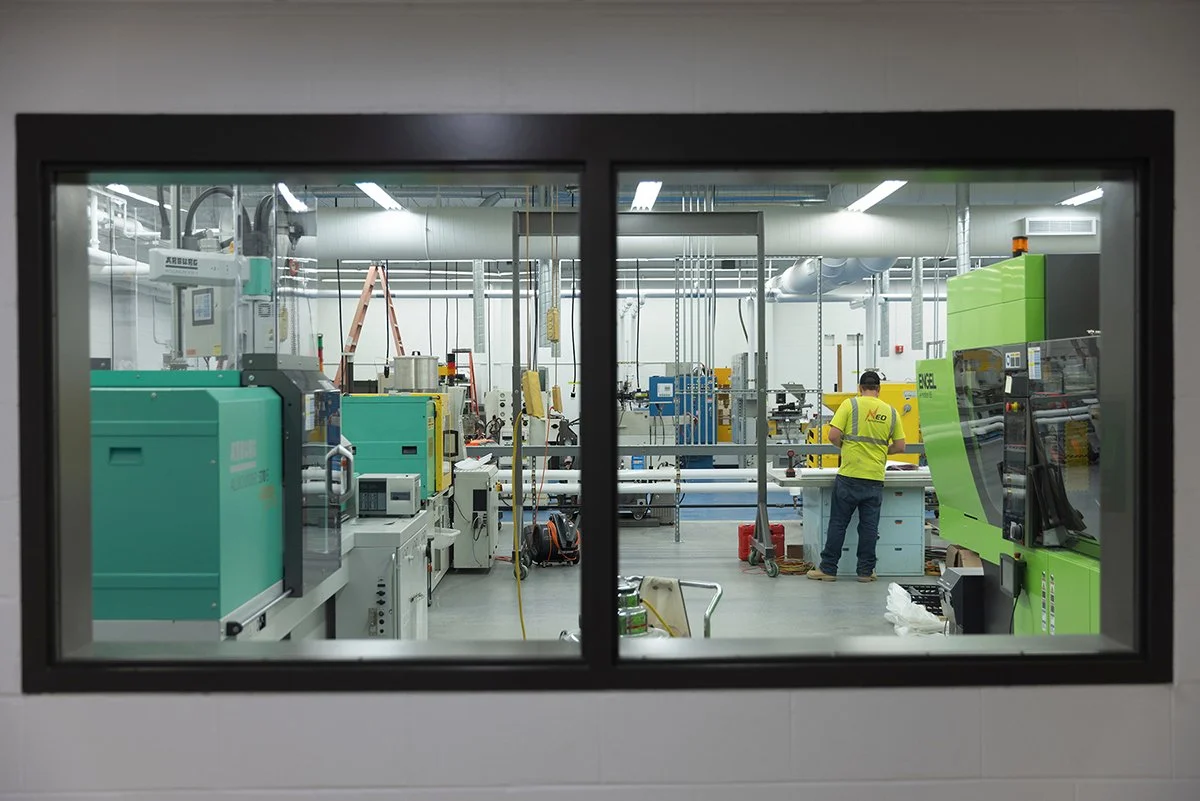
New hallway windows allow passers-by to view what students are working on in the new Plastics Engineering Lab. Image: Courtesy of University of Wisconsin-Stout
The University of Wisconsin-Stout has completed a $7.4 million renovation of some of its most heavily utilized laboratories, bringing state-of-the-art technology, improved safety, and greater instructional flexibility to the Construction Lab, the Woods Lab, and adjacent portions of the Jarvis Hall Technology Wing. The project, completed over two phases during consecutive summers, reflects UW-Stout’s polytechnic approach to education, where hands-on experience is integral to learning.
Phase 1, completed in summer 2024, addressed 17,000 square feet of lab space, including the Plastics Engineering Lab and the Engineering Technology Research and Development Lab. Phase 2, completed in 2025, encompassed nearly 25,000 square feet of Jarvis Tech, focusing on the Construction Lab, Woods Lab, and adjacent support spaces. The phased approach allowed the university to maintain active teaching and research operations, while also accommodating summer camps and conferences that rely on the labs.
“One of the biggest challenges was coordinating the construction schedule to avoid disruption to active teaching schedules, camps, and conferences,” says Justin Utpadel, senior facilities officer at UW-Stout. “Our phased approach spanned two summers, minimizing disruption during our academic year. Careful planning and communication ensured that essential lab functions were available when necessary.”
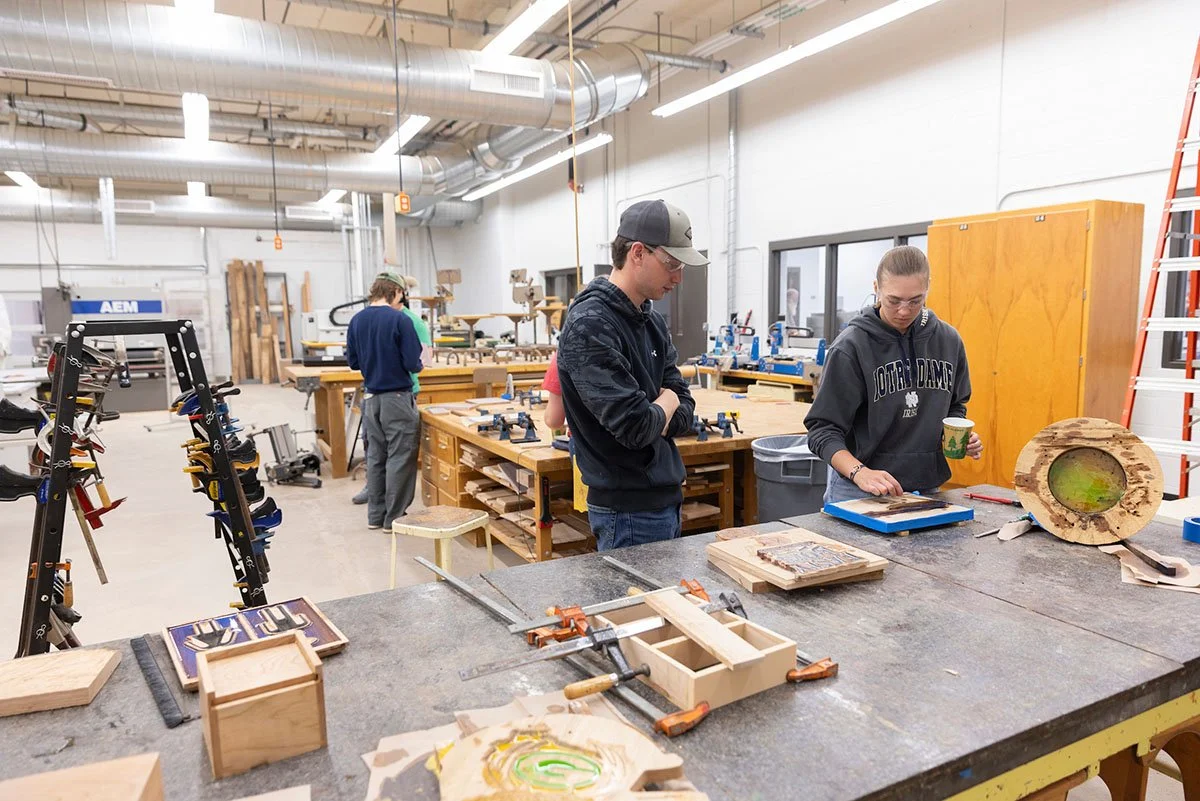
Students collaborate in the newly renovated Woods Lab. Image: Courtesy of University of Wisconsin-Stout
The project team included BWBR (architect), IMEG Corporation (engineer), RJ Jurowski Construction (general contractor), KPH Environmental Corporation (ACM removal), Hovland’s Inc., (HVAC), Hooper Corp. (plumbing), Neo Electrical Solutions (electrical), and Summit Fire Protection (fire protection). Several second-tier subs also played a key role in the project, Utpadel notes.
Stakeholder engagement drives design decisions
A key element of the renovation was active engagement with faculty, staff, and students. Their insights were critical in identifying deficiencies, instructional limitations, and operational inefficiencies. Input from these stakeholders guided decisions on lab layouts, equipment integration, and the flexibility of instructional spaces. Patterns of student use also informed the design, ensuring that the labs would support hands-on learning and meet evolving instructional needs.
“Faculty, staff, and students played a key role in shaping the renovation scope and priorities, helping identify deficiencies in lab infrastructure and instructional limitations, which then helped ensure the upgrades aligned with instructional needs and lab workflows,” Utpadel says. “Their input helped guide decisions on layout, equipment integration, and instructional flexibility. Student use patterns also informed design choices and highlighted the need for modernized equipment and safety enhancements.”
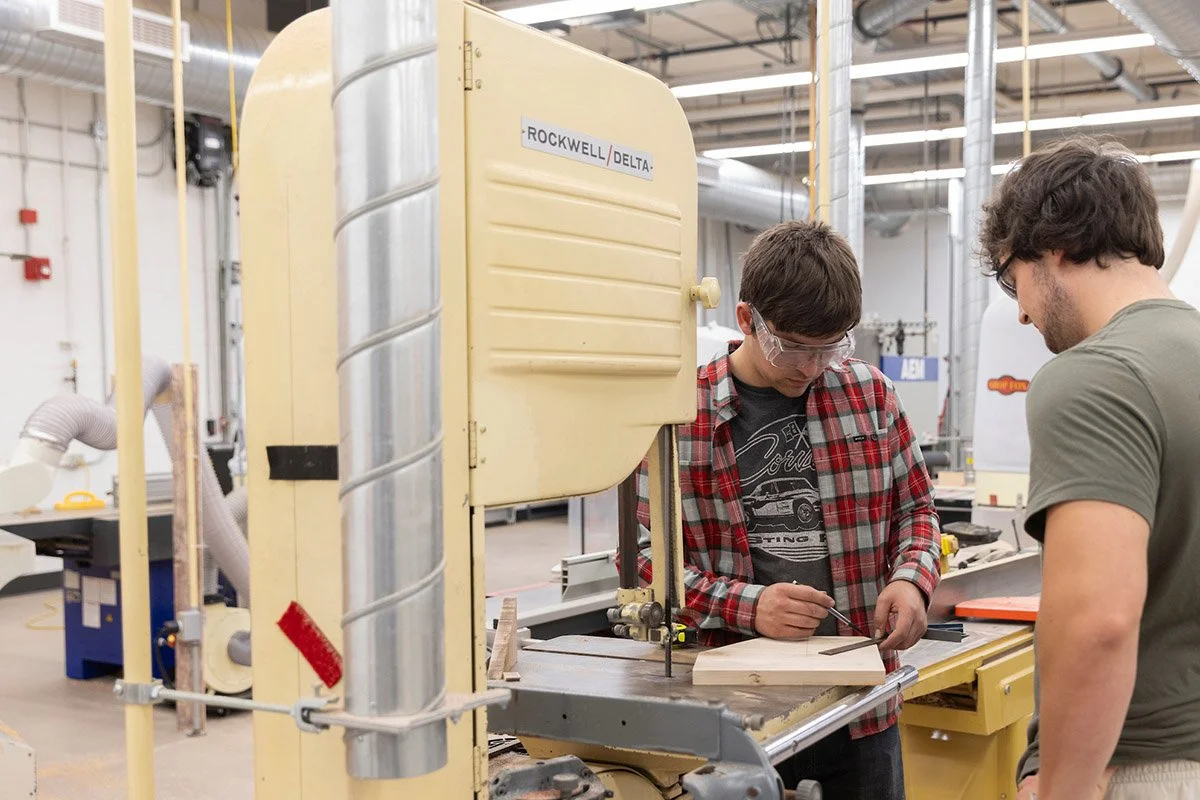
Students work in the Woods Lab inside Jarvis Hall Technology Wing, one of two recently remodeled labs in the building. Image: Courtesy of University of Wisconsin-Stout
The renovation addressed both aesthetic and technical improvements. New windows along the hallway and large overhead roll-up doors improved visibility, accessibility, and the flow of students and instructors between labs and adjacent classrooms. These changes also enable labs to accommodate modern equipment and foster collaborative learning.
Upgrades to critical infrastructure included the replacement of two air handling units, which improved HVAC efficiency and control, and the installation of a modern dust-collection system and three new exhaust fans in the Construction Lab. These systems improve air quality and environmental safety, particularly during high-use periods.
“Air handling units were replaced to improve efficiency, air quality, and control. The original dust collection systems were failing and lacked fire protection. Labs received modern dust-collection systems enhancing air quality and environmental safety, especially during high-use periods,” Utpadel says. “These upgrades support a healthier and more compliant lab environment with increased operational reliability.”
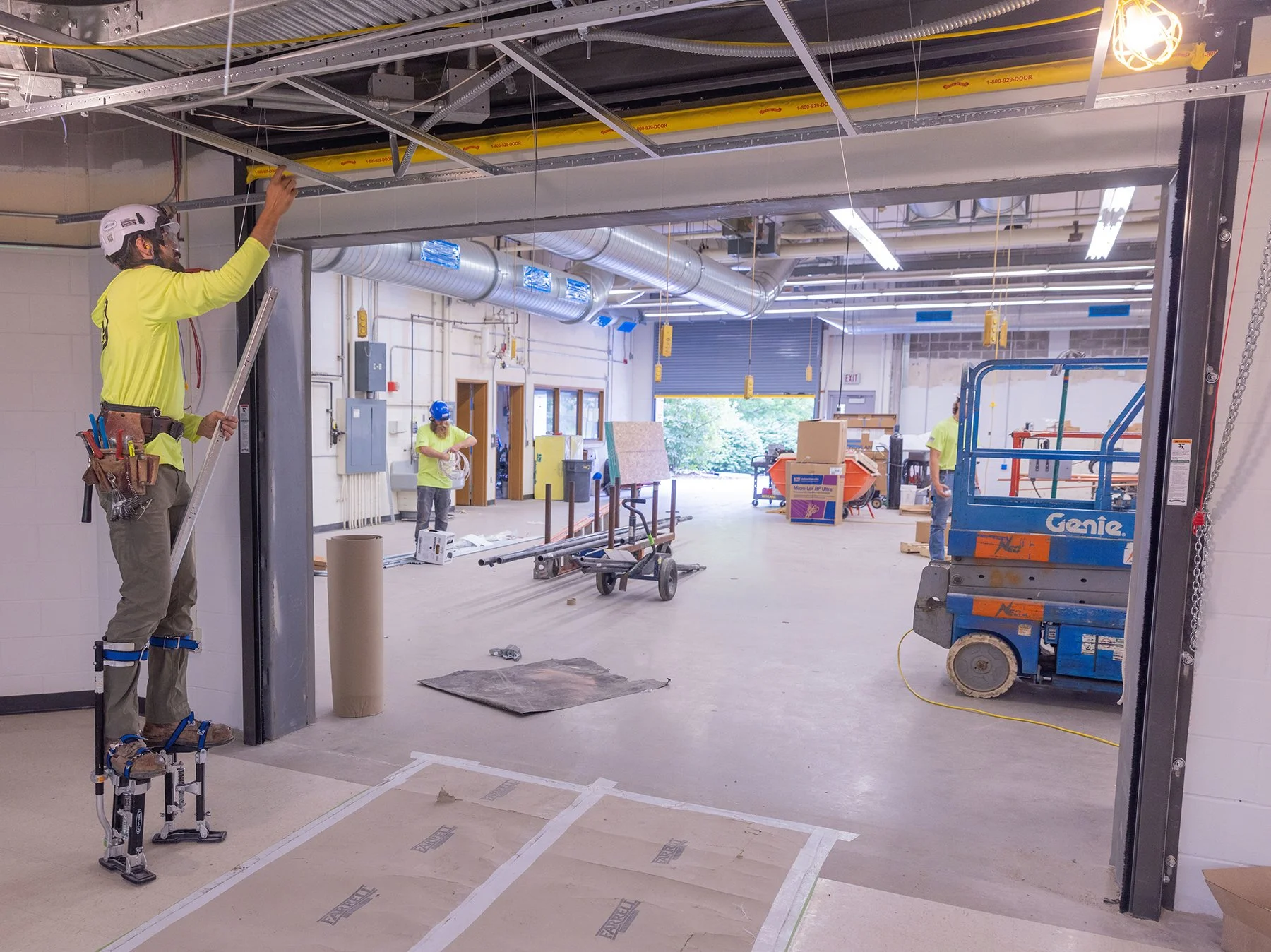
The renovation includes new, overhead garage doors in the labs. Image: Courtesy of University of Wisconsin-Stout
Other infrastructure improvements included a fully integrated sprinkler system covering the entire first floor, upgraded fire alarm notification systems, and renovations to existing restrooms with the addition of a single-occupant facility. Secure storage areas were created to safely house surveying equipment and other instructional tools.
Designing for flexibility and future technologies
A central goal of the renovation was to create adaptable spaces capable of accommodating evolving technologies and instructional needs. Lab layouts were reconfigured to maximize efficiency, polished concrete replaced worn parquet floors, and overhead doors and windows enhanced operational flexibility.
“The renovation addressed deferred maintenance and prioritized adaptability and flexibility by installing overhead doors to accommodate larger equipment, reconfiguring lab layouts, and upgrading infrastructure. Polished concrete flooring, improved environmental controls, and the introduction of new, large, overhead doors allow the labs to adapt to future equipment ensuring long-term viability of the labs for evolving academic and industry needs,” Utpadel said.
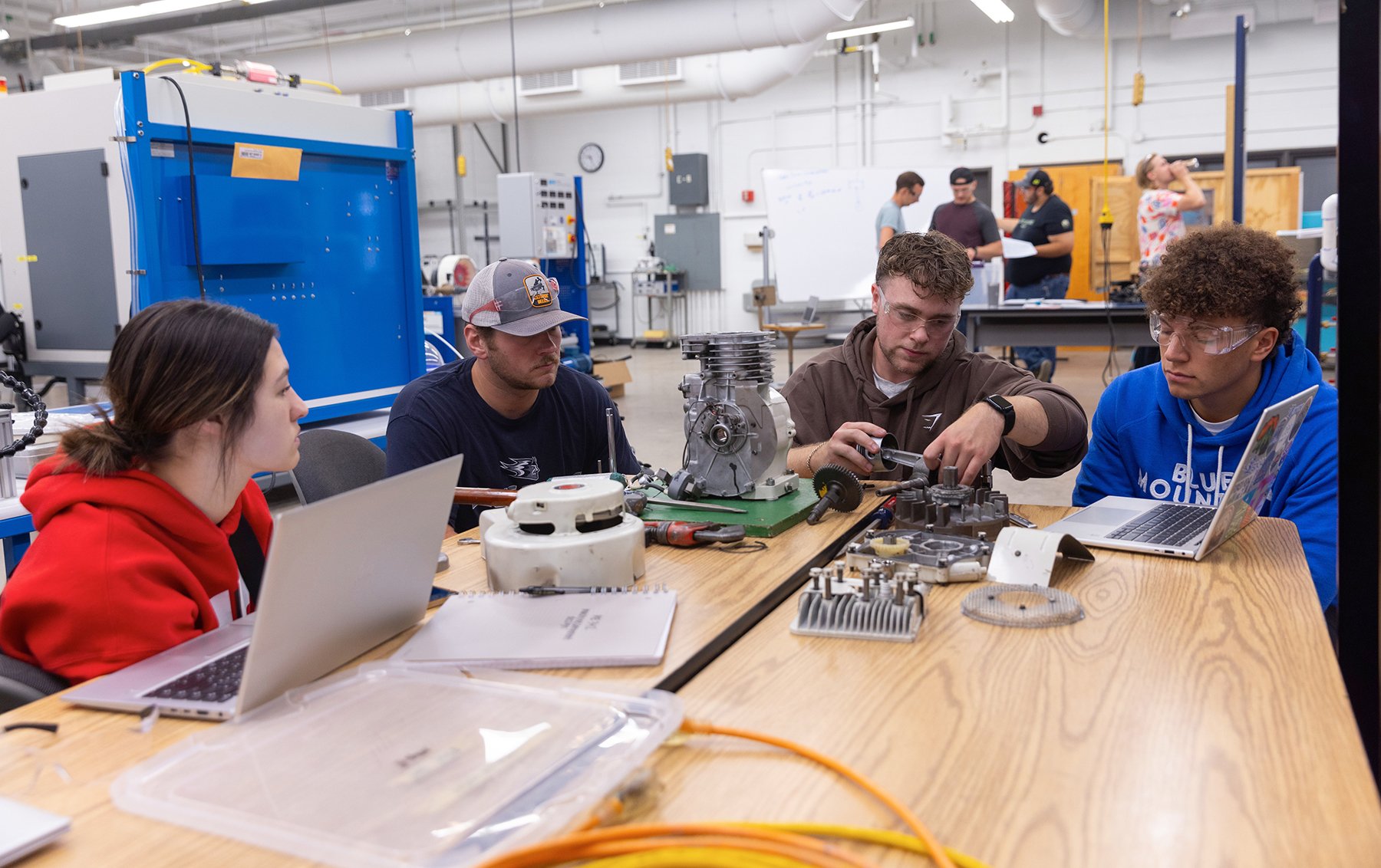
Mechanical engineering students work on an engine project in the renovated Engineering Technology Research and Development Lab. Image: Courtesy of University of Wisconsin-Stout
The renovation also created space for cutting-edge technology. A new room adjacent to the Woods Lab will house a $1 million Amatrol Smart Factory Enterprise system, a fully integrated automated manufacturing setup including processes such as inventory control, inspection, sorting, assembly, testing, CNC machining, and storage. The system was made possible through a $3.1 million donation from the Ronald and Joyce Wanek Foundation and is designed to give students practical experience in modern production systems.
Similarly, the Construction Lab was prepared to accommodate a 3D concrete printer funded by a $647,000 grant from the Wisconsin Economic Development Corp. These installations highlight UW-Stout’s commitment to keeping lab infrastructure current with emerging industry practices.
“The renovation largely focused on building infrastructure which created flexible and adaptable spaces that could accommodate new technologies, such as the Amatrol Smart Factory Enterprise system, purchased with a grant from the Wanek Foundation, and a 3D concrete printer, purchased with a grant from the Wisconsin Economic Development Corp. Both grants were awarded towards the end of the renovation, but all of this new state-of-the-art equipment could be installed while preserving and enhancing existing infrastructure and laboratory offerings,” Utpadel says. “This balance ensures continuity in instruction while enabling innovation.”
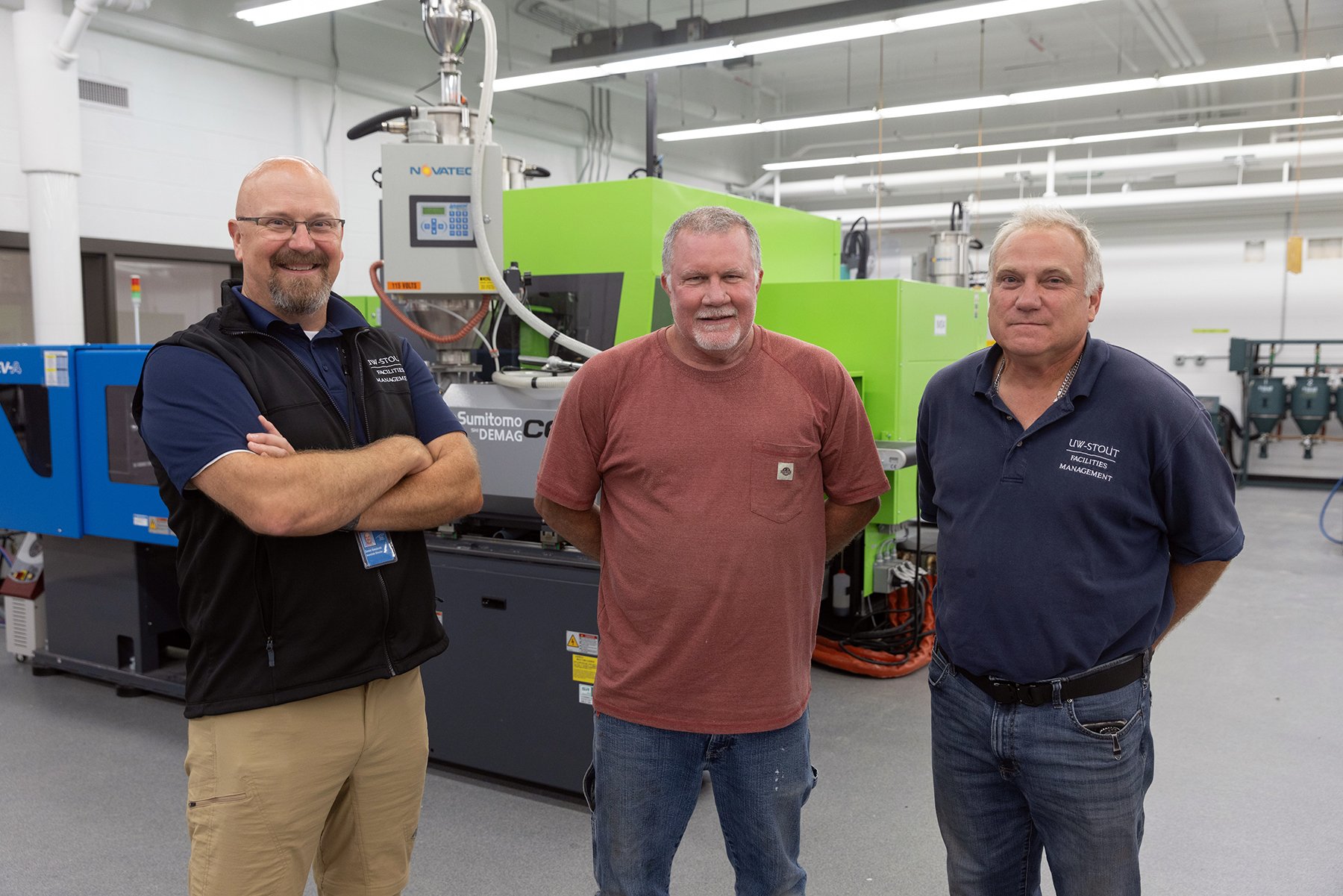
Staff members Zenon Smolarek, John Buss and Chad Schlough (pictured from left while standing in the plastics lab) were instrumental in the renovation project. Image: Courtesy of University of Wisconsin-Stout
These technologies immerse students in real-world manufacturing and construction scenarios, enhancing their hands-on experience and preparing them for careers in evolving industries. Students can now engage directly with automated production systems, advanced fabrication techniques, and modern construction technologies within a controlled and safe learning environment.
The combined effects of increased visibility, improved access, and flexible layouts foster a more collaborative learning environment. Students and instructors benefit from streamlined workflows, reduced setup times, and improved integration between classroom lectures and laboratory exercises.
“New windows and overhead doors increase visibility and accessibility, fostering a more open and collaborative learning environment. These features also streamline movement between labs and adjacent classrooms, reduce setup time, and enhance workflow efficiency and reinforcing the integration of lecture and lab experiences,” Utpadel said.
Lessons for future lab renovations
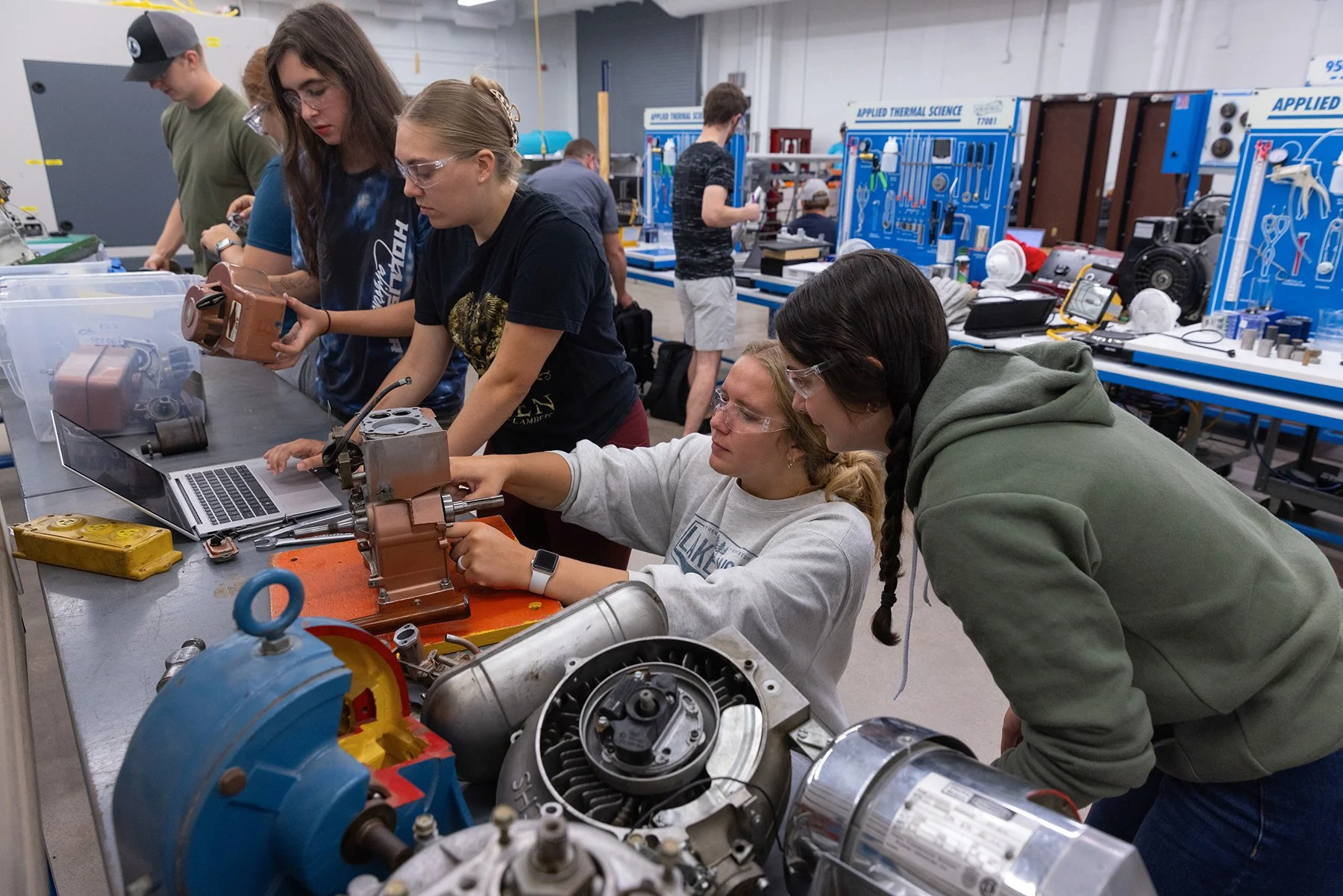
Mechanical engineering students work on an engine project in the renovated Engineering Technology Research and Development Lab. Image: Courtesy of University of Wisconsin-Stout
The UW-Stout renovation provides a case study in balancing active academic operations, stakeholder engagement, infrastructure modernization, and the integration of new technologies. Key takeaways for lab planners and architects include the value of phased construction, active collaboration with faculty and students, planning for adaptability, and leveraging external partnerships to fund advanced equipment.
“Key takeaways include the importance of stakeholder engagement, phased construction planning, addressing deferred maintenance, and designing for adaptability. Integrating instructional needs with future-ready infrastructure ensures long-term value. The project also highlights the impact of strategic partnerships and external funding in advancing educational environments,” Utpadel says.
The Jarvis Tech lab renovations demonstrate how thoughtful planning, updated infrastructure, and the integration of new technologies can support instructional needs, improve safety, and provide adaptable laboratory spaces, offering insights that may inform similar projects at other universities and applied learning institutions.