
How Eli Lilly Is Shaping the Design of an Academic Pharma Lab
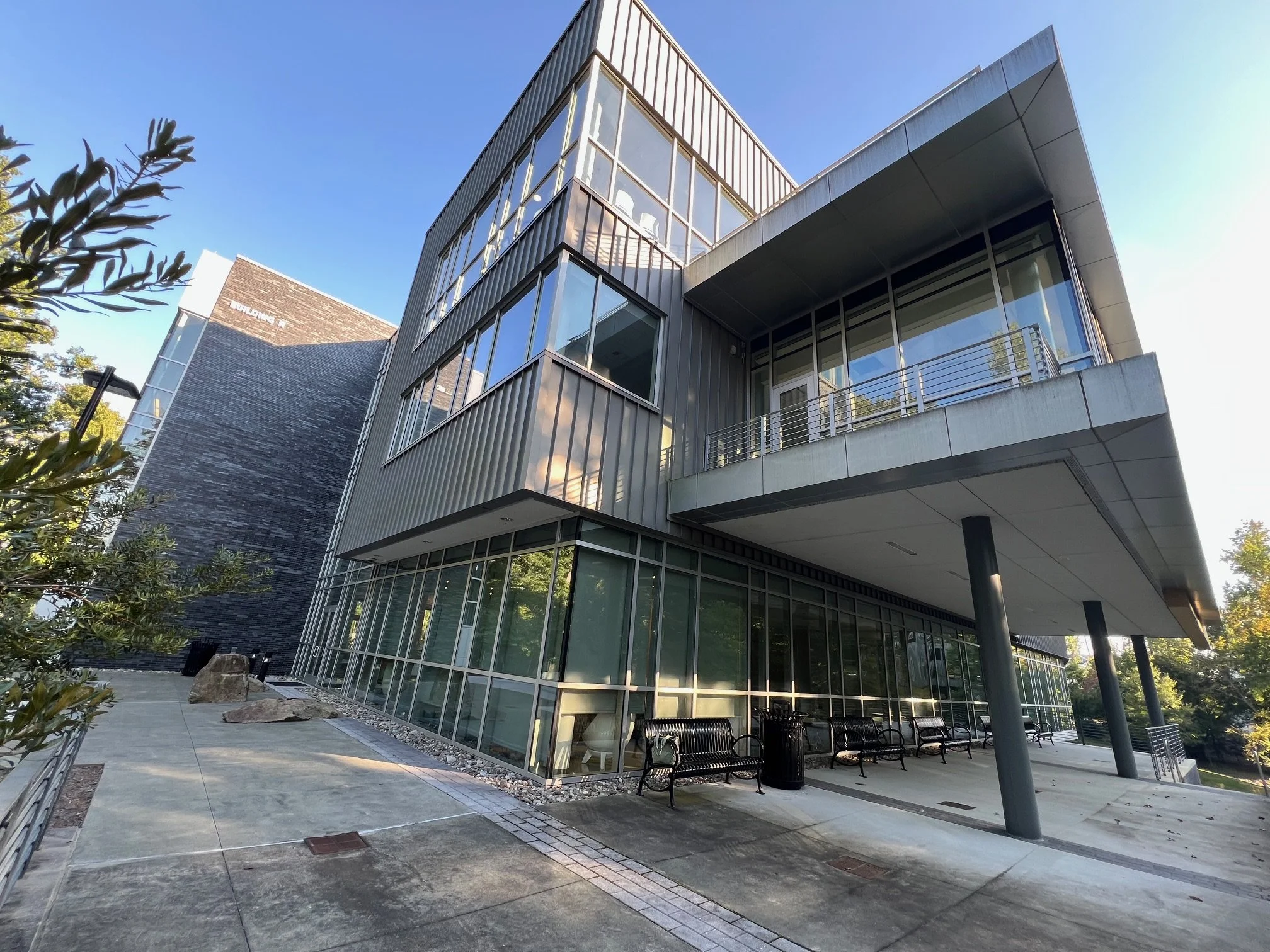
Lehigh Carbon Community College worked closely with its mentor institution, Wake Technical Community College (pictured), home of the Lilly Science and Technology Center, to develop its own lab spaces. Image: Robyn Davies
As pharmaceutical manufacturing expands across the US, academic institutions are under increasing pressure to deliver workforce-ready graduates who can operate in highly regulated, technologically advanced environments.
A new partnership between Lehigh Carbon Community College (LCCC) and Eli Lilly and Company represents a notable shift in how teaching laboratories are conceived—not as abstract instructional environments, but as direct simulations of modern pharmaceutical production facilities.
Supported by a $5 million state investment tied to Lilly’s $3.5 billion manufacturing campus in Pennsylvania’s Lehigh Valley, LCCC is renovating an existing building into a specialized biotechnology and pharmaceutical training hub.
The LCCC team is using the Eli Lilly-sponsored labs at Wake Technical Community College (Wake Tech) as a blueprint for upcoming renovations at its Schnecksville campus. These new biotechnology spaces are specifically designed to train students for roles at the future Lilly plant in Upper Macungie Township.
The project offers valuable insight into how academic laboratory design is evolving to meet real-world manufacturing requirements, especially when driven by close collaboration with industry partners.
Unlike traditional academic labs, where flexibility and generalized teaching functions dominate planning decisions, LCCC’s renovation is guided by a singular imperative: replicating pharmaceutical manufacturing conditions as faithfully as possible.
“Our approach to the design of our new laboratory spaces is to consider our industry partner’s needs as a fundamental design constraint,” says Andrew King, interim dean of healthcare sciences, aviation, mathematics and science. “We’re going to include industry relevant equipment and technology while also maintaining our student-centered focus.”
This shift from education-first design to industry-anchored simulation affects everything from equipment selection to mechanical systems and spatial layout. Lilly’s operational standards directly influence the infrastructure, ensuring students are trained on the same types of systems they will encounter in professional environments.
“Lilly has been an excellent partner and guide in modernizing and expanding our science laboratories,” King notes. “As our primary industry partner in the pharmaceutical manufacturing space, their needs are a major driver in our equipment selection choice. This allows us to provide gold-standard biotechnology curriculum while providing our students with experience directly relevant to Lilly’s business operations.”
Cleanroom simulation as a core design feature
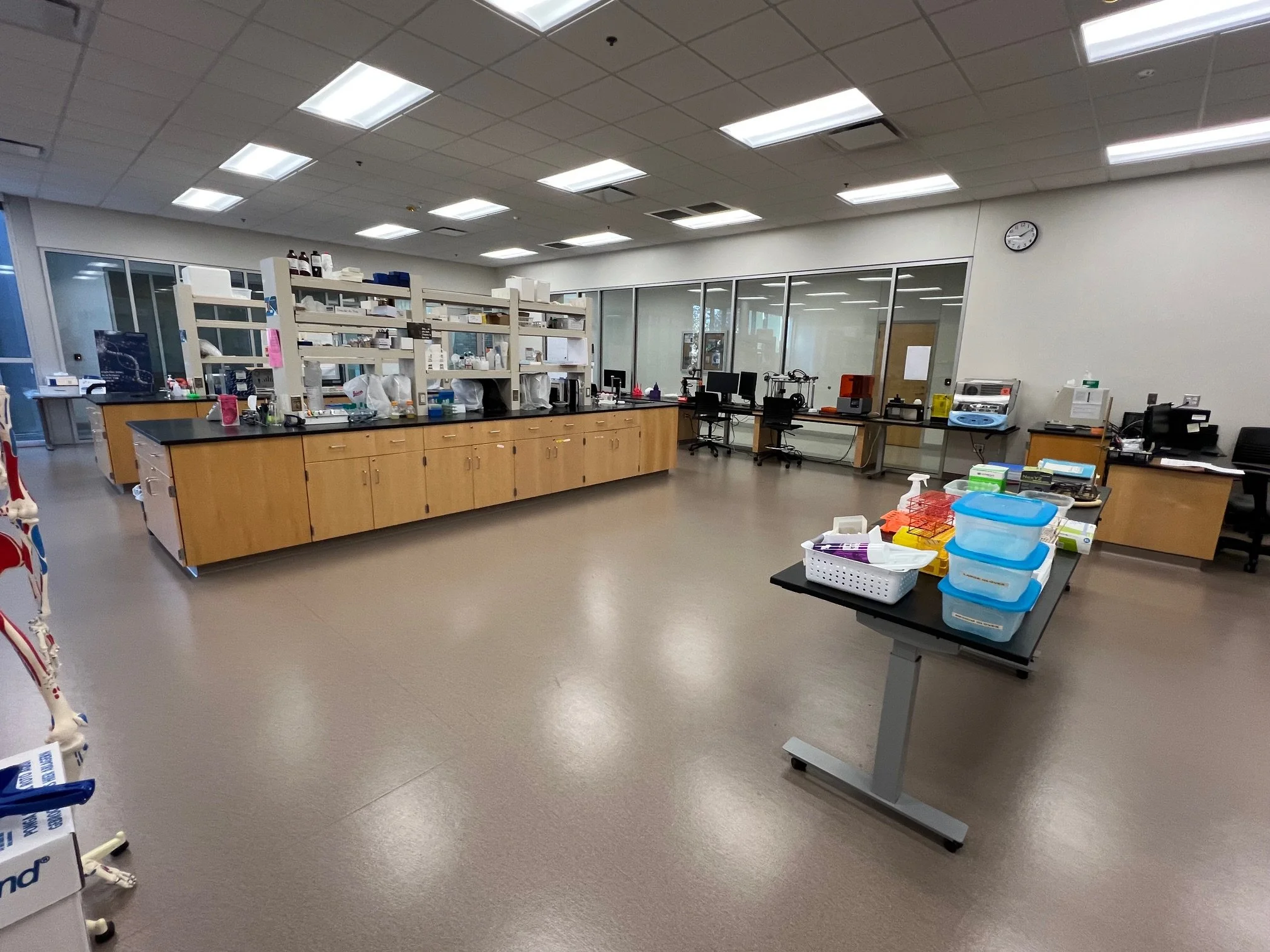
The LCCC team visited the Eli Lilly-sponsored science labs at Wake Tech in Raleigh (pictured), as these facilities serve as the blueprint for LCCC’s own biotechnology renovations. Image: Robyn Davies
Among the most technically demanding aspects of the project is the integration of a simulated cleanroom designed to mirror sterile pharmaceutical production environments.
“One of our laboratories is going to serve as a cleanroom simulator, and that necessitates adherence to ISO 5 standards in addition to other design concerns,” King says.
Achieving ISO 5-equivalent conditions within an academic building requires extensive mechanical system upgrades, particularly HVAC improvements to control airflow, filtration, pressurization, and particulate counts.
“The key design elements for our laboratory expansions are updating the electrical, plumbing, and HVAC,” King says. “Everything flows from those elements and this upgrade will allow an academic laboratory to comply with ISO 5 requirements.”
These upgrades illustrate a critical lesson for renovation projects: retrofitting existing facilities to meet pharmaceutical standards often hinges on hidden infrastructure constraints. Mechanical system capacity, duct routing, and spatial clearances must all be carefully evaluated early in design.
Beyond the cleanroom itself, LCCC is constructing a dedicated aseptic fill training suite, which introduces additional containment and environmental control requirements.
“Our dedicated aseptic training suite is going to require thorough sealing and HVAC enhancement to accurately simulate an environment with a sterile fill line,” King says.
This emphasis on fill-finish simulation reflects the reality that aseptic processing remains one of the most critical (and technically demanding) steps in pharmaceutical manufacturing.
Supporting realistic workflows through specialized labs
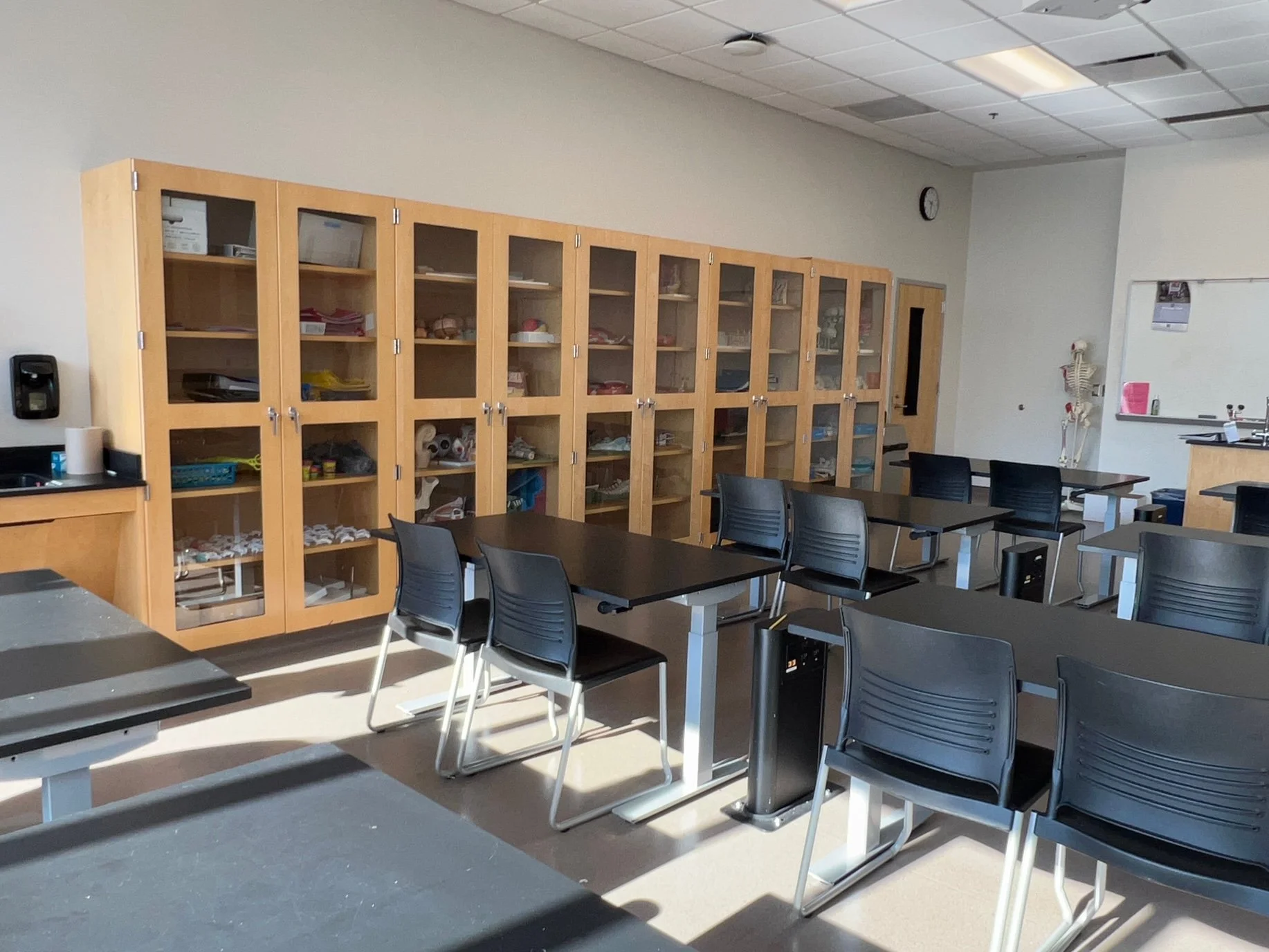
A look at the Wake Tech labs inspiring LCCC’s new biotech training spaces. This renovation will bridge the gap between the Schnecksville campus and the new Lilly plant in Upper Macungie Township. Image: Robyn Davies
The facility will include four distinct laboratory environments, each designed to replicate a specific stage of pharmaceutical production:
A foundational biotechnology laboratory for core skills
An advanced biotechnology lab with integrated cleanroom simulation
An automation laboratory replicating logistics and packaging operations
A dedicated aseptic fill laboratory simulating sterile drug production
The aseptic fill laboratory is the “crown jewel” of the facility, says King. “[This is] where our students are going to learn how to load the active pharmaceutical ingredient into their delivery systems.”
These specialized environments move beyond traditional academic lab layouts by emphasizing workflow continuity and process realism. For example, sterile preparation and storage areas are integrated directly into laboratory zones to replicate real manufacturing procedures. This minimizes workflow interruptions while reinforcing proper aseptic protocols—a design strategy commonly seen in pharmaceutical production but less typical in academic settings.
Addressing acoustic, logistical, and operational challenges
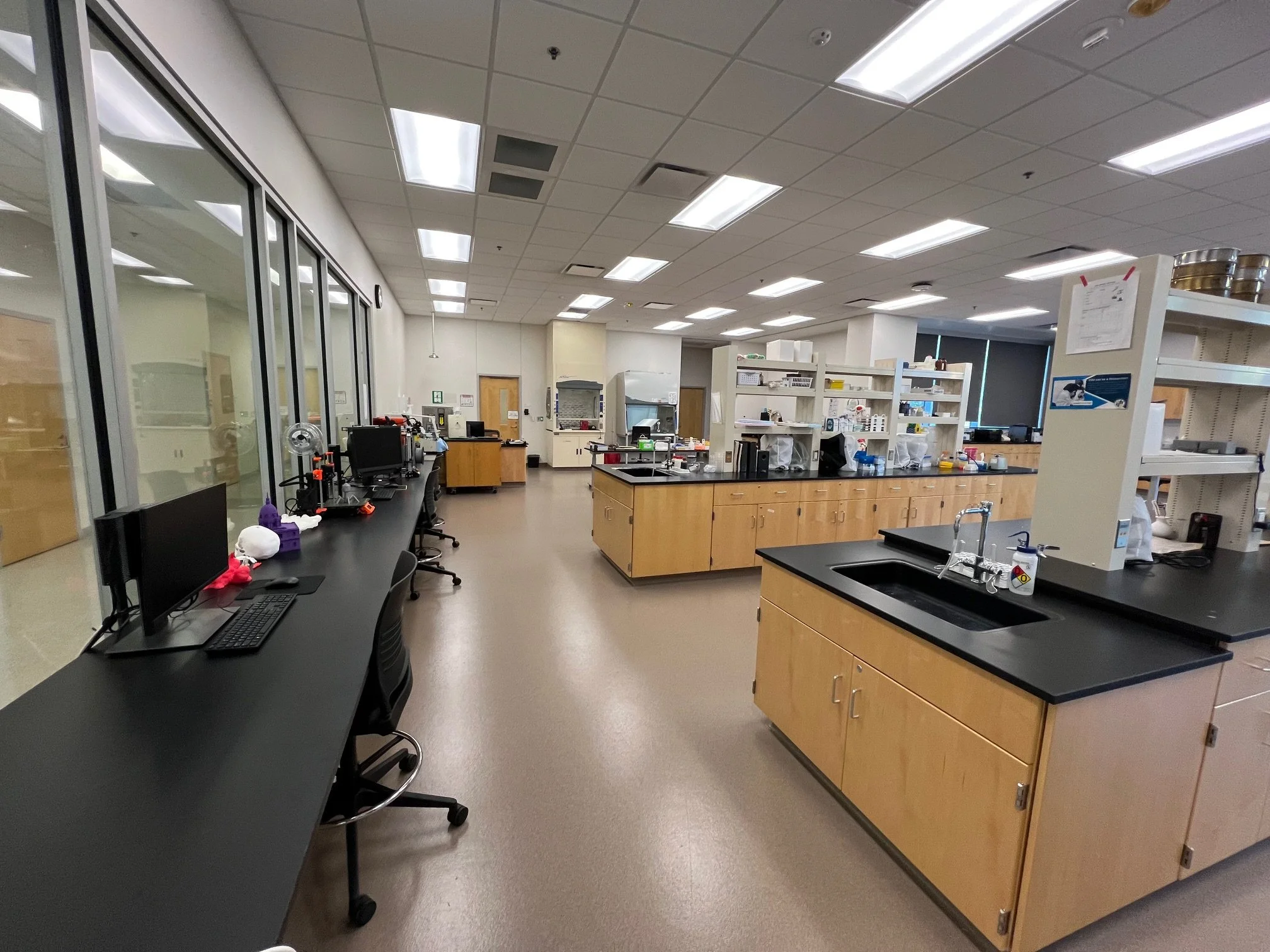
LCCC is drawing inspiration from Wake Tech’s Eli Lilly science labs to design new biotech training facilities in Schnecksville. Image: Robyn Davies
In addition to containment and airflow requirements, planners had to account for operational realities such as equipment noise and workflow logistics.
“Our simulated packaging line is going to require acoustic mitigation to allow the adjacent classroom spaces to function while industry relevant logistics equipment is operating,” King says.
This reflects a key planning consideration for mixed-use training facilities: industrial simulation environments can introduce mechanical vibration and sound levels incompatible with traditional academic spaces. Acoustic isolation, structural reinforcement, and zoning become essential.
LCCC is also centralizing all biotechnology laboratories within a single wing, allowing the school to centralize all materials related to its biotechnology program—a departure from distributed academic lab layouts. This co-location strategy improves operational efficiency, simplifies material management, and encourages collaboration between workforce trainees and academic students.
One of the most consistent lessons emerging from the project is the critical importance of utility infrastructure.
“Our major challenge is cost estimation and updating utilities in an older building,” says Dr. Ann Bieber, president of Lehigh Carbon Community College. “Many contractors cannot give us an accurate estimate of the costs associated with upgrading the utilities we will need to support our laboratories.”
Pharmaceutical training labs impose far greater mechanical and electrical demands than standard teaching labs, requiring higher air change rates, specialized filtration, stable power supply, and precise environmental control. This reality reinforces a broader principle for lab renovation projects: utility upgrades often represent the most complex—and costly—aspect of transforming legacy facilities into modern training environments.
Designing for long-term workforce development
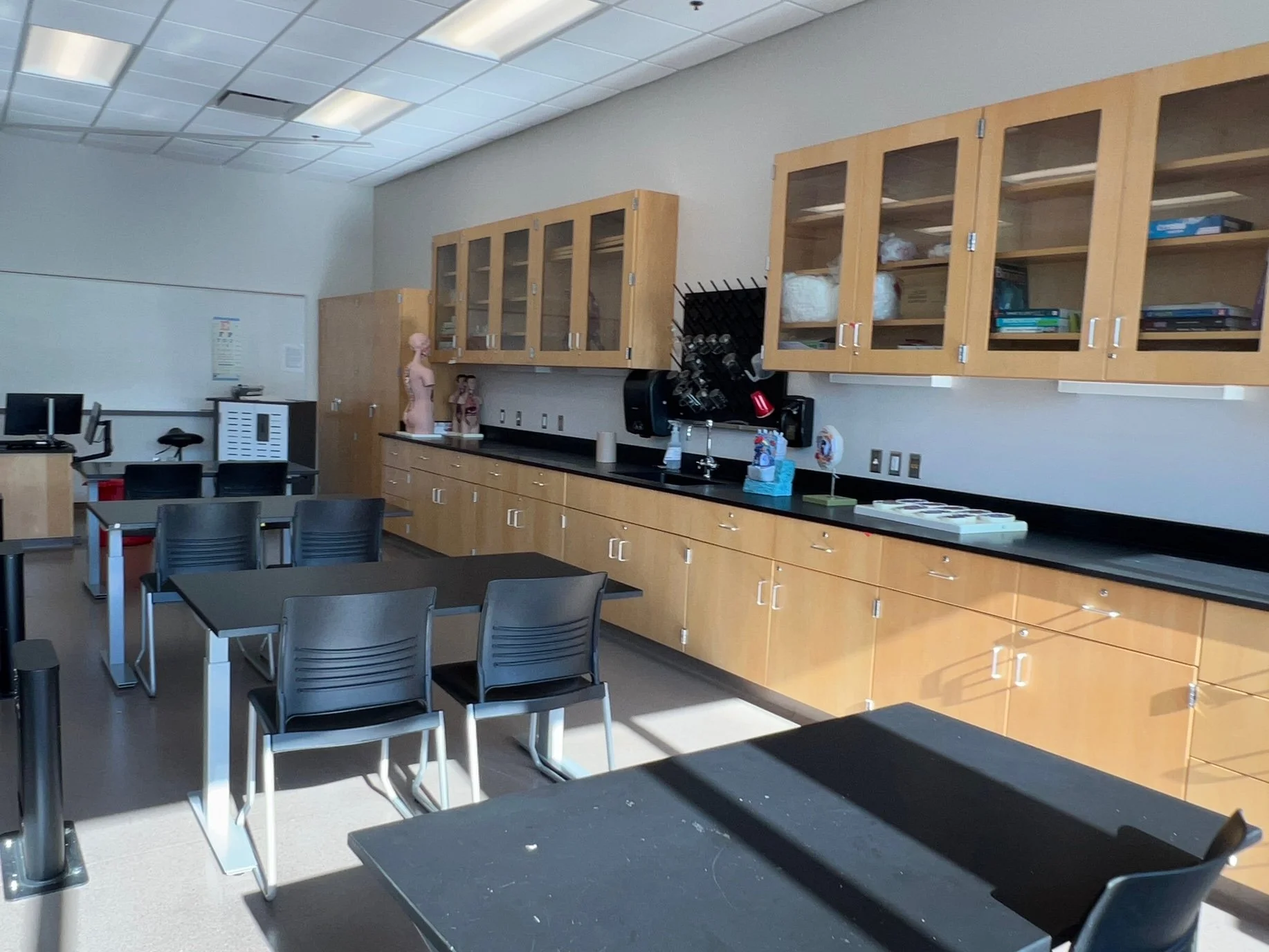
LCCC is modeling its new biotech labs after Wake Tech’s Eli Lilly-sponsored facilities. Image: Robyn Davies
Despite the technical complexity, LCCC’s design philosophy emphasizes accessibility and simplicity. This approach ensures that advanced infrastructure does not create barriers for learners while maintaining adaptability for evolving pharmaceutical processes.
“Our design philosophy embraces Universal Design and Simplicity,” Bieber says. “These design philosophies will allow us to provide a quality career-relevant educational experience to all students while insuring the sustainability of the programs supported by these laboratories.”
The facility’s ultimate goal extends beyond technical training—it is designed to serve as a regional workforce engine.
“The approach we’ve taken at LCCC is, ‘If you build it, then they will come,’” Bieber says. “By preparing our laboratories, students, and curriculum for a Fortune 100 company, we are creating training facilities that will prepare the Lehigh Valley to become a training hotspot for biotechnology workers.”
Bieber continues, “We envision that employers from will find the skilled workforce we produce an attractive feature of Pennsylvania, and as a result decide to locate in this region. Our community will benefit from the social mobility promoting educational opportunities and future jobs that these facilities will assist in attracting to our region.”
A new model for academic-industry lab design
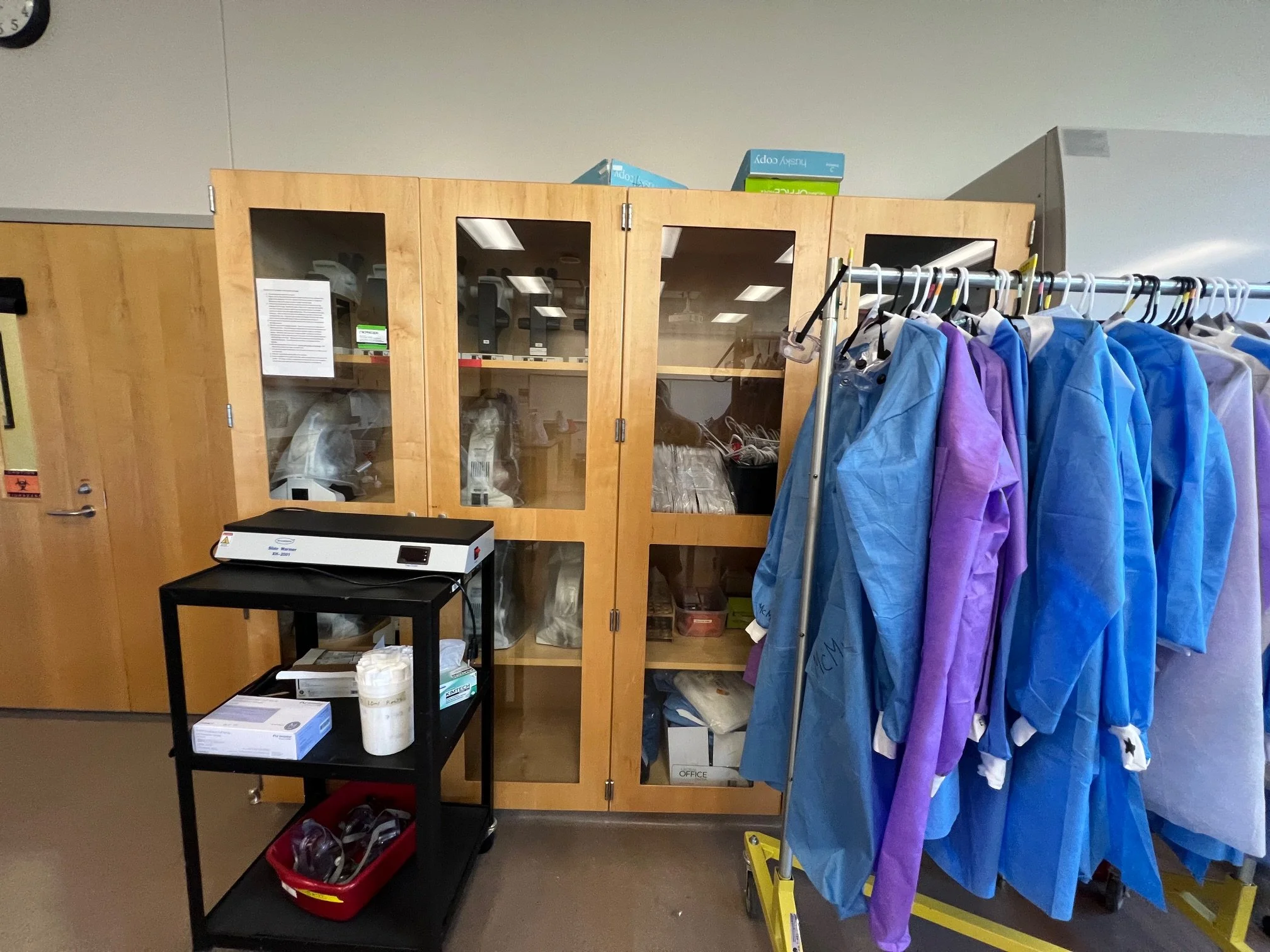
A look inside the Wake Tech laboratories that are serving as the model for LCCC’s new biotech spaces. This Eli Lilly-sponsored environment replicates real-world pharmaceutical manufacturing to better align student training with industry needs. Image: Robyn Davies
The LCCC-Lilly partnership demonstrates how academic laboratory design is evolving in response to workforce demands and industry collaboration. Rather than designing generalized teaching spaces, institutions are increasingly creating highly specialized environments that mirror industrial workflows, regulatory requirements, and operational conditions. Cleanroom simulation, integrated logistics training, centralized lab zoning, and utility-driven infrastructure planning are becoming essential components of modern training facilities.
As pharmaceutical manufacturing continues to expand, partnerships like this may become the blueprint for how academic institutions design laboratories—not only to teach science, but to replicate the environments where science becomes industry. Perhaps most importantly, the project highlights the value of designing with precision and foresight.
“Our general approach is ‘measure twice, cut once,’” says King. “We want to get it right the first time and exceed both our students’ and industry partner’s expectations.”