
Designing for Translation: Lessons from the Lang Walker AO Medical Research Building
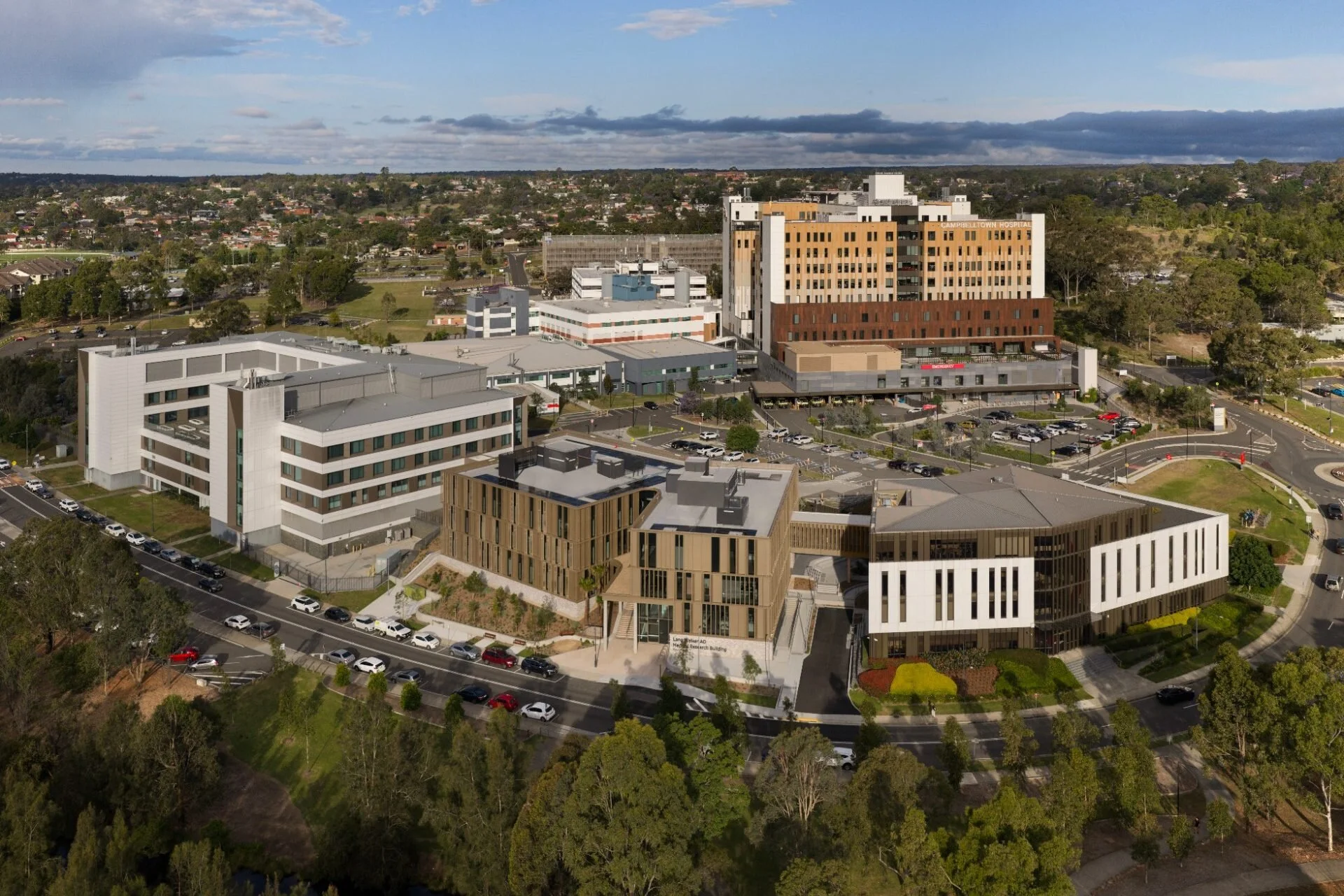
The Lang Walker AO Medical Research Building at Campbelltown Hospital brings together research, clinical care, and community access in a $50 million facility designed to accelerate translational health outcomes for southwestern Sydney’s diverse and rapidly growing population. Image: Tom Roe
When the Lang Walker AO Medical Research Building officially opened on the Campbelltown Hospital campus in southwestern Sydney, Australia, it marked more than the completion of a $50 million facility. It represented a deliberate shift in how applied medical research environments are conceived—one that places community access, clinical translation, and long-term flexibility ahead of traditional laboratory typologies.
Located within the Campbelltown Health and Education Precinct, the new multistory building brings together UNSW Sydney, Western Sydney University, South Western Sydney Local Health District, and the Ingham Institute for Applied Medical Research.
Its mission is explicitly local and unapologetically ambitious: to improve health outcomes for a fast-growing, culturally diverse region facing disproportionate burdens of chronic disease, mental illness, and preventable conditions.
The project team included Walker Corporation (project manager), BVN (architecture firm), and Richard Crookes Construction (construction firm).
Starting with a research strategy, not a floor plan
One of the project’s most consequential decisions occurred before schematic design ever began. As Katie Quinn Gilbert, executive director of research partnerships at the Ingham Institute, explains, the Functional Design Brief and Research Strategy deliberately framed the facility as “a people story, not a building story.” That framing positioned architecture as an enabler of outcomes rather than the primary driver.
Gilbert emphasizes that this shift was intentional and strategic. Rather than defaulting to a wet-lab–heavy institute, the partners defined the Lang Walker building as a predominantly clinical and dry research facility, aligned with its translational focus on chronic and complex conditions such as diabetes, mental health, and addiction.
Only one space—the laboratory processing room—is classified as a Class 8 lab, with the rest of the building designated as Class 5. As Gilbert notes, this classification reinforces the building’s emphasis on outpatient clinical research rather than acute healthcare and reflects a deliberate move away from conventional lab-first models.
For planners, this approach illustrates how allowing research strategy to inform space typology can support more targeted, efficient, and adaptable solutions than relying on standard laboratory templates.
Making “closing the gap” literal
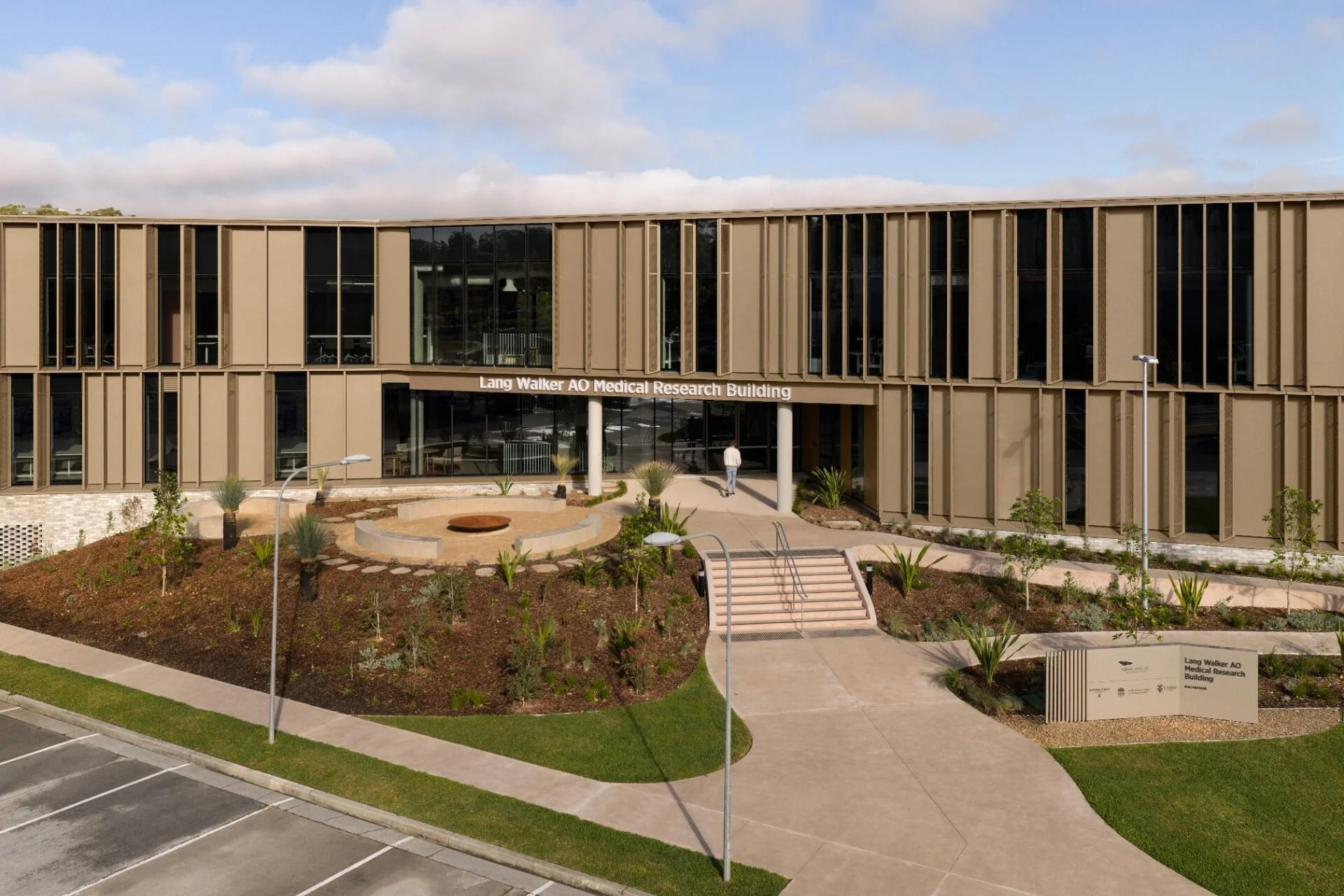
Physically integrated with Campbelltown Hospital and the Western Sydney University Macarthur Clinical School, the Lang Walker AO Medical Research Building embeds clinical research into everyday care through connected pathways and co-located clinical research clusters. Image: Tom Roe
A core ambition of the project was to reduce the distance—physical, procedural, and cultural—between clinical care and research participation. Rather than operate as a standalone institute, the Lang Walker building is physically stitched into Campbelltown Hospital (Block D) and the Western Sydney University Macarthur Clinical School through bridges and aligned floor levels.
Gilbert describes this as a deliberate effort to embed research “inside the care ecosystem,” extending the internal Hospital Street and creating a continuous movement spine from ward to clinic to research space. In practice, patients can move through consultation, testing, follow-up, and data capture within a single, coherent episode of care.
Architecturally, this intent is realised through three Clinical Research Clusters (CRCs), each designed to National Health Facility Guidelines standards and co-located with a central Research Assessment Zone (RAZ). According to Gilbert, the layout ensures that “what feels like a routine clinic visit is simultaneously a structured research encounter,” helping to normalize participation and embed research into everyday care.
Balancing collaboration and control
As a shared hub for clinicians, researchers, students, and partners, the building needed to promote interaction without compromising privacy, infection control, or biosafety. Gilbert points to the project’s five functional groupings—Shared Public, Dry Research, Clinical Research, Research Assessment, and Logistics/Support—as the organizing framework that made this balance possible.
Open-plan dry research floors with non-allocated desks, quiet rooms, incubator spaces, and maker areas encourage cross-disciplinary collaboration and industry engagement. Shared breakout spaces, meeting rooms, and tea points are deliberately positioned along circulation routes to create informal interaction zones without reinforcing departmental silos.
At the same time, Gilbert notes that each Clinical Research Cluster functions as a controlled clinical environment, complete with its own reception, waiting areas, consult and interview rooms, clean and dirty utilities, medication rooms, and amenities. Higher-risk functions—including lab processing, waste, and plant—are consolidated in defined zones and clearly separated from public and collaborative areas.
Adjacency planning as a flexibility tool
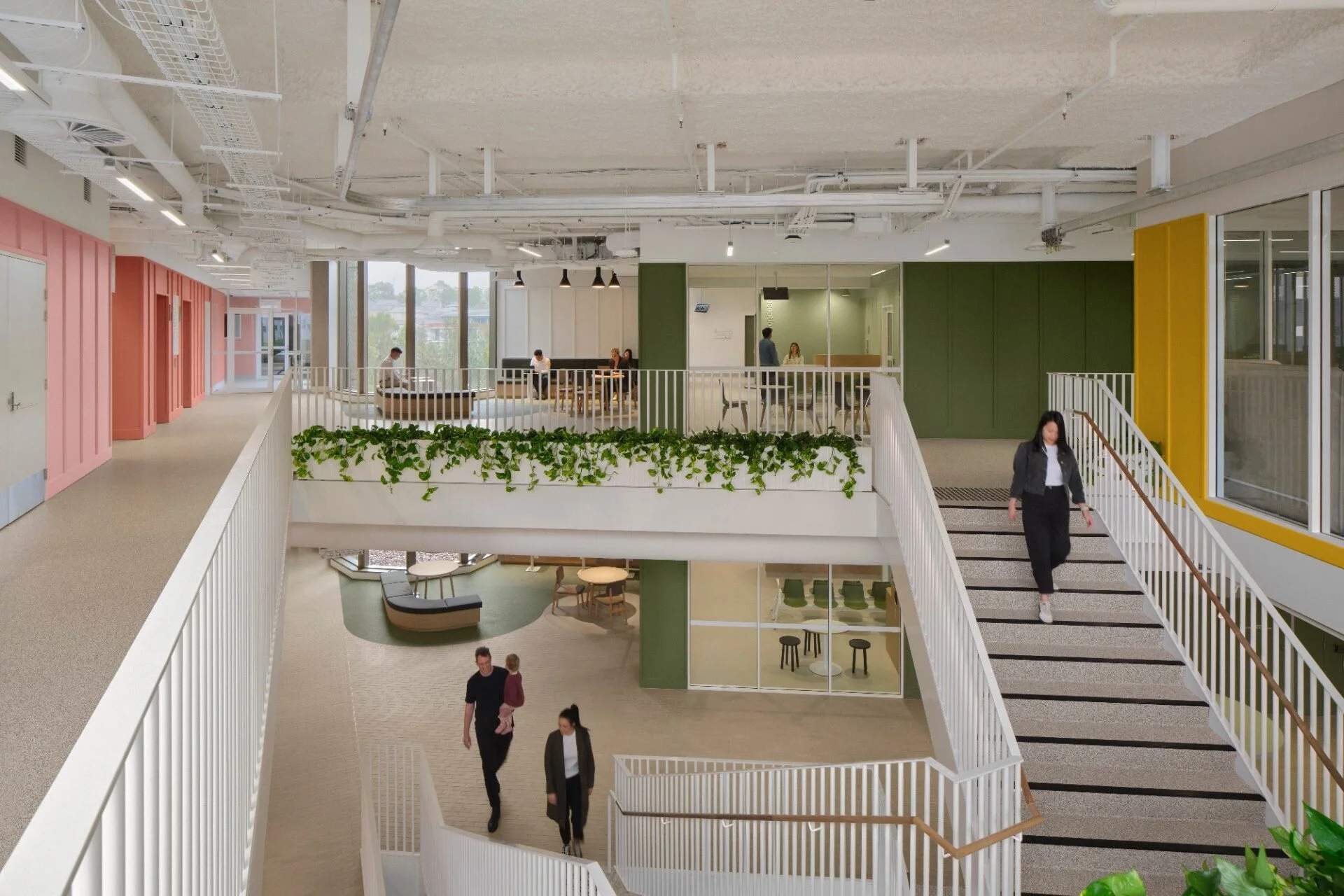
A block-and-stack planning strategy pairs clinical research clusters with dry research and a centrally located assessment zone, enabling efficient workflows today while supporting long-term flexibility as research and education needs evolve. Image: Tom Roe
The building’s block-and-stack organization underpins both operational efficiency and long-term adaptability. Logistics and plant are located at lower ground; clinical clusters and dry research are vertically paired across occupied levels; and the Research Assessment Zone is centrally positioned for equitable access from all clusters.
Gilbert explains that Cluster 1, focused on diabetes and obesity, was intentionally co-located with the RAZ to support frequent use of specialized testing spaces and planned adjacent to hospital pathology services. Education and community engagement spaces sit within the Shared Public zone near main circulation, allowing them to be easily reweighted between teaching, outreach, and industry use as priorities evolve.
This adjacency-driven approach, Gilbert emphasizes, highlights that flexibility is as much about relationships between spaces as it is about modularity within them.
Avoiding the “flash wet lab” trap
A defining principle of the project was the deliberate decision not to pursue what Gilbert explicitly describes as “a ‘flash wet lab building.’” Instead, the Lang Walker facility was conceived as “a flexible clinical/dry research hub” capable of supporting multiple programs over time.
To achieve this, the design avoids theme-dedicated floors and fixed departmental labs in favor of occupant-agnostic clinical clusters and open dry research floors. As Gilbert puts it, the building is “designed to be occupied by opportunity, not ownership,” allowing programs to expand, contract, or shift focus without major architectural intervention.
At the same time, Gilbert notes that the design responds to specific needs through subtle tailoring—bariatric-compliant layouts for diabetes and obesity research, child-friendly environments for pediatrics, and calmer, lower-stimulus spaces with double-exit interview rooms for Indigenous health and addiction research—without locking the building into fixed identities.
Designing with community and country
Community access is treated as a core program, not an amenity layer. Shared public spaces—including welcome areas, seminar rooms, a coffee kiosk, parenting rooms, and informal waiting zones—are clustered around the central atrium and multiple entry points.
Gilbert underscores that this approach reinforces the building’s role as both a research institute and a civic destination. Externally, landscaped spaces incorporate yarning circles, children’s play areas, and Indigenous planting, informed by ongoing engagement through BVN’s Designing with Country framework. These elements support culturally safe participation for Aboriginal and culturally and linguistically diverse communities—an essential foundation for trust and long-term research engagement.
Planning for what comes next
Future change is anticipated in both planning principles and infrastructure. Open-plan, non-allocated workspaces; theme-agnostic clinical clusters; and provision for limited dry-to-wet conversion are supported by a “loose fit” structural approach and engineering redundancy.
Digital infrastructure was also prioritised. As Gilbert notes, the building is “IT/data-rich with high redundancy,” supporting evolving digital health, big data, and AI-enabled research platforms over its lifespan.
Several lessons from the Lang Walker AO Medical Research Building resonate for lab planners, architects, and end users:
Start with a shared research strategy, not a default lab model
Treat clinics themselves as research instruments for translational health
Prioritise flexibility through adjacencies and theme-agnostic planning
Invest early in precinct integration to make collaboration routine
Embed community access and cultural safety into the brief from day one
Overall, the project suggests that achieving translational impact involves more than physical proximity between labs and clinics, and can be supported by architectural strategies that facilitate collaboration, participation, and adaptability.