Bumping Into Breakthroughs
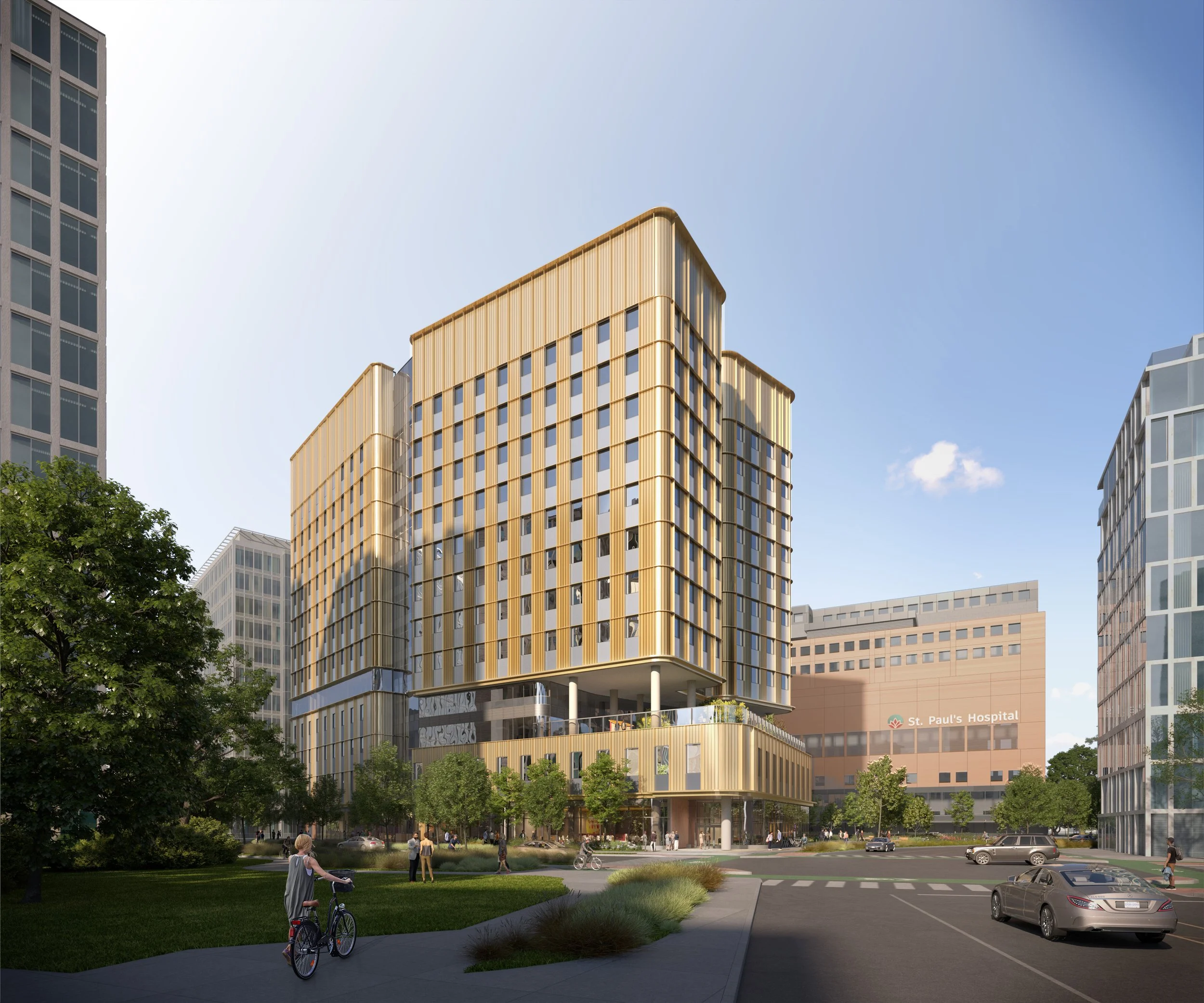
Clinical Support and Research Centre, St. Paul’s Healthcare Campus, Vancouver British Columbia. Image: Rendering by Diamond Schmitt
Tall buildings fight conversation. They organize complexity vertically, stacking people and programs with great efficiency, but this often leads to fragmentation–with teams separated by floors and disciplines divided. It’s a serendipity killer, because you see the same people, in the same loop, every day. By default, these are not social or collaborative environments.
Yet as research teams grow and urban building sites shrink, research labs are going vertical. The real challenge isn’t stacking equipment—it’s rebuilding the social life of a campus across floors. Collaboration and connection in this context must be designed.
Research thrives in an environment where people mingle and conversation sparks new ideas. We know this from decades spent designing labs and from our own research, but you don’t have to take it from us. A large natural experiment at MIT found that when researchers are relocated into the same building, they become more likely to coauthor papers—especially in buildings designed to mix multiple departments and related fields. Earlier work at Harvard similarly linked physical proximity between coauthors to higher citation impact.
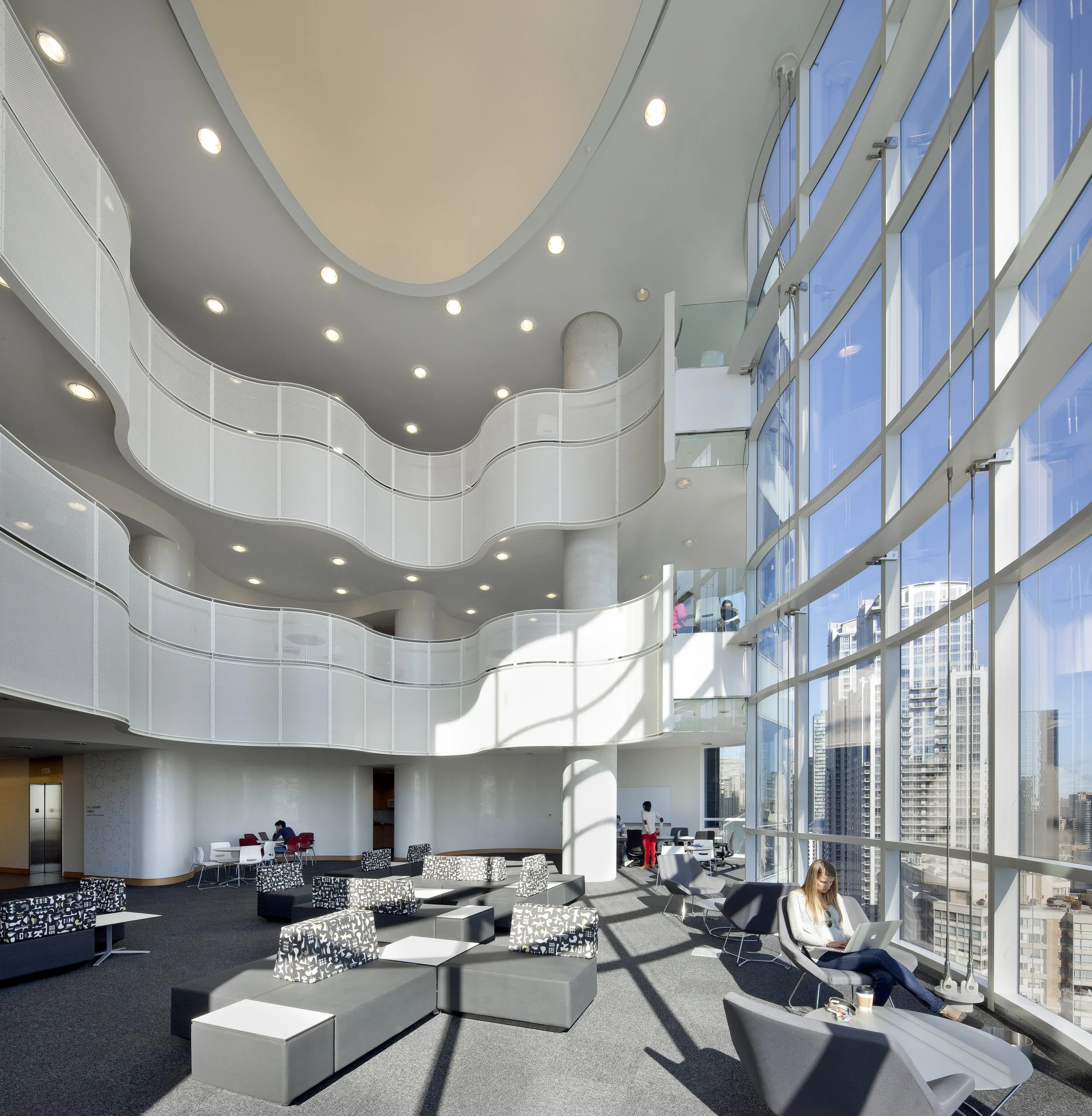
Peter Gilgan Centre for Research and Learning, SickKids Hospital, Toronto. Photo Credit: Tom Arban Photography Inc.
Beginning in the late 2000s our work designing research labs hit an inflection point, after which we’ve been hired for an increasing number of projects on constrained urban sites. The Peter Gilgan Centre for Research and Learning, part of SickKids Hospital in Toronto, prompted us to think concretely about vertical neighborhoods. The goal was to subdivide a tall building—in that case, 21 stories—into smaller communities linked by visible movement and shared spaces.
To overcome the silo culture that is ingrained in tall buildings connected by elevators, we established interconnected floors and created opportunities for social interactions. We put the building’s social magnets, like kitchens, lounges, and meeting rooms, right where that movement already exists to ensure circulation and conversation share the same address. These spaces reward the detour. And we pushed those multi-level hubs to the street edge, where daylight and the city’s energy pull people out of their heads and into each other’s orbit.
That playbook—open circulation, convenience stairs, stacked commons, and social destinations on the desire lines—has shaped and evolved our thinking on later projects, including the Clinical Support and Research Centre planned for St. Paul’s Hospital in Vancouver. Designed to support a complex mix of both clinical and research teams, “collision zones” are woven into the plan, creating crossroads where clinical functions intersect with research floors. This approach ensures that movement between these areas becomes an opportunity for exchange–making social mixing and knowledge transfer a part of the daily routine.
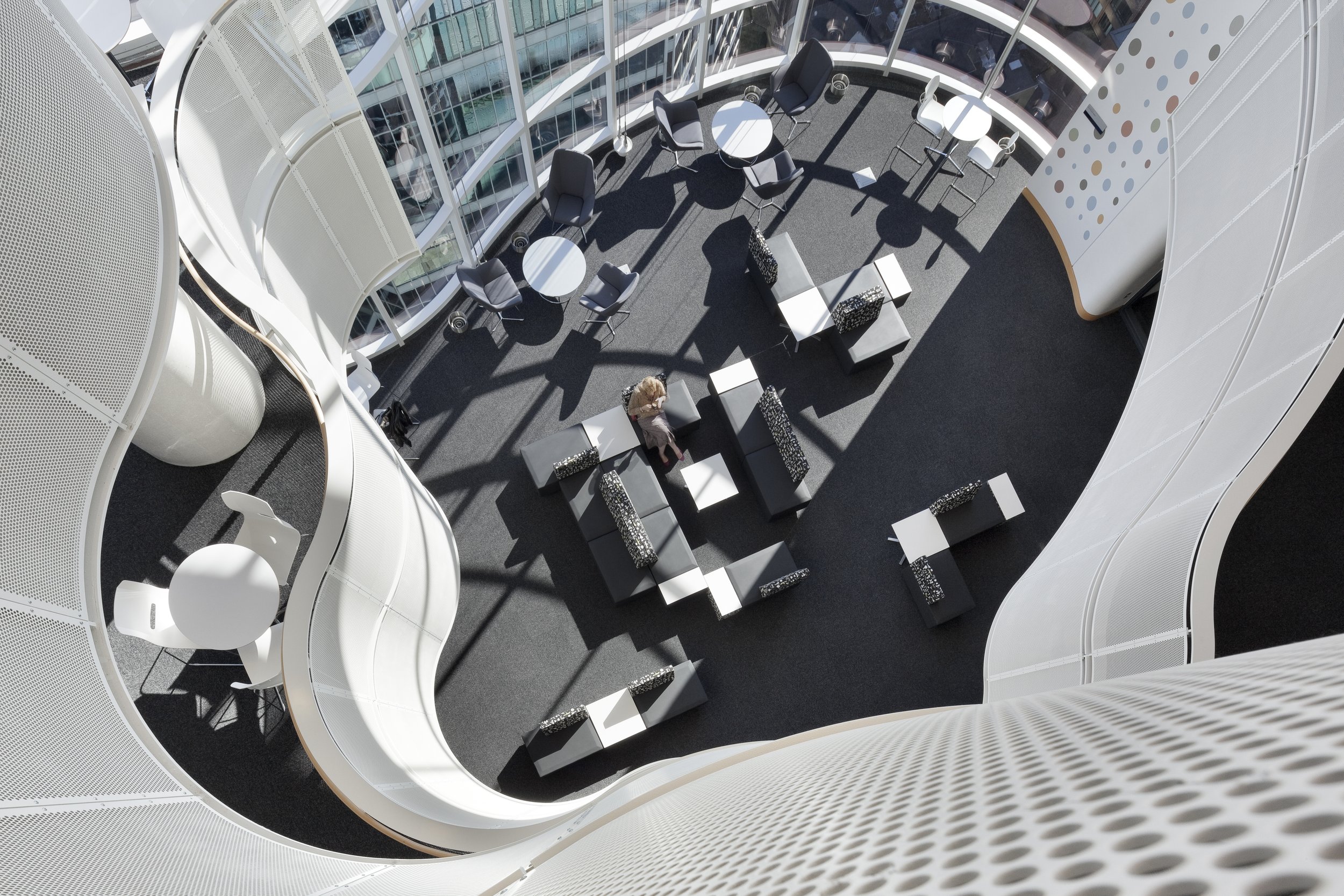
Peter Gilgan Centre for Research and Learning, SickKids Hospital, Toronto. Photo Credit: Tom Arban Photography Inc.
In big cities, designing a “vertical campus” is as much about choreographing experience as placing vacuum pumps, cold storage, and vent hoods. The goal isn’t just to stack labs; it’s to stack relationships—to make movement intuitive, put daylight and shared amenities where people naturally pause, and seed repeatable encounters. An interconnected circulation network, integrated social hubs, and transparent in-between spaces move information, transform movement into social infrastructure, and accelerate the exchange of ideas. A vertical campus succeeds when it reliably sets up the next breakthrough-catalyzing conversation—across disciplines, teams, and people who might otherwise never meet.