
When Lab Design Meets Reality: Hard Lessons from a High-Tech Build
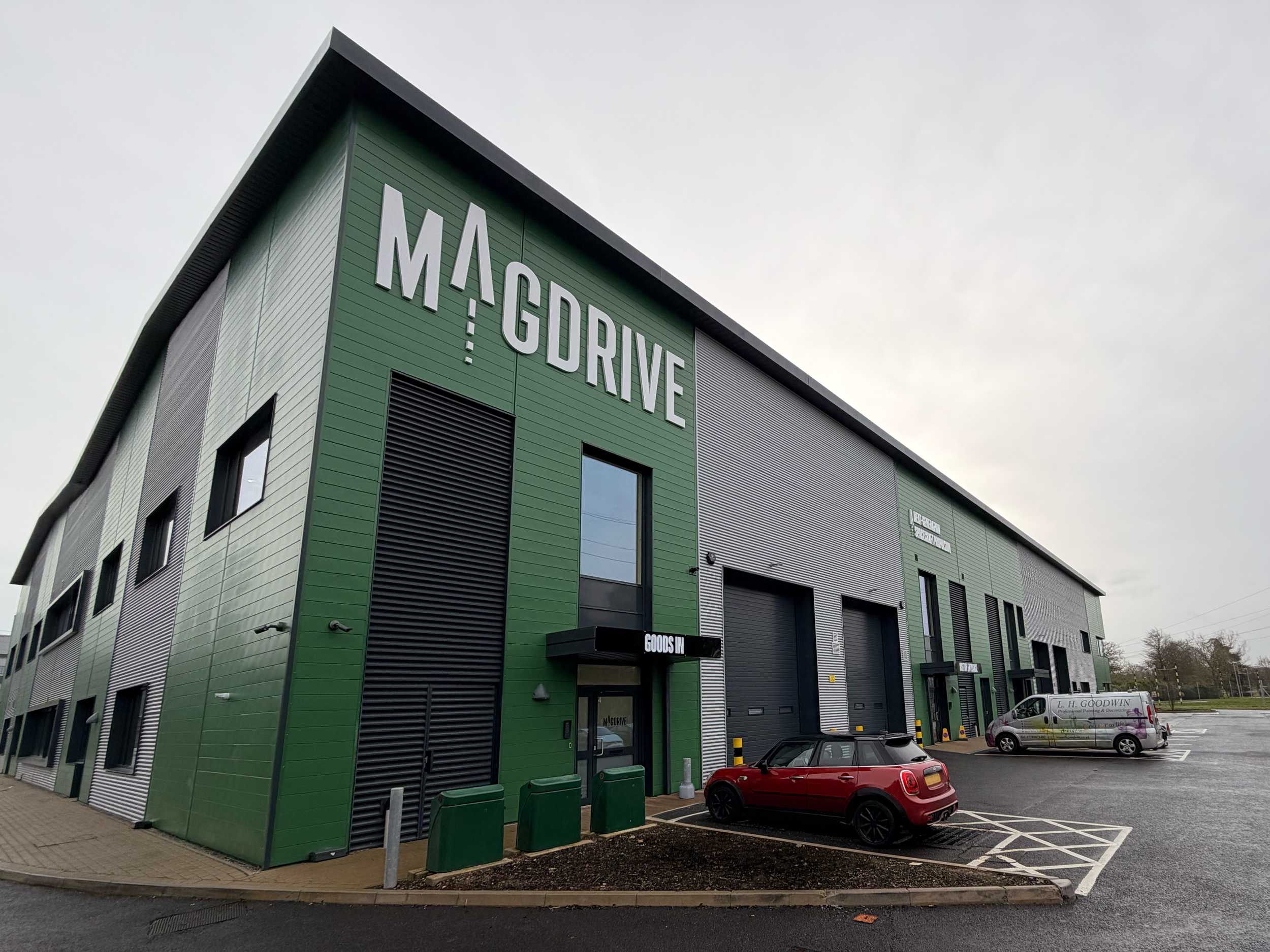
The £3.8 million Disruptive Experimental Electric Propulsion (DEEP) Lab at Harwell Campus showcases the specialized cleanroom and high-vacuum infrastructure required to support next-generation electric propulsion research—and the complex design and construction coordination behind it. Image: Courtesy of Magdrive Ltd
Building a world-class laboratory is rarely a linear process. When the project involves high-vacuum environments and cleanroom standards for electric propulsion research, the complexity scales exponentially. The recently opened Disruptive Experimental Electric Propulsion (DEEP) Lab at Harwell Campus in Oxfordshire, built by space technology company Magdrive, stands as a £3.8 million testament to the UK’s growing space sector.
But beneath the lab’s cutting-edge vacuum chambers and cleanrooms, there are real-world takeaways for the lab design and construction community. Projects that combine advanced research infrastructure with tight timelines often surface lessons that go far beyond a single facility. From coordinating specialized equipment installations to maintaining clear communication across project teams, the DEEP Lab offers a practical look at how complex lab builds come together and where challenges are most likely to emerge.
Chuong Van Dang, chief of staff at Magdrive, shared with Lab Design News an inside look at the challenges faced during the construction of the DEEP Lab. Magdrive’s experience serves as a case study in managing tight timelines, specialized infrastructure, and the vital importance of the "source of truth" in project management.
Designing around a "massive" centerpiece
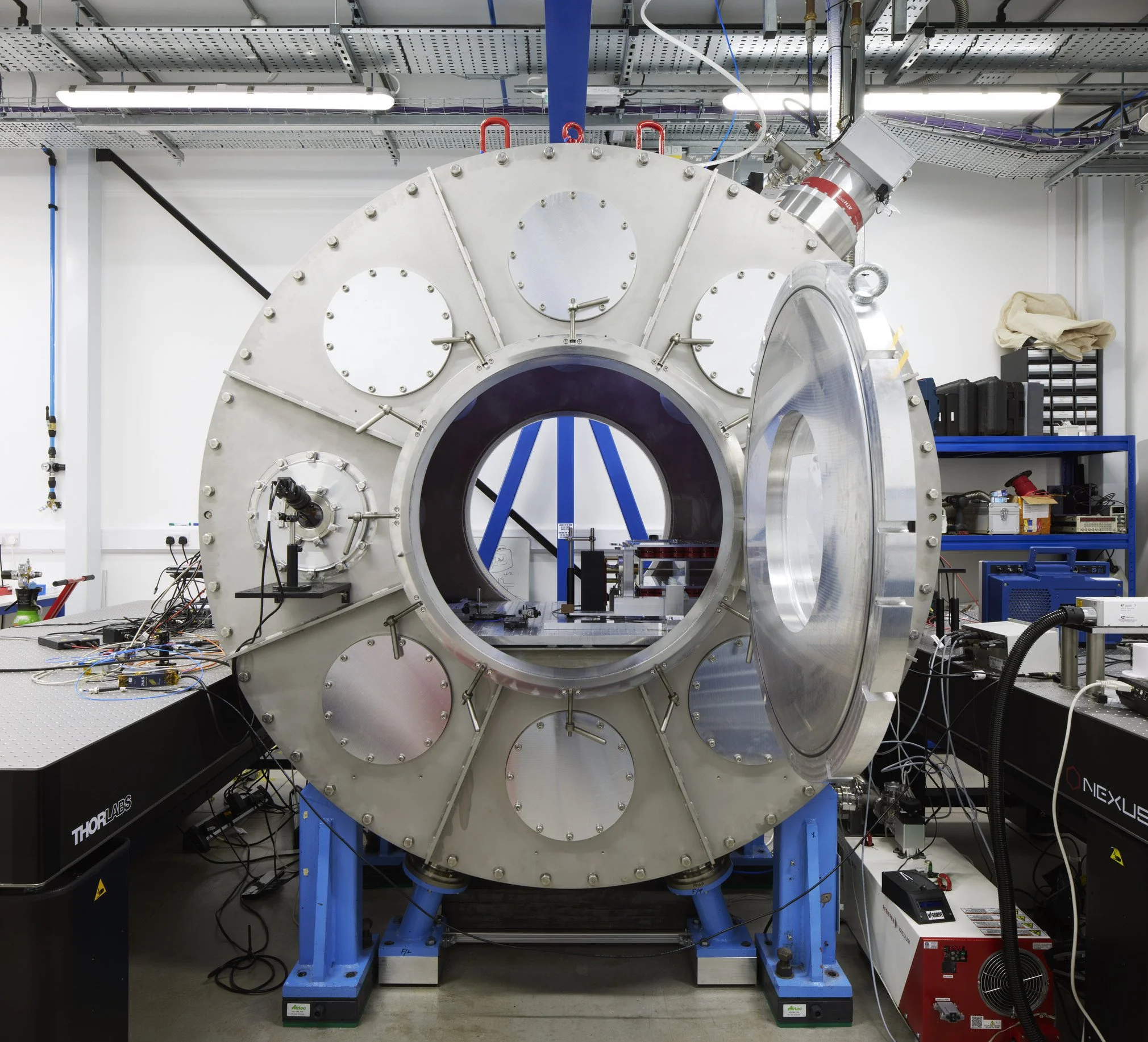
The DEEP Lab’s layout was designed around a massive 1.5-meter-diameter, eight-to-nine-ton vacuum chamber for electric propulsion testing, with a straight equipment pathway from the loading bay to the physics lab and carefully planned door clearances to accommodate large-scale hardware. Image: Courtesy of Magdrive Ltd
The DEEP Lab was not a standard office-to-lab conversion. Its layout was dictated by the primary research requirements: electric propulsion testing. This necessitated a facility built literally and figuratively around massive hardware—specifically, a 1.5-meter diameter vacuum chamber. The facility features a straight run from the loading bay through the mechanical workshop to the physics lab, says Van Dang, utilizing garage doors to facilitate the movement of large-scale equipment.
The logistical requirements for the chamber, which involves approximately eight to nine tons of steel, influenced every stage of the design, says Van Dang. “Once that's planned and brought in, then everything else gets kind of built around it,” he says.
Key takeaway: For facilities housing heavy or sensitive equipment, infrastructure must be "future-proofed" from day one. Magdrive’s engineers were required to sign off on an exhaustive number of door height specifications and pivot points to ensure that even equipment still under construction off-site could be successfully integrated once the walls were up.
The cleanroom conundrum
One of the most significant challenges during the DEEP Lab project was the procurement and integration of the ISO 7 cleanroom. Initially, the team opted for a modular system, under the impression that it would be a simple "build-it-up" process.
However, as the design phase progressed, discrepancies emerged between the initial mechanical and electrical (M&E) calculations and the requirements of the cleanroom specialists. Halfway through the design phase, Magdrive switched suppliers to a team that asked more rigorous, albeit difficult, questions regarding airflows and fan filtration units. This change had a significant on the project’s mechanical, electrical, and plumbing (MEP) costs, leading to a significant budget spiral.
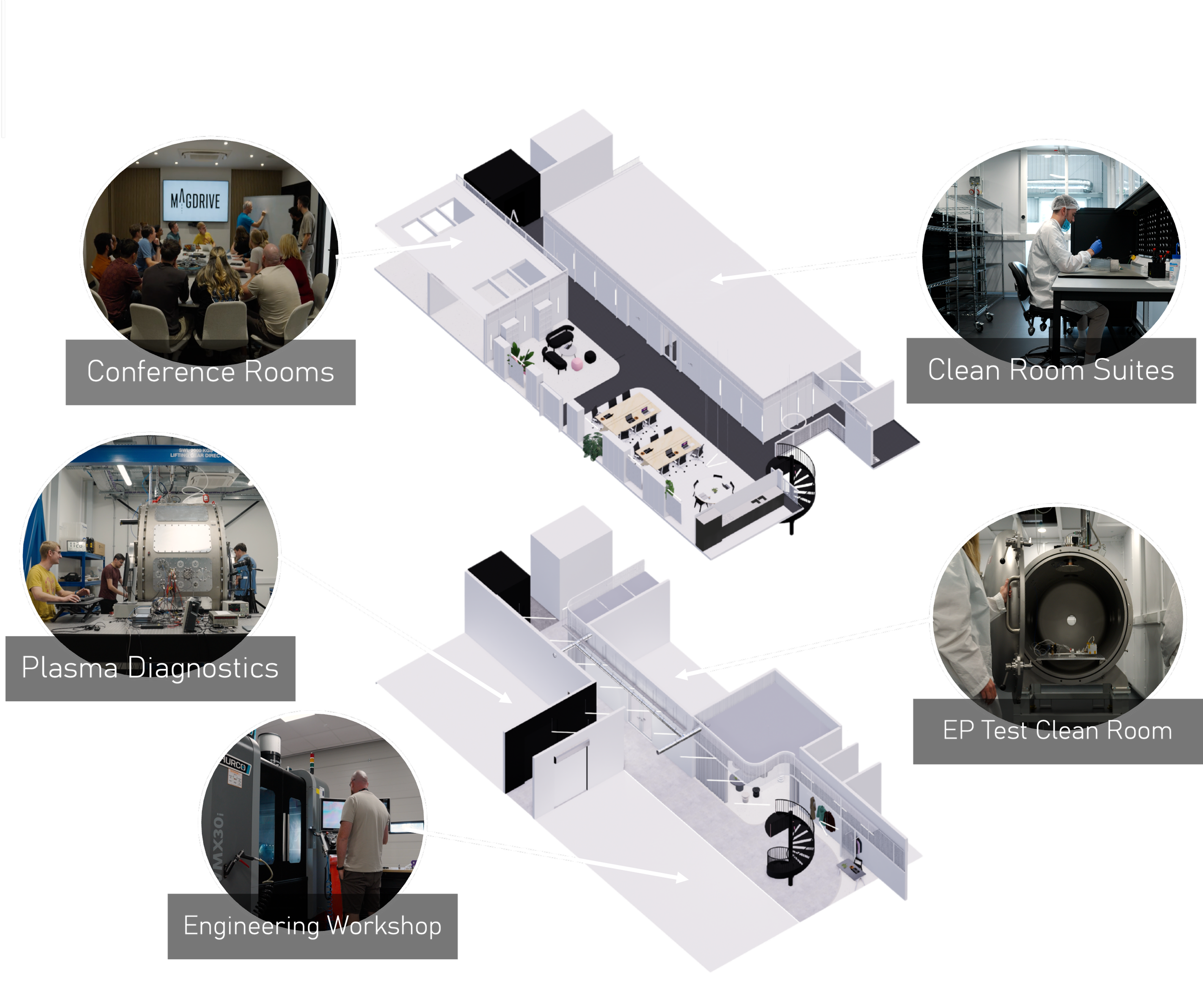
Midway through the DEEP Lab project, Magdrive switched cleanroom suppliers after airflow and filtration requirements for the ISO 7 space revealed gaps in earlier mechanical and electrical planning—an adjustment that significantly increased MEP costs and highlighted the need for dedicated technical project management. Image: Courtesy of Magdrive Ltd
"I think what we lacked in this kind of delivery was a technical project manager who could be helpful," Van Dang says. "I've got a day job and I'm trying to [act as] project manager as best I can. But when I'm dealing with multiple contractors—the M&E consultant, the cleanroom supplier, the main contractor who is responsible for the contractors, electricians, plumbers—and no one's giving a straight answer, and everyone's blaming each other … who's holding that source of truth?”
A tight 18-month window
Timeline constraints often dictate the success (or stress) of a lab project. The DEEP Lab was funded in part by a £1.8 million grant from the UK Space Agency’s Space Cluster Infrastructure Fund (SCIF). This funding came with a non-negotiable 18-month delivery window.
Crucially, this 18-month period included everything from property acquisition and legal "conveyancing" to design and construction. Because time was of the essence, the team had to forgo a traditional tender process for architects and contractors, relying instead on recommendations and previous partners.
For Magdrive’s next facility—a projected 10,000-sf facility for the industrialization of plasma thrusters—Van Dang plans to adjust the approach significantly:
Buffer the timeline: "[I will] give myself a more comfortable timeline of at least 18 months for design and delivery,” says Van Dang, “rather than 18 months to acquire, design, and deliver."
Independent project management: Next time, Van Dang says, a top priority will be to hire an independent consultant who is "responsible just for delivering a project" and has no loyalty to specific vendors.
Go local: Van Dang suggests that using a local architect, rather than one based further away (as was the case with the DEEP Lab project and its London-based architect team), may ensure more frequent site visits and a higher degree of accountability during the construction phase.
Collaboration and accessibility
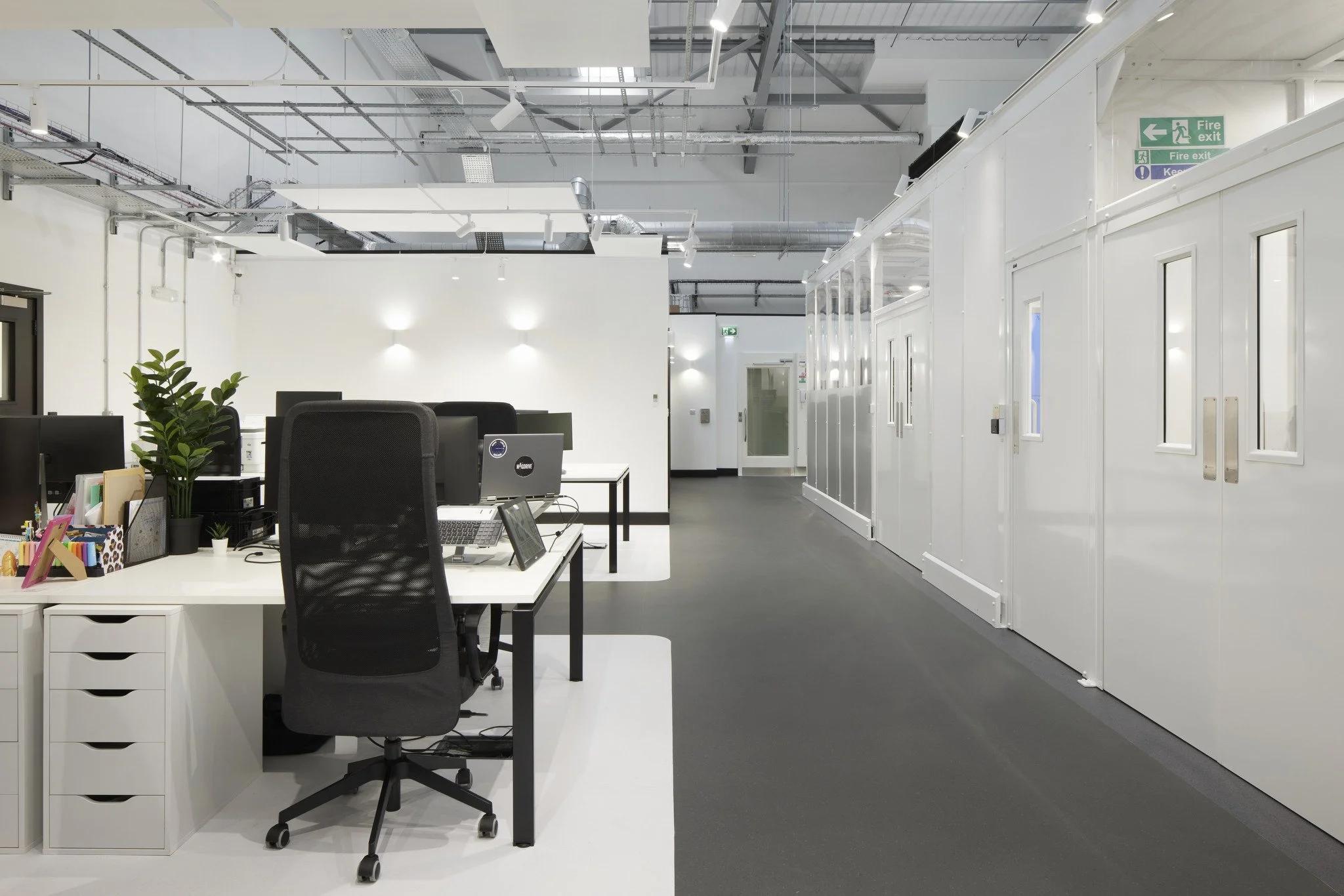
The DEEP Lab now serves as a shared testing hub for the UK space sector—supporting institutions like Cranfield University and University of Southampton—demonstrating how strong underlying infrastructure and coordinated project leadership are essential to delivering reliable, collaborative research facilities. Image: Courtesy of Magdrive Ltd
Despite the hurdles, the DEEP Lab successfully realized its goal of becoming a hub for the UK space industry. It offers a unique shared-workspace model for cleanrooms and testing facilities, lowering the barrier to entry for startups that lack the capital for their own vacuum chambers or CNC machines.
The facility is currently utilized by academic institutions such as Cranfield University and Southampton University, fostering a collaborative environment between academia and industry.
For those embarking on their first specialized lab build, Van Dang notes that the "finish" of a lab is what the users see, but the "infrastructure" is what they feel. While aesthetic flaws such as poor tiling can be frustrating, it is the integration of complex M&E systems—chilled water, compressed air, and data—that ultimately determines the facility's operational integrity.
When you are not a professional builder, Van Dang notes, you are often at the mercy of your subcontractors’ “source of truth.” Finding a technical leader who can bridge the gap between scientific requirements and construction realities is perhaps the most valuable investment a stakeholder can make.