
While many folks are gathering with family this week, I figured it might be a good opportunity to stir the pot with another topic that can fuel heated debates. This month, I would like to discuss the implications of how a project budget can impact the outcomes of a lab renovation or new construction.
In preparing this post, it became clear that even when only touching on high-level considerations, more than one column will be necessary to hit the highlights. Therefore, I will address the first two points below during this discussion, and will return at a later time to delve into the rest. The topics I will discuss during this series are design team selection, quality of finishes/FF&E, contractor experience, future flexibility, and schedule. There are, of course, other considerations, but these are several that most folks on both the AEC and end-user sides have frequently encountered when deciding on budget and project approach for any given scope.
The design team will oftentimes be the first group to interact with the end users to determine the trajectory of a project, unless the project is design-build delivery. In either setup, however, the team entrusted to lead the lab planning and design efforts on a Science & Technology project will have a significant impact on how the project will go—from schedule, to layout efficiency, to budget. It can be tempting for owners or end users to bid projects and automatically select the lowest bidder competitively—and in instances where all the design firms are qualified and experienced in the project type, this may be a successful approach. However, as there has been more interest from design and engineering firms to get involved in S&T projects, there have been more instances of firms getting their feet in the door by bidding on these project types for the first time.
Anecdotally, I have noticed that oftentimes dramatically low bids from architects and engineers on complex projects come from firms inadvertently pricing projects like corporate interiors scopes, not understanding the additional programming efforts required to successfully plan the equipment and utilities required for these highly complex spaces. Therefore, what may appear to be an upfront cost savings for the client can lead to delayed design timelines and, often, significant unforeseen costs. Some examples of what may cause this are insufficient programming meetings, which lead to information trickling in throughout design, causing multiple redesign iterations, missed utility coordination such as specific power or exhaust requirements which then need to be incorporated during permit review or construction, and delayed construction schedules when long lead time equipment isn’t identified early on for early release packages. These oversights not only cause lost profits during additional facility downtime, but also costs in extended construction schedules and having to purchase equipment based solely on what is available fastest as opposed to what may be the best value. Having the right design partner from day one is not only a good investment, but can indeed save significant margins across the length of the project.
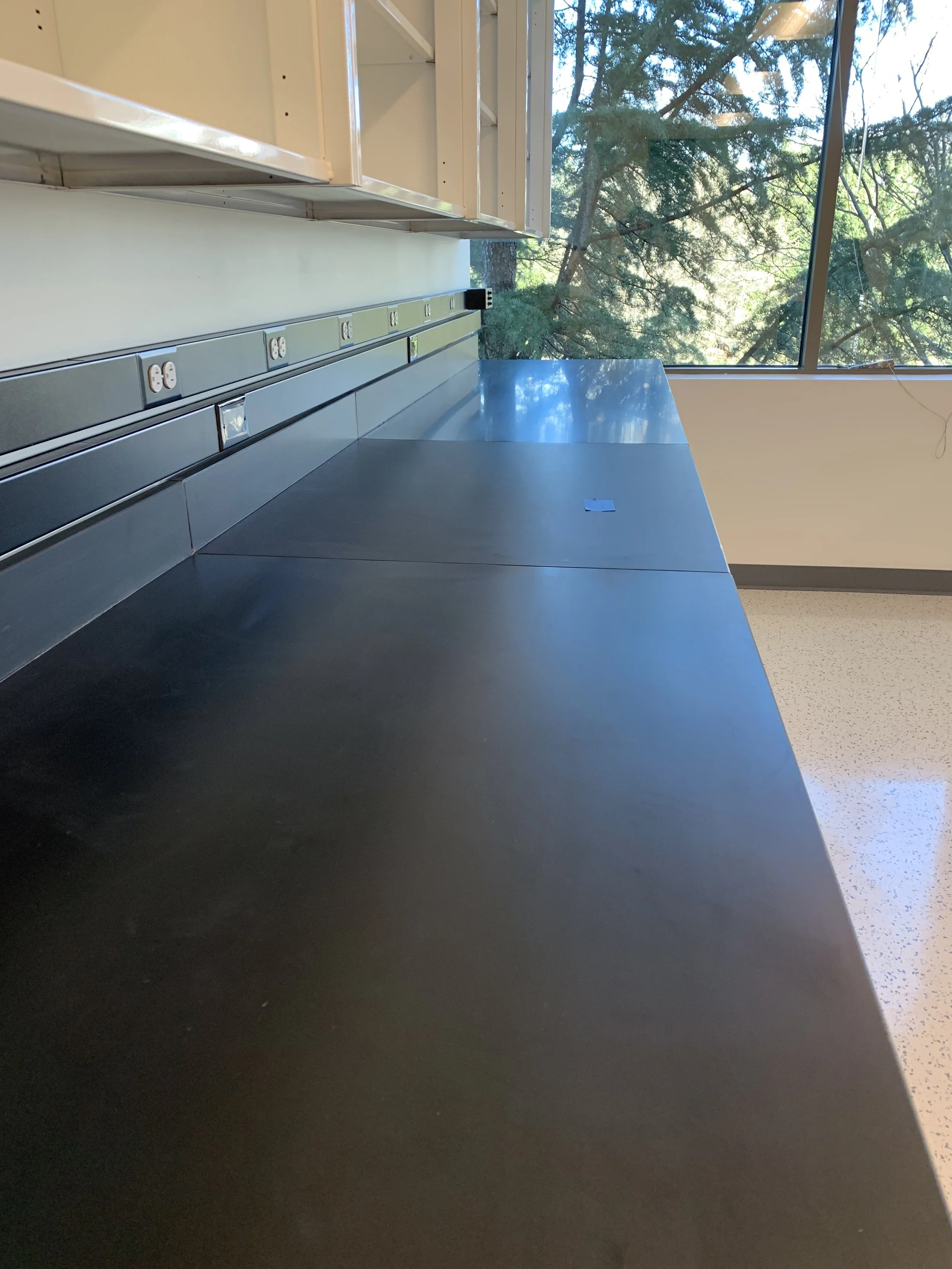
Choosing high-performance finishes and casework is a rather straightforward discussion. There are many companies that offer highly durable products at a reasonable price point, so this is not necessarily an “either/or” discussion. However, there can sometimes be the trap of specifying a product that is not necessarily appropriate for the use of the lab due to a lower cost, as opposed to finding a competitively priced option of an appropriate product. An example of this would be countertop specification. Phenolic resin is an excellent option for many lab applications and is generally a cost savings over epoxy resin. However, some lab uses are better supported by epoxy resin, such as chem labs that use specific caustic chemicals. In these instances, specifying a phenolic countertop may seem to be a cost savings up front. Still, it may need to be repeatedly replaced due to the chemicals compromising the surface through repeated exposure. Product performance and lifecycle costs therefore should be taken into account when determining the most cost-effective approach to finish selection.
As mentioned previously, I will continue delving into the remaining topics in forthcoming columns. In the meantime, I would love to hear others’ opinions. Do you agree with the main considerations listed, or would you have chosen others? Alternatively, do you disagree with the overall premise? Feel free to send me your feedback, and perhaps I will continue extending the conversation by incorporating others’ opinions as well. I look forward to the discussions!
All opinions expressed in Design Between the Lines with Lori Ambrusch are exclusive to the author and are not reflective of Lab Design News.