Strong Foundations Start With Better Questions
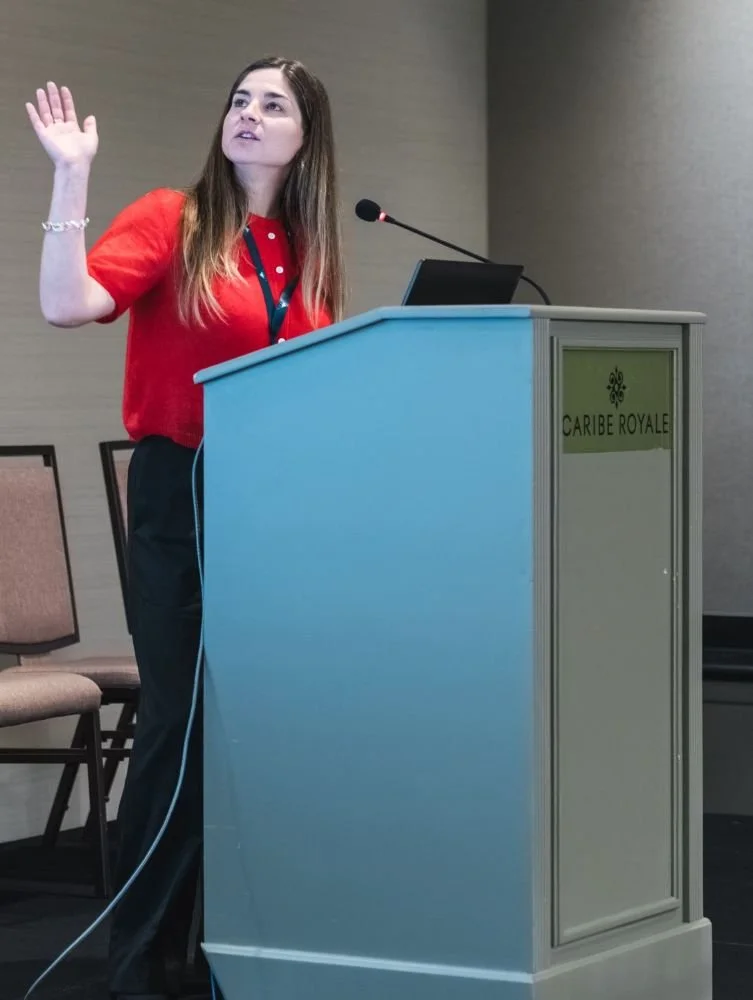
Kelly Smyth, AIA, associate director of lab planning at Genesis AEC, presents “Strong Foundations: Building Understanding Through Lab Programming” at the 2026 Lab Design Conference in Orlando, FL.
Good laboratory design depends on understanding the science that will take place inside a facility, but getting to that understanding is not always straightforward. For architects and lab planners, the challenge is often less about becoming experts in every scientific discipline and more about knowing what to ask, when to ask it, and how to translate the answers into decisions that can guide a project.
That was the focus of Kelly Smyth’s presentation, “Strong Foundations: Building Understanding Through Lab Programming,” at the 2026 Lab Design Conference in Orlando, FL.
In the session, Smyth, associate director of lab planning at Genesis AEC, outlines a practical approach to the programming phase, emphasizing discovery, documentation, communication, and the importance of identifying potential project impacts before they become design problems.
Rather than treating programming as a straightforward exercise in collecting room requirements, Smyth presents it as an opportunity to build a shared understanding between scientists and design professionals. Through targeted questions and early engagement with users, planners can uncover the workflows, equipment needs, hazards, adjacencies, and other considerations that ultimately shape the facility.
This presentation from the 2026 Lab Design Conference is available to watch as a free on demand webinar. American Institute of Architects members can earn 1 LU/HSW credit upon completion of this session.
At the center of Smyth’s approach is the power of asking good questions. She opened the presentation with an everyday example: asking a six-year-old what she wants for dinner might produce a limited response, while more specific follow-up questions can reveal preferences and constraints that lead to a better result.
The same principle applies to laboratory programming. Rather than simply documenting what users say they need, planners can use a series of increasingly specific questions to understand the activities, workflows, equipment, relationships, and constraints behind those requests.
“We start with high-level questions about the type of work being done and the scientific goals driving it, then follow the thread,” Smyth tells Lab Design News. “That's where the real insights emerge about adjacencies, opportunities for shared space, and workflow relationships that could otherwise be overlooked.”
That process also requires planners to recognize that every project brings its own combination of scientific, organizational, site, budget, schedule, regulatory, and operational considerations. A request that appears straightforward on the surface may look very different once those factors are examined together.
One example Smyth discusses involves a project where users requested numerous freezers. Asking about how frequently samples were actually accessed led to a conversation about off-site storage, ultimately freeing valuable research space for bench work. “We don't need to be scientific experts to ask good questions,” she notes. “What we bring is insight into flow, layout, and configuration, specifically how to translate the way people work into a space that supports it.”
Building a design basis
Smyth organizes the programming process around several complementary activities: reviewing existing information, mapping project priorities, interviewing users, and collecting physical data through equipment lists, surveys, walkthroughs, and observations.
The goal is not simply to produce a room list. These activities establish what Smyth describes as a Lab Design Basis, bringing together the business, regulatory, safety, and scientific criteria that will inform subsequent design decisions.
“A successful programming process is organized, well-documented, and built on more than a single conversation with a lab manager,” she says. “In our practice, it moves through a few key activities: a pre-design review of existing documentation and assumptions; priority mapping with leadership to establish the business case; in-depth interviews with the actual lab users; and physical datapoint gathering—equipment lists, headcounts, walkthroughs of existing spaces. Together, these build what we call a Lab Design Basis: the business, regulatory, safety, and scientific criteria that drive every design decision that follows.”
That documentation becomes particularly important as projects evolve. Requirements change, new information emerges, and stakeholders may reconsider earlier decisions. Rather than treating those changes as a reason to start over, a well-documented programming process gives the team a foundation against which new decisions can be evaluated.
Smyth emphasizes the value of maintaining what she calls “living documents” throughout the project. Equipment information, headcounts, questionnaires, program space lists, adjacency diagrams, room data sheets, and other programming artifacts can help preserve the reasoning behind design decisions and provide a shared reference point for the project team.
Looking beyond the room list
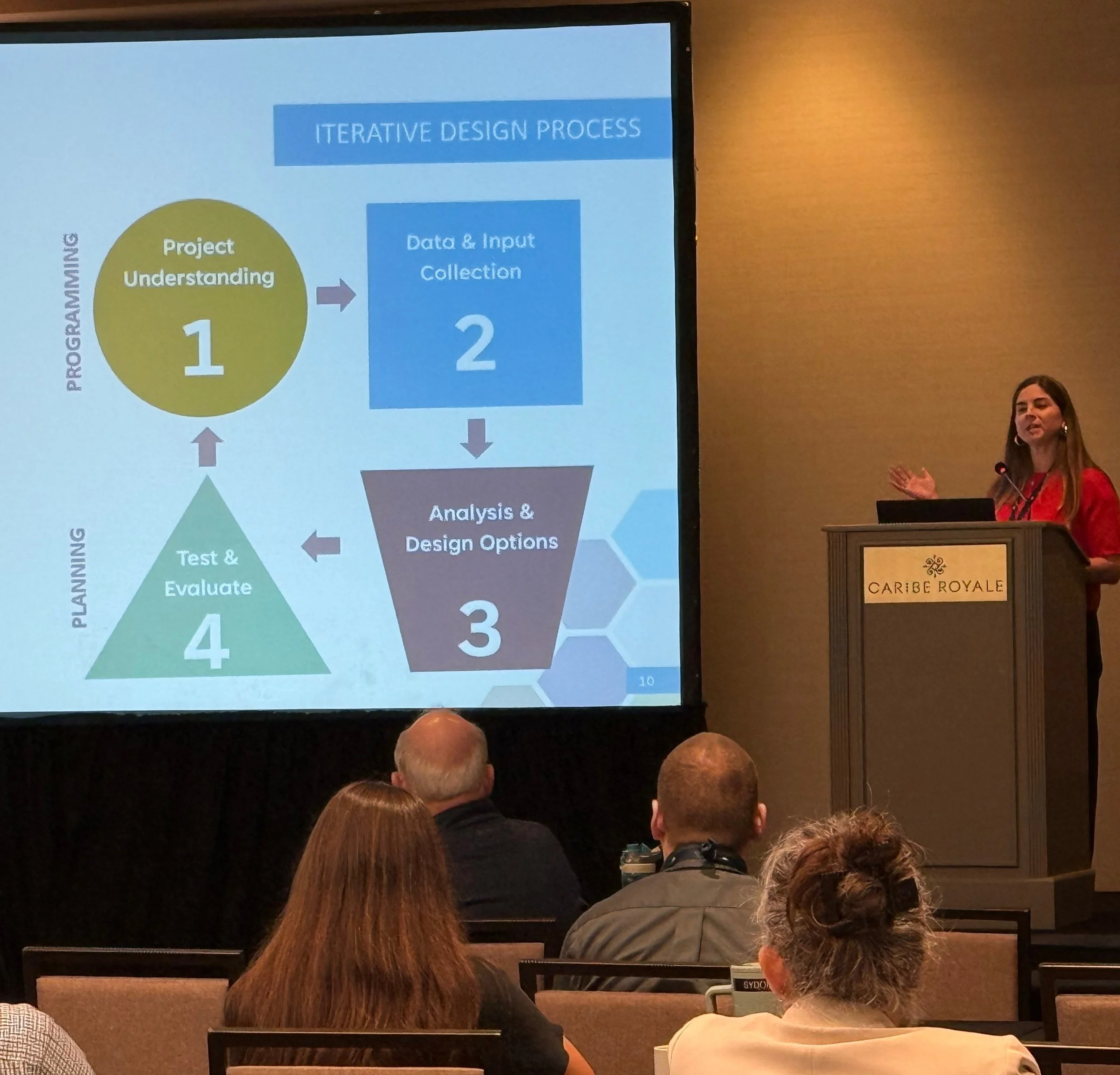
Laboratory programming helps teams identify the scientific, safety, regulatory, and infrastructure requirements that shape a project.
Another important theme of the presentation is that laboratory types cannot be understood as a simple list of categories. Scientific activities, hazards, codes, business requirements, site conditions, and infrastructure needs overlap in ways that make each project distinct.
Smyth illustrates this through the research-to-commercialization spectrum. Early discovery environments may prioritize openness, interaction, flexibility, and collaboration, while preclinical, clinical, and commercial or cGMP environments typically require increasing levels of process specificity, segregation, environmental control, and documentation.
Understanding where a project sits along that spectrum can therefore influence decisions well beyond the laboratory itself.
The same applies to safety and regulatory considerations. Programming is an opportunity to identify requirements associated with biosafety, radiation, industrial hygiene, hazardous materials, equipment, and other risks early enough to influence the design. Smyth points to examples such as decontamination autoclaves, effluent decontamination systems, fire-water collection, and structural requirements associated with heavy shielding as issues that can have significant spatial and infrastructure implications.
The objective is to uncover those requirements before they become late-stage surprises.
“Early engagement builds alignment and confidence across the whole team and gives everyone a solid design basis to return to,” Smyth says. “Projects still evolve, but instead of starting over, we're revising against clear documentation.”
Making time for discovery
Ultimately, Smyth argues that programming should be treated as a fundamental part of the design process rather than preliminary work that can be compressed when schedules become tight.
“If I could leave people with one thing, it would be this: invest real, dedicated time in programming and discovery; and build that time into your proposals and design schedules from the start, not as an afterthought.”
That investment can help design teams identify major requirements earlier, reduce rework, and create a clearer connection between scientific activities and the spaces, infrastructure, and safety measures needed to support them.
For architects, lab planners, and other professionals working on laboratory projects, Smyth’s presentation offers a useful framework for approaching one of the most consequential stages of a project: understanding what the facility actually needs to support before deciding what it should look like.
“Gathering and processing information—user wants and needs, equipment lists, current and projected headcounts, and more—takes time, but it pays dividends throughout the rest of the project,” Smyth says. “And show your work: keep good records. Living documents and programming artifacts make it much easier to answer, ‘Why is this like this?’ and ‘How did we get here?’ later in the process.”
The full presentation, “Strong Foundations: Building Understanding Through Lab Programming,” is available to watch on demand through Lab Design News. The course is approved by AIA CES for 1 LU/HSW credit.
Continue exploring these ideas at the 2027 Lab Design Conference, taking place May 10-13 in Dallas, TX. Hear from lab users, architects, planners, and industry experts about how to uncover the information that shapes laboratory projects, translate scientific workflows into design requirements, and make informed decisions about space, adjacencies, infrastructure, and safety.