Species-Specific Care Drives the Design of LSU’s Wildlife Hospital
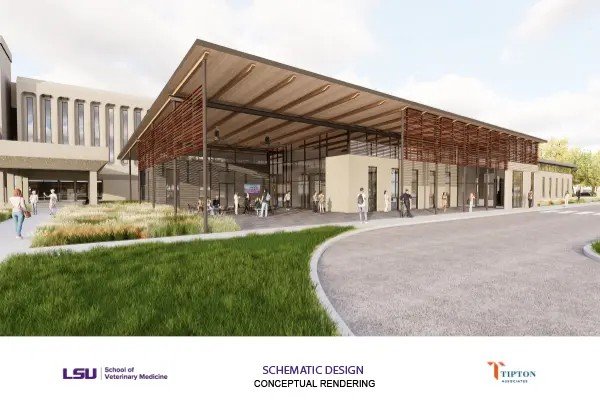
An architectural rendering of a new Wildlife Hospital of Louisiana shows the building’s planned design and positioning on the LSU Vet Med campus. Image: Courtesy of LSU School of Veterinary Medicine’s Wildlife Hospital of Louisiana
For decades, the LSU School of Veterinary Medicine’s Wildlife Hospital of Louisiana has operated under extreme spatial constraints that belie the scope and importance of its work. Each year, the hospital treats thousands of injured wild animals from across the state, serving as a critical intersection of clinical care, education, conservation, and public service.
Now, with plans underway for a new, stand-alone Wildlife Hospital, LSU Vet Med is reimagining what a purpose-built veterinary wildlife facility can be, and how thoughtful lab and hospital design can support a complex, mission-driven program.
At the center of this effort is a stark reality: volume has outpaced infrastructure. “The fact that we are currently seeing 2,000 animals using a 350 sf space means that this new facility will provide significant opportunities to expand across all these areas while considering species specific needs, safety, and biosecurity,” says Mark Mitchell, director of the Wildlife Hospital of Louisiana.
That reality has driven years of advocacy and planning, culminating in a proposed 14,000-sf facility designed to meet both current demands and future growth.
Designing for species-specific care and biosecurity
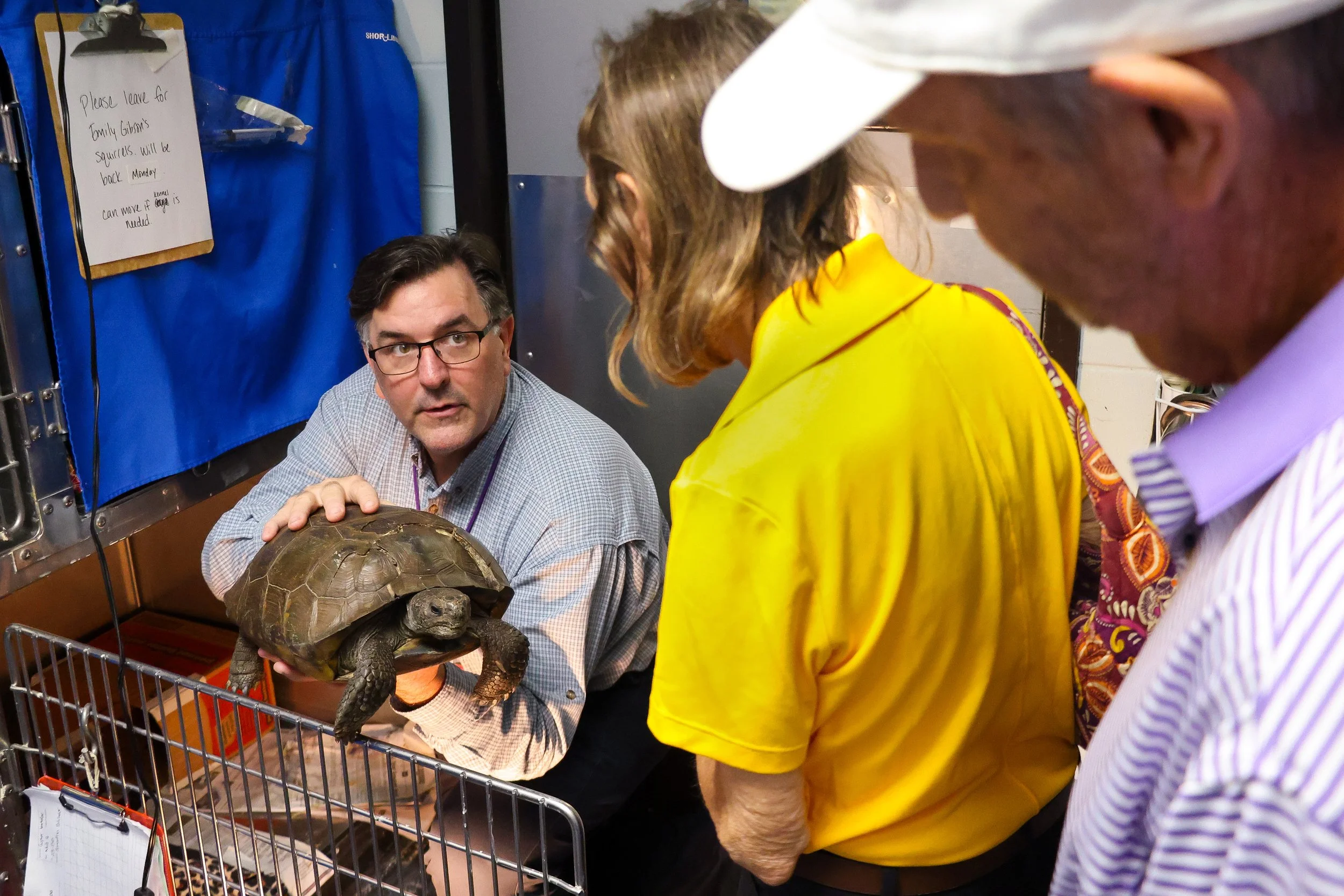
Facing a surge in volume that has outpaced infrastructure, the Wildlife Hospital of Louisiana is expanding from a 350-sf space serving 2,000 animals to a new facility designed to better support species-specific care, safety, and biosecurity, says Mark Mitchell, director of the Wildlife Hospital of Louisiana. Image: Courtesy of LSU School of Veterinary Medicine’s Wildlife Hospital of Louisiana
One of the most influential design drivers for the new hospital has been the need to separate species to improve care outcomes and reduce biosecurity risks. In the current facility, all animals share a single space.
“We currently have a singular space that houses birds, mammals, and reptiles,” Mitchell explains. “The new facility will not only have class-specific areas, but will also have specialized areas for within class needs. For example, they’ll be separate wards for raptors, passerines, and waterfowl.”
This zoning strategy extends to quarantine and isolation planning as well. “Class-specific quarantine wards will also reduce the risk of disseminating highly infectious disease diseases through the hospital,” Mitchell says.
This approach reflects a growing emphasis on granular zoning, controlled circulation, and infection control, especially in facilities that serve as both clinical environments and disease surveillance hubs.
Space constraints drive change
While species diversity and safety have shaped the new program, the most persistent challenge has been sheer lack of space. According to Mitchell, this limitation affects nearly every aspect of hospital operations.
“The extremely small size of our current hospital is our major pain point,” he says. “It limits us from being able to manage a wider range of species. For example, we are currently limited in the mammals that we can receive.”
The new building is intended to remove those constraints entirely. “The new facility will allow us to see all wildlife species, including all mammals,” Mitchell adds. “The new facility will allow us to safely manage these animals for both the patient and the caretaker.”
That emphasis on caretaker safety is particularly relevant in wildlife medicine, where animals may be stressed, unpredictable, or potentially zoonotic, requiring thoughtful adjacencies, holding areas, and staff workflows.
Planning for imaging, surgery, and long-term infrastructure
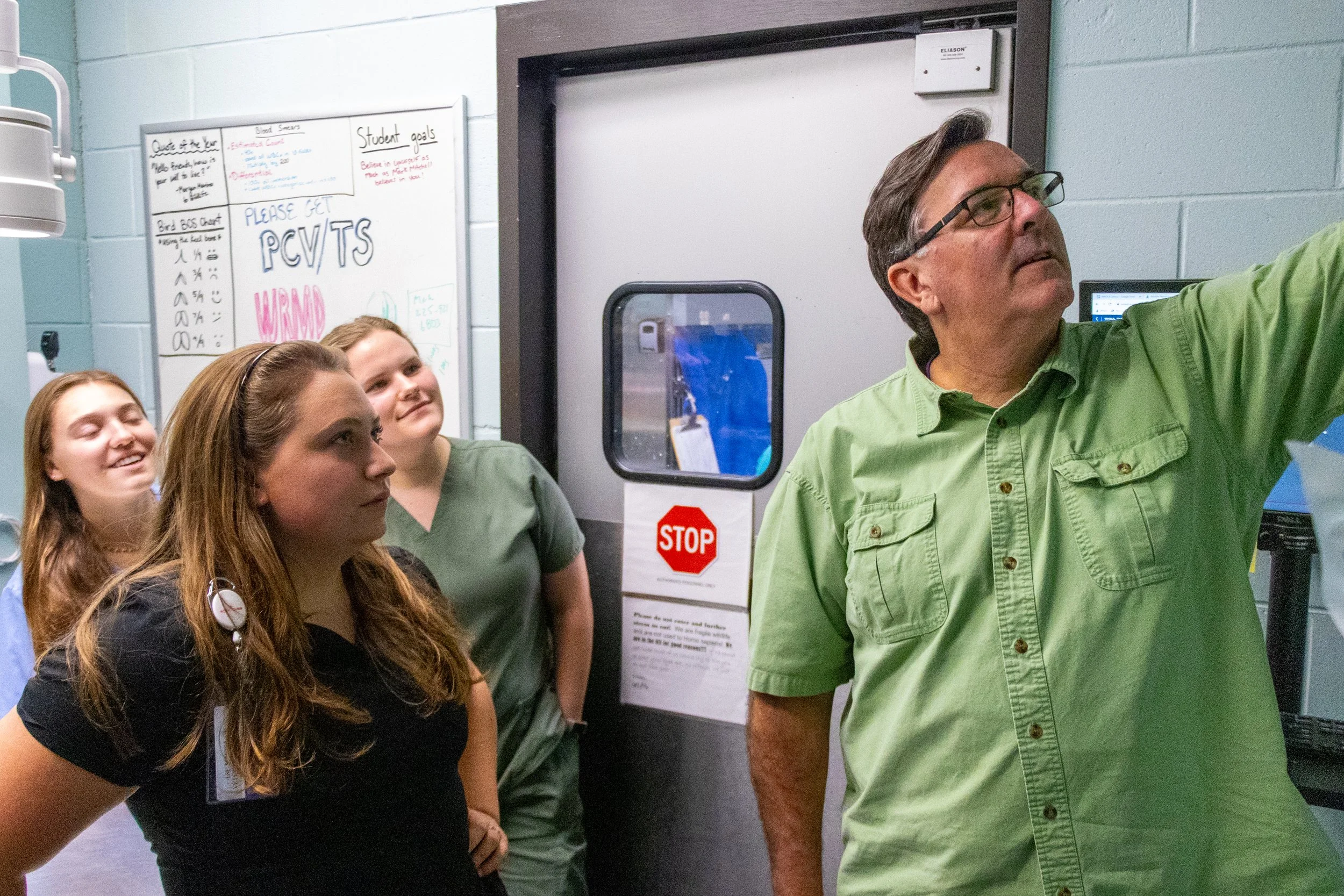
Designed to support advanced diagnostics and expanded surgical capacity, the new Wildlife Hospital of Louisiana facility prioritizes early infrastructure planning—accommodating CT imaging, radiology, and a fourfold increase in surgical tables—while thoughtfully adapting technology to the unique constraints of wildlife rehabilitation. Image: Courtesy of LSU School of Veterinary Medicine’s Wildlife Hospital of Louisiana
Advanced diagnostics and surgical capacity are also central to the hospital’s design. Rather than retrofitting existing spaces, the project team is making early infrastructure decisions to support evolving technologies.
“For imaging, we plan on using a portable computed tomography unit and a fixed radiology suite,” Mitchell says. “These can be in a shared site and will be appropriately prepared so that there’s no need to do additional retrofit later.”
Surgical capacity is expanding significantly as well. “For surgery, we are expanding from one surgical table between shared services to four surgical tables,” Mitchell says.
At the same time, wildlife rehabilitation presents unique constraints compared to traditional veterinary hospitals. “Because this is for wildlife rehabilitation, there are often limits to the extent we can incorporate certain technologies; however, we have been able to adapt and provide appropriate care even within these limitations,” he says.
Flexibility and future growth
While the new hospital represents a major expansion, planners are taking a measured approach to growth projections. The design is intended to accommodate increasing caseloads without oversizing the facility.
“As noted earlier, our current facility is so small that the expansion to this facility provides an immediate opportunity to accommodate the growth we expect,” Mitchell says. “Even with the addition of new species, we don’t expect the caseload to expand much beyond 4,000 to 5,000 cases.”
The scale of the expansion remains transformative. “To go from 2,000 species in a 350-sf facility to 4,000 to 5,000 species in a 14,000-sf facility should provide us with sufficient room and potential to grow to meet unexpected needs in the future,” he adds.
Integrating clinical care, teaching, and public engagement
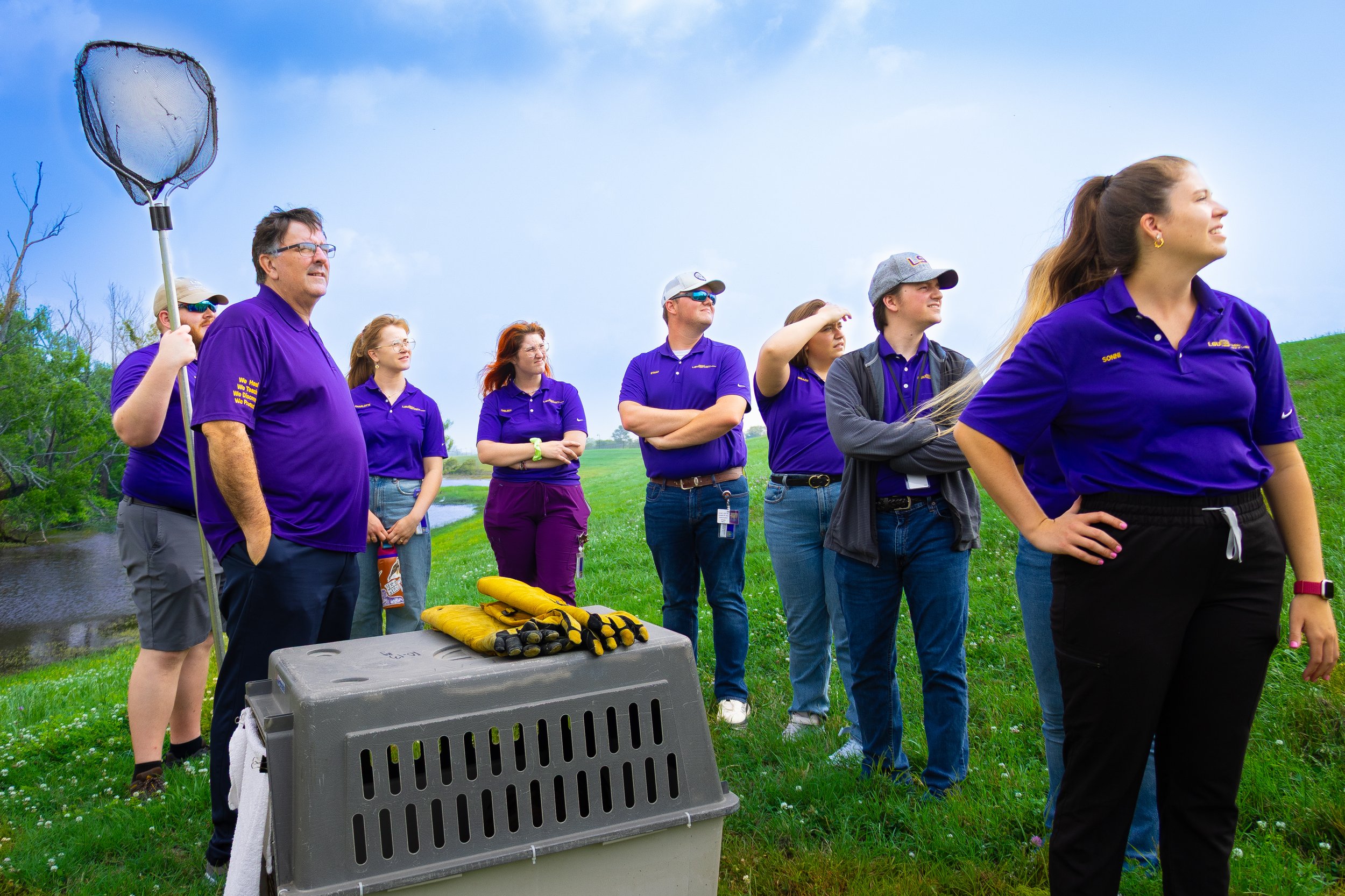
The planned Wildlife Hospital of Louisiana integrates clinical, teaching, and public-facing spaces through design strategies like controlled sightlines and one-way windows—protecting animal care while supporting education, outreach, and public engagement. Image: Courtesy of LSU School of Veterinary Medicine’s Wildlife Hospital of Louisiana
A defining feature of the planned Wildlife Hospital is its integration of clinical, teaching, and public-facing spaces. This arrangement requires careful balancing to avoid disrupting animal care.
“All three spaces are essential to our mission,” Mitchell says. “The clinical space will be protected to minimize negative impacts on the animals while still allowing the public an opportunity to interface with the public.”
Design strategies such as controlled sightlines play a key role. “For example, one-way windows on doors will help minimize human interference,” he explains.
Education and outreach are intentionally woven together. “The teaching and public facing spaces will be integrated because educating the public is an essential component of what we do,” Mitchell says. “An auditorium and patio will serve as specific sites to perform outreach with our ambassadors and provide educational programs for visiting students.”
Securing support for a stand-alone facility required more than statistics—it required visibility. According to Mitchell, one strategy has been especially effective.
“A tour of our current facility and educating visitors on the sheer number of cases we process annually in the space has been a real eye-opener for our leadership, donors, and external stakeholders,” he says.
The educational mission has resonated strongly as well. “In addition to this, our message on the importance of integrating education to improve the communication skills of our young people has been extremely important to our donors and stakeholders.”
Collaboration and user-driven design
Early collaboration between architects and end users has shaped the program well before detailed design begins.
“Our wildlife team and the architects have had a series of meetings to design a facility that would accommodate our tripartite mission of education, conservation, and one health,” Mitchell says.
Input from clinicians, students, and staff has been central to refining workflows and visibility. “It was essential to gather our team to work towards identifying methods to improve workflow,” he says. “Over the course of these meetings, we identified potential roadblocks or obstacles.”
Those discussions led directly to design adjustments. “We were able to work with the architects to redesign certain aspects of the hospital to ensure we could minimize any issues,” Mitchell says. “We also discussed at length the idea of floor to ceiling windows to ensure visibility of procedures for the public.”
Safety, sustainability, and the One Health mission
Safety remains non-negotiable, particularly as students and visitors engage with the hospital’s work. “Safety is an absolute priority in designing this facility,” Mitchell emphasizes. “Primary and secondary education students and visitors will be able to visualize animals and procedures through one-way glass.”
Communication bridges the gap between clinical and public spaces. “We want to facilitate questions that require the students to have to think outside the box,” he says.
Finally, the hospital’s design reinforces LSU Vet Med’s broader One Health mission. “The Wildlife Hospital of Louisiana can serve as an essential sentinel for one health concerns in our state,” Mitchell says. “We have designed a lab infrastructure that will allow us to do a wide variety of clinical and research based diagnostics to improve our capacity to understand how diseases impact our patients, the populations they come from, and the risk they pose to humans.”
As the project moves forward, the planned Wildlife Hospital of Louisiana illustrates how stakeholder input and program-driven design are being applied to support veterinary research, education, and wildlife care, with anticipated benefits for students and the broader community.