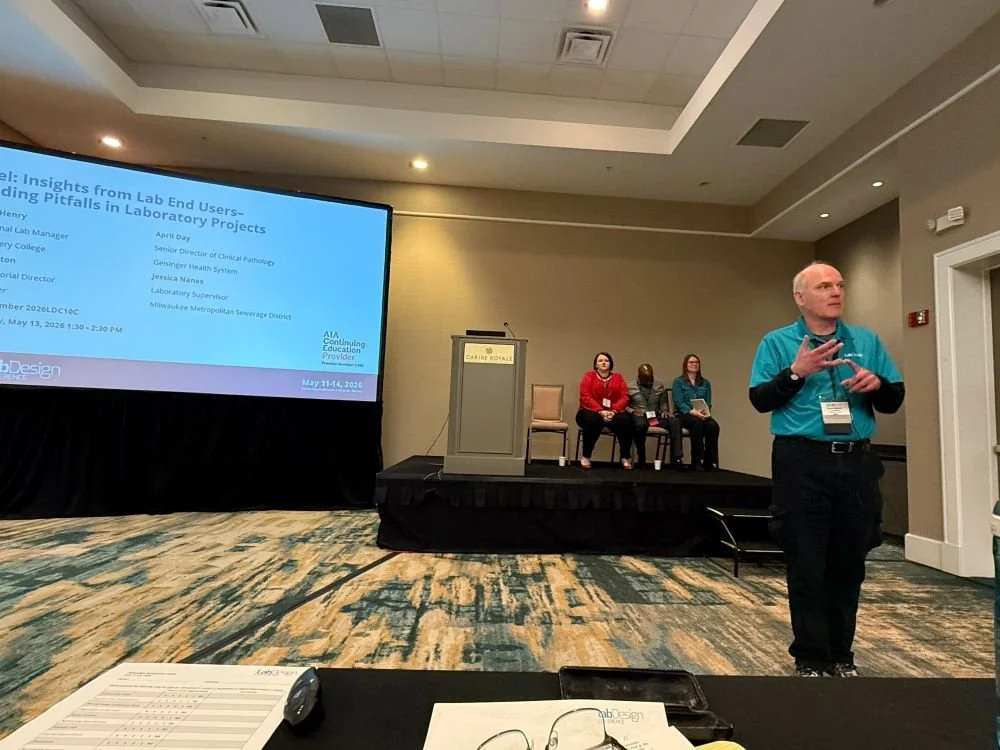
Scott Hanton, editorial director at Lab Manager; Dwayne Henry, instructional lab manager of chemical and biological sciences at Montgomery College’s Takoma Park/Silver Spring Campus; April Day, senior director of laboratory medicine at Geisinger; and Jessica Nanes, laboratory supervisor at Milwaukee Metropolitan Sewerage District, share insights on avoiding common pitfalls in laboratory projects during a panel discussion at the 2026 Lab Design Conference in Orlando, FL.
Laboratory projects can encounter costly setbacks when end users, facilities teams, and design professionals are not aligned on project goals, equipment requirements, and operational needs. At the 2026 Lab Design Conference in Orlando, FL, a panel of laboratory professionals shared lessons from their experiences with new construction, renovations, and facility management, highlighting how early collaboration, clear communication, and planning for future needs can help project teams avoid common pitfalls.
The panel, “Insights from Lab End Users–Avoiding Pitfalls in Laboratory Projects,” was moderated by Scott Hanton, editorial director of Lab Manager. Panelists included Dwayne Henry, instructional lab manager of chemical and biological sciences at Montgomery College-Takoma Park/Silver Spring Campus; April Day, senior director of laboratory medicine at Geisinger; and Jessica Nanes, laboratory supervisor at Milwaukee Metropolitan Sewerage District.
Although the panelists represented different laboratory environments, their experiences pointed to several shared priorities: involve the right people early, communicate the reasoning behind design decisions, and consider how a facility will function long after construction is complete.
Bring facilities and end users into the process early
One recurring challenge was the consequences of excluding key stakeholders during planning. Henry described issues with emergency generators and electrical systems in his institution’s new building, where facilities personnel had not been involved early enough to understand the decisions made during design.
After the building was turned over, facilities staff faced questions about systems they had not helped plan, making it difficult to resolve problems efficiently. Similar issues arose with ultra-low-temperature freezers and other equipment requiring maintenance and coordination.
“The biggest thing that I will say that we talk about is the end users, and making sure that the end users are being involved as well,” Henry said, emphasizing that facilities personnel also need to participate from the beginning.
The panelists encouraged project teams attending the Lab Design Conference to consider not only the scientists and laboratory managers who will occupy a space but also the people responsible for maintaining its systems, managing safety, purchasing equipment, and supporting daily operations.
Day described a structured approach to stakeholder engagement at Geisinger. When a project is approved, she brings it to a regional leadership meeting and asks department leaders to identify representatives who should participate in the kickoff. Those stakeholders can then determine whether their departments need to remain involved as the project progresses.
This approach gives potentially affected groups an opportunity to raise concerns before decisions become difficult or expensive to change.
Make communication understandable and actionable
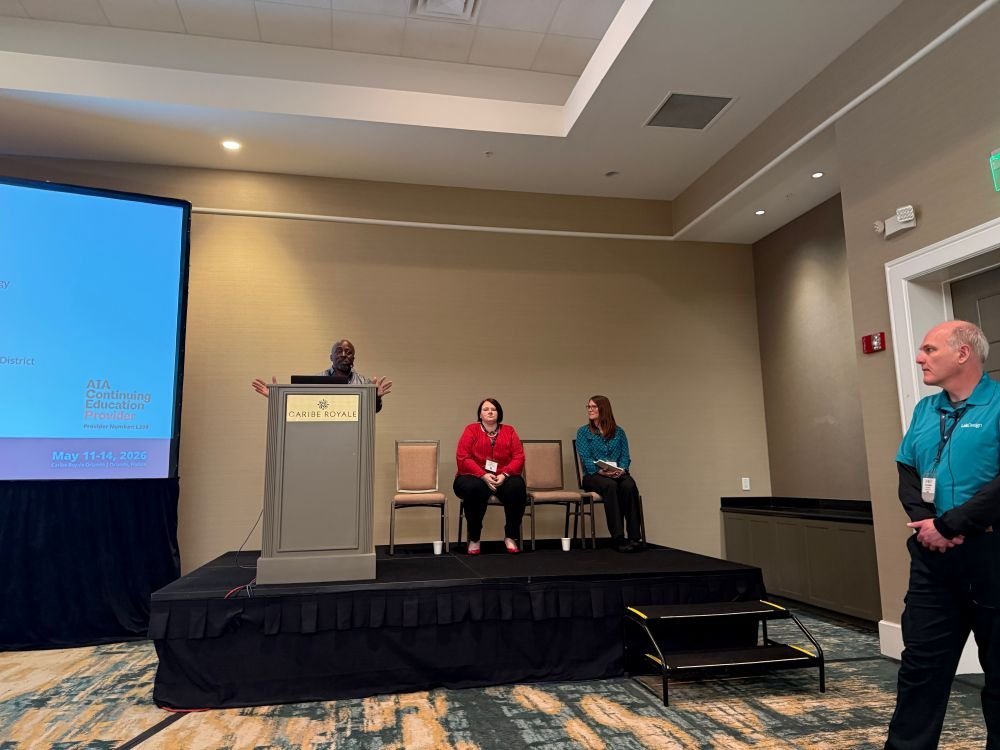
Panelists discuss how early collaboration among laboratory users, facilities teams, and project stakeholders can help prevent costly delays and design challenges during laboratory renovations and new construction at the 2026 Lab Design Conference in Orlando, FL.
Including stakeholders is only part of the solution. Participants must also understand what is being discussed and why their input matters.
Day noted that laboratory users, architects, engineers, and contractors may approach a project with different knowledge and priorities. Simply describing a proposed feature may not communicate how it will affect the people using the space.
She recommended explaining both the feature and its intended benefit. As she put it, “I need this so that we can ___” is a useful way to frame requests and clarify the purpose behind a design decision.
Hanton reinforced the importance of explaining the reasoning behind questions and decisions. Scientists may understand their processes and equipment but have limited familiarity with building codes, architectural requirements, or space planning. Without that context, they may not provide the information designers need.
“Tell me why you're asking me the question. Tell me why my answer is important,” Hanton said to the Lab Design Conference audience.
Communication also needs to extend across project teams. Henry recalled instances when groups worked in separate silos, with information reaching the right people too late to prevent problems. He recommended maintaining communication among end users, facilities, environmental health and safety (EHS) personnel, and other project stakeholders.
Nanes offered another way to gather input, particularly from people who may not speak up during meetings. While preparing for a future laboratory remodel at the Milwaukee Metropolitan Sewerage District, her team has toured other laboratories to learn from their layouts, technologies, and operational challenges.
These visits have helped identify issues such as inadequate outlets and ventilation. Nanes also highlighted the value of gathering feedback through electronic whiteboards, allowing staff to document workflow problems as they encounter them rather than relying solely on scheduled meetings.
Plan for equipment, warranties, and future growth
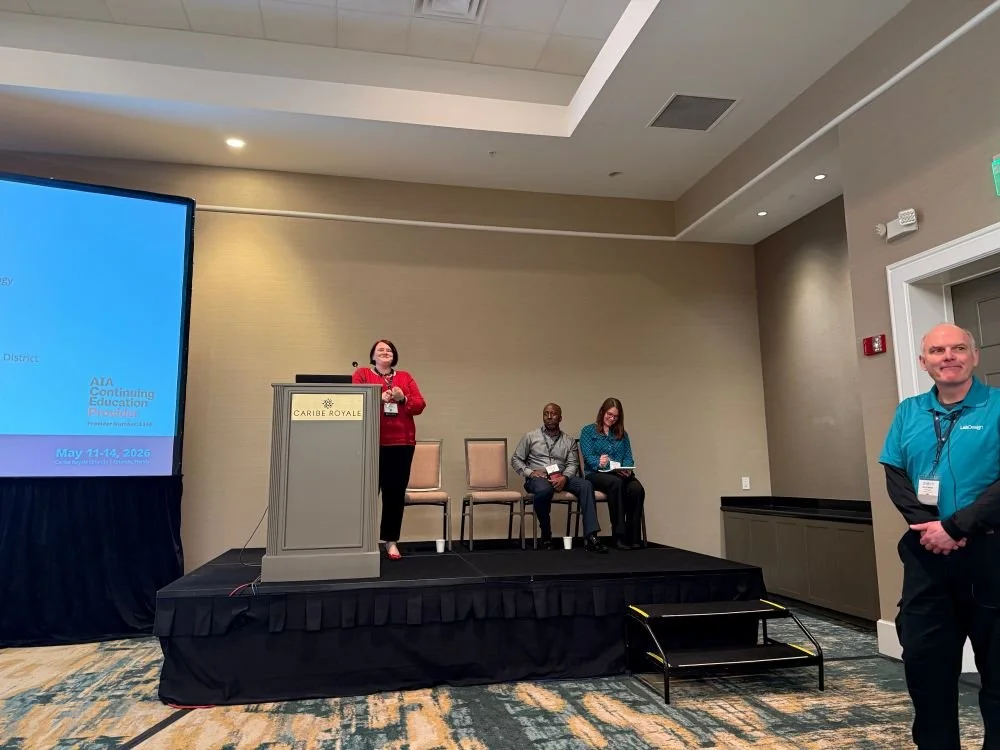
Laboratory end users share lessons learned on communication, equipment planning, safety, and flexibility, offering practical strategies for avoiding common project pitfalls and creating spaces that better support scientific work.
The panelists also emphasized that decisions about equipment procurement and infrastructure can have lasting financial consequences. Henry described how construction delays during the COVID-19 pandemic affected equipment purchased with state funds. Some instruments arrived years before the building was ready for occupancy. When staff eventually unpacked them, they discovered that some were not working, and the warranties had expired.
The experience highlighted the importance of coordinating equipment delivery with construction schedules and occupancy. Project teams can also work with purchasing departments to negotiate warranty terms that begin when equipment enters service rather than when it is delivered.
Planning for future needs is equally important. Hanton recalled underestimating electrical capacity and digital infrastructure requirements in a laboratory project. As scientific needs evolved, the facility required additional power and fiber connections, while an undersized server room limited expansion.
“We just never get it right of having enough power,” Hanton noted, recommending that teams consider how infrastructure needs may change over time.
Henry similarly cautioned Lab Design Conference attendees against filling laboratory rooms so completely that there is no space for additional equipment, new teaching requirements, or changes in use. Leaving room for growth can help institutions adapt without undertaking another major renovation.
Treat occupancy as the beginning, not the end
The panelists stressed that a completed building may still require time and coordination before it functions as intended. Henry explained that managing expectations was important when his institution moved into its new facility. Even when a building looks finished, operational problems can emerge as equipment is installed and staff begin using the space.
Day shared an example involving HVAC controls and temperature and humidity monitoring. Different contractors and maintenance teams had responsibility for various systems, but gaps in coordination and access complicated troubleshooting, including during weekends when environmental conditions needed immediate attention.
Her experience underscored the need to establish clear responsibilities for monitoring, maintenance, and after-hours response before occupancy.
Ultimately, avoiding laboratory project pitfalls requires more than delivering a building that meets its original specifications. Project teams must understand how the facility will be used, how its systems will be maintained, and how scientific needs may change. By involving end users and support teams early, communicating the purpose behind decisions, and planning for operational realities, teams can create laboratories that are better equipped to serve their occupants over the long term.
How can laboratory end users help shape facilities that better support their work? Find out at the 2027 Lab Design Conference, May 10-13 in Dallas, TX. The conference will bring together lab users, architects, engineers, facility managers, and other project team members to share real-world challenges, ask questions, exchange ideas, and build relationships that can inform future laboratory projects. It’s an opportunity for end users to voice their pain points, learn from others’ experiences, and connect with the people who can help turn their needs into better-designed laboratory environments.