
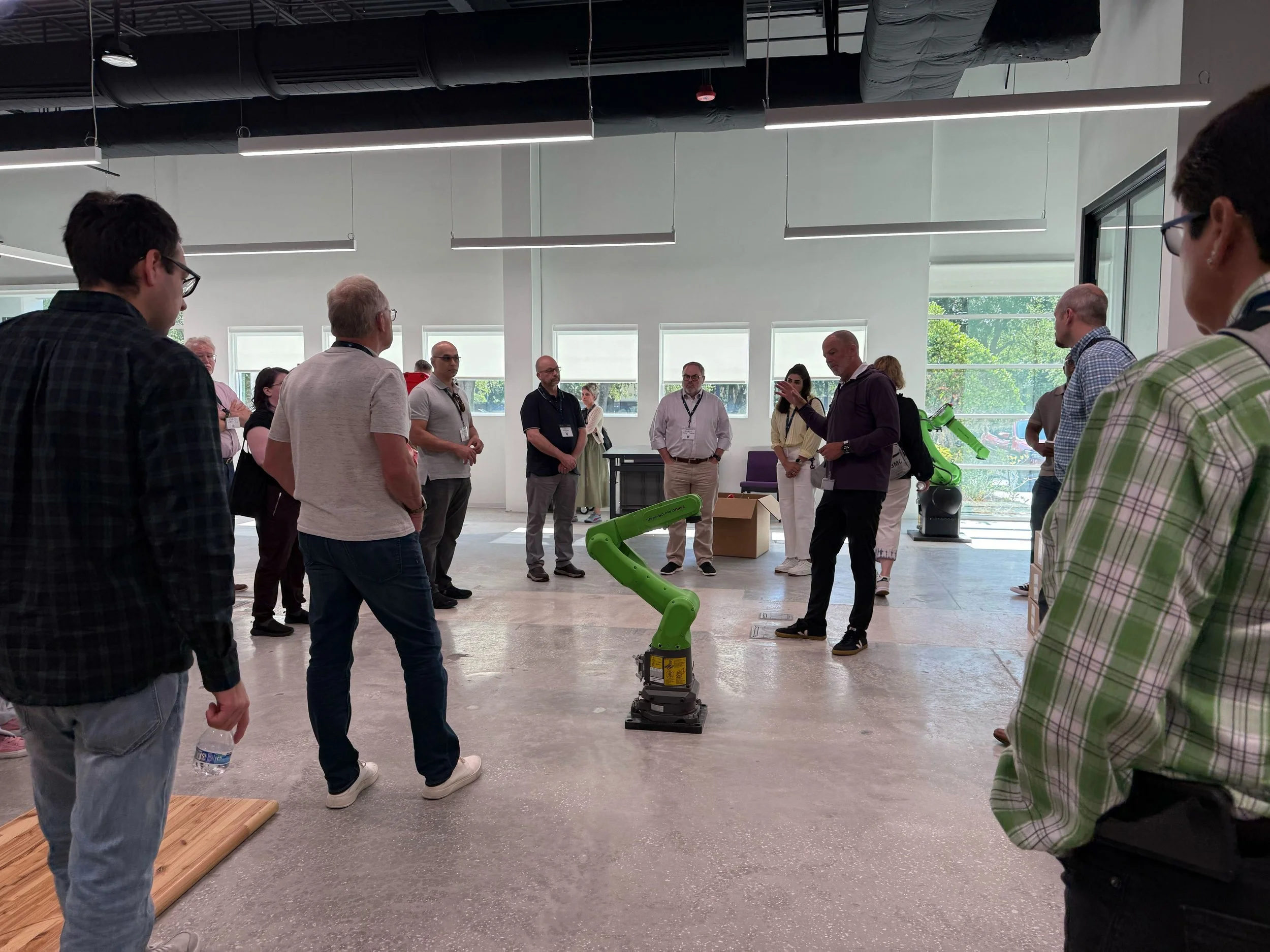
Attendees toured the Siemens Energy Orlando Innovation Campus, where integrated engineering, technology, and design environments showcased how collaborative, future-focused facilities can accelerate innovation, prototyping, and sustainability-driven research.
On May 14, attendees of the 2026 Lab Design Conference took part in a series of guided facility tours across the Orlando area, offering a rare opportunity to step inside active research, innovation, and environmental laboratories. Structured as a full-day program with both morning and afternoon options, the tours allowed participants to choose between two morning destinations—and for some, to attend one in the morning and another in the afternoon—creating a flexible, immersive learning experience rooted in real-world lab operations.
Across all sites, tours were led not only by design and construction project team members, but also by lab users themselves. This dual perspective gave attendees a layered understanding of how facilities were conceived, delivered, and ultimately used in day-to-day operations.
The core objective of the tours was to bridge the gap between design intent and operational reality. For lab planners, architects, and project teams, the experience offered firsthand insight into how spatial layouts, equipment placement, and infrastructure decisions directly influence workflow efficiency, safety, and adaptability. Observing scientists and technicians in action provided a clearer understanding of how design choices either support or constrain evolving research needs.
For lab end users, the tours offered an opportunity to see how peer institutions have approached similar challenges. By visiting other functioning labs, researchers and operational staff could evaluate how different design strategies impact productivity, collaboration, and flexibility. These observations often sparked conversations about what worked well, what could be improved, and how alternative approaches might be applied in their own facilities.
Vendors—including casework, furniture, and equipment providers—also benefited from seeing products in real operational environments. Rather than viewing systems in isolation or in showroom conditions, they were able to observe how products integrate into complex workflows, withstand daily use, and contribute to the overall performance of a lab ecosystem.
Siemens Energy Orlando Innovation Campus
One of the morning tour options featured the Siemens Energy Orlando Innovation Campus, a multidisciplinary hub designed to accelerate innovation through the integration of technology, engineering, and design. The campus includes specialized environments such as the Innovation Center Orlando, Technology Application Center, and Additive Manufacturing Application Center, supporting development from early concept through prototyping, validation, and deployment.
For attendees, the site illustrated how co-locating diverse capabilities can reduce development timelines while encouraging collaboration and iterative problem-solving. The campus also demonstrated how flexible, future-oriented lab environments can support emerging priorities such as decarbonization and sustainability-driven research. By uniting these functions under one roof, the facility serves as a clear example of how programming and design can directly shape innovation outcomes.
Florida Polytechnic University
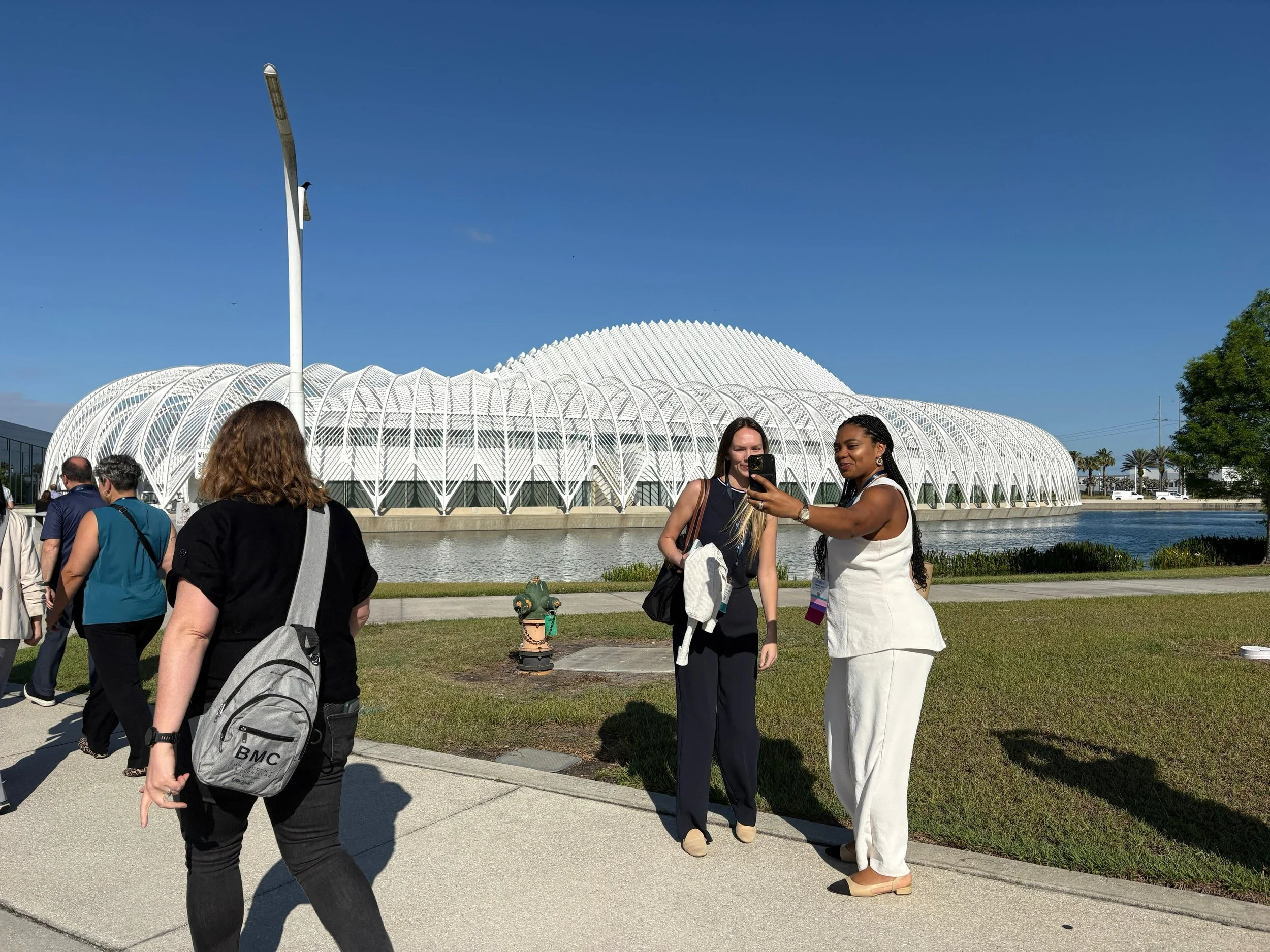
Attendees visited Florida Polytechnic University, touring the Barnett Applied Research Center and the Innovation, Science, and Technology (IST) Building, where light-filled, collaborative research and learning spaces showcased the university’s integration of STEM education, applied research, and interdisciplinary innovation.
The second morning option brought attendees to Florida Polytechnic University, where they toured both the Barnett Applied Research Center and the Innovation, Science, and Technology (IST) Building.
The Barnett Applied Research Center is designed as a light-filled, collaborative environment organized around a central atrium. Housing research labs, classrooms, and innovation spaces, the facility emphasizes transparency and interaction while supporting future expansion. Its design reinforces the university’s commitment to applied research and industry collaboration, while physically connecting learning and experimentation in one cohesive environment.
The IST Building serves as a signature architectural landmark for the university. With its distinctive dome form and integrated shading systems, the building reflects a strong commitment to STEM education and innovation. Inside, a mix of classrooms, laboratories, faculty offices, and shared commons spaces supports hands-on learning and interdisciplinary research. The building functions not only as an academic facility but also as a visible expression of the university’s identity and mission.
Iron Bridge Regional Water Reclamation Facility
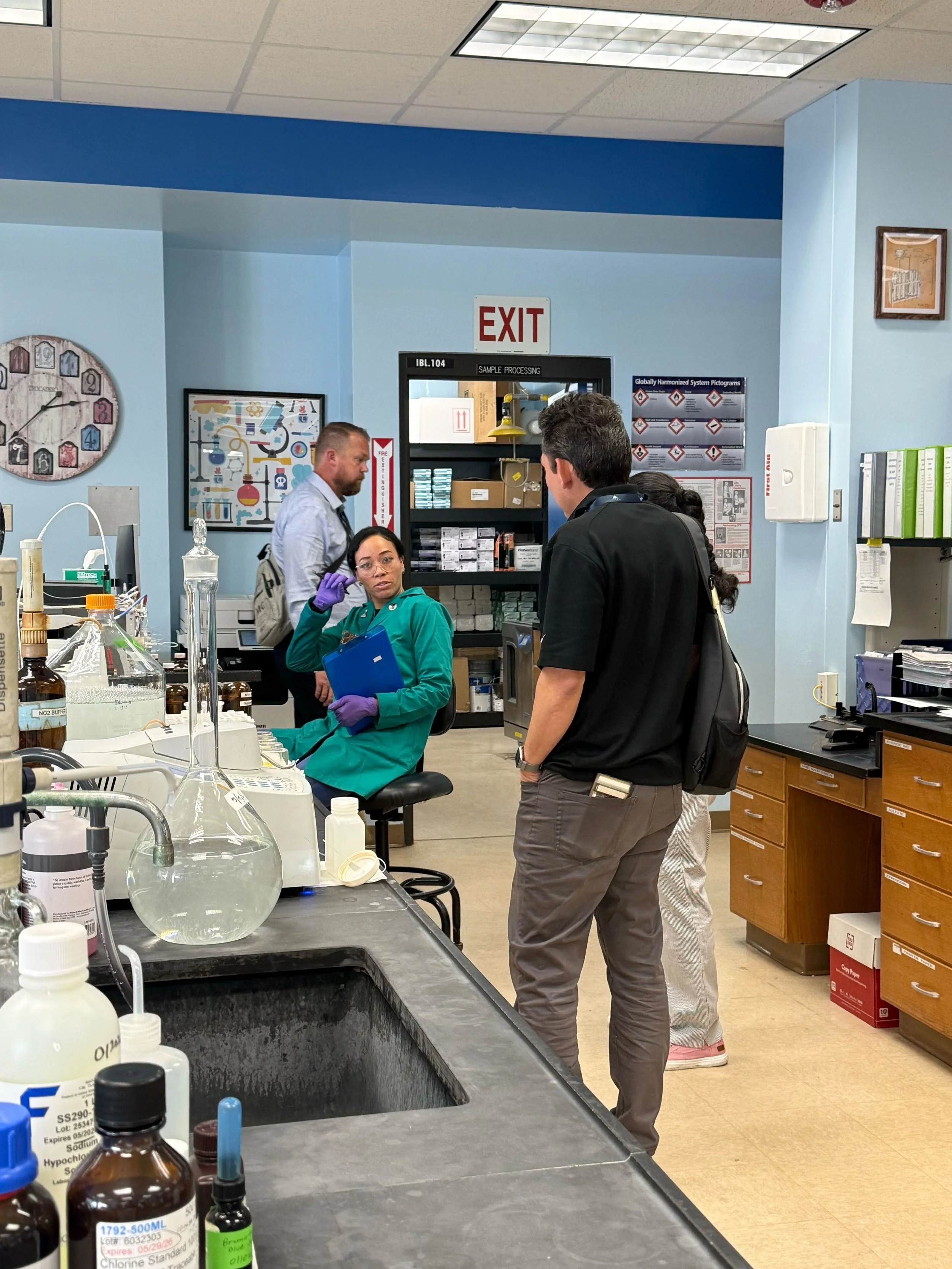
Attendees toured the Iron Bridge Regional Water Reclamation Facility Environmental Laboratory Services facility, where advanced testing of wastewater, surface water, and industrial discharge demonstrated how rapid, high-volume environmental analysis supports the City of Orlando’s water system operations and infrastructure resilience.
The afternoon tour focused on the Iron Bridge Regional Water Reclamation Facility, where attendees visited the Environmental Laboratory Services facility. This municipal laboratory plays a critical role in supporting the City of Orlando’s water systems through comprehensive environmental testing and analysis.
The lab monitors wastewater from multiple treatment plants, surface water from lakes and wetlands, and industrial discharge from large-scale users. Certified for 85 parameters in non-potable water and solids, the facility specializes in wet chemistry, metals, and microbiology testing. It produces approximately 80,000 analytical results annually, with 84 percent delivered within 24 hours and 95 percent within one week—enabling rapid operational response across the city’s water infrastructure.
A unique perspective on real-world lab performance
Across all three destinations, the Lab Design Conference tours underscored a shared theme: the importance of aligning design decisions with real-world use. By bringing together designers, builders, users, and vendors in active laboratory environments, the program created a dynamic forum for observation and exchange grounded in daily operational reality.
Rather than focusing solely on completed projects, the tours emphasized lived experience—how labs actually function, adapt, and evolve once occupied. For many attendees, this direct exposure provided one of the most valuable forms of insight: seeing how design decisions ultimately perform under the pressures of real scientific, educational, and environmental work.