
Key Design Considerations for Cleanroom/Dryroom Facilities
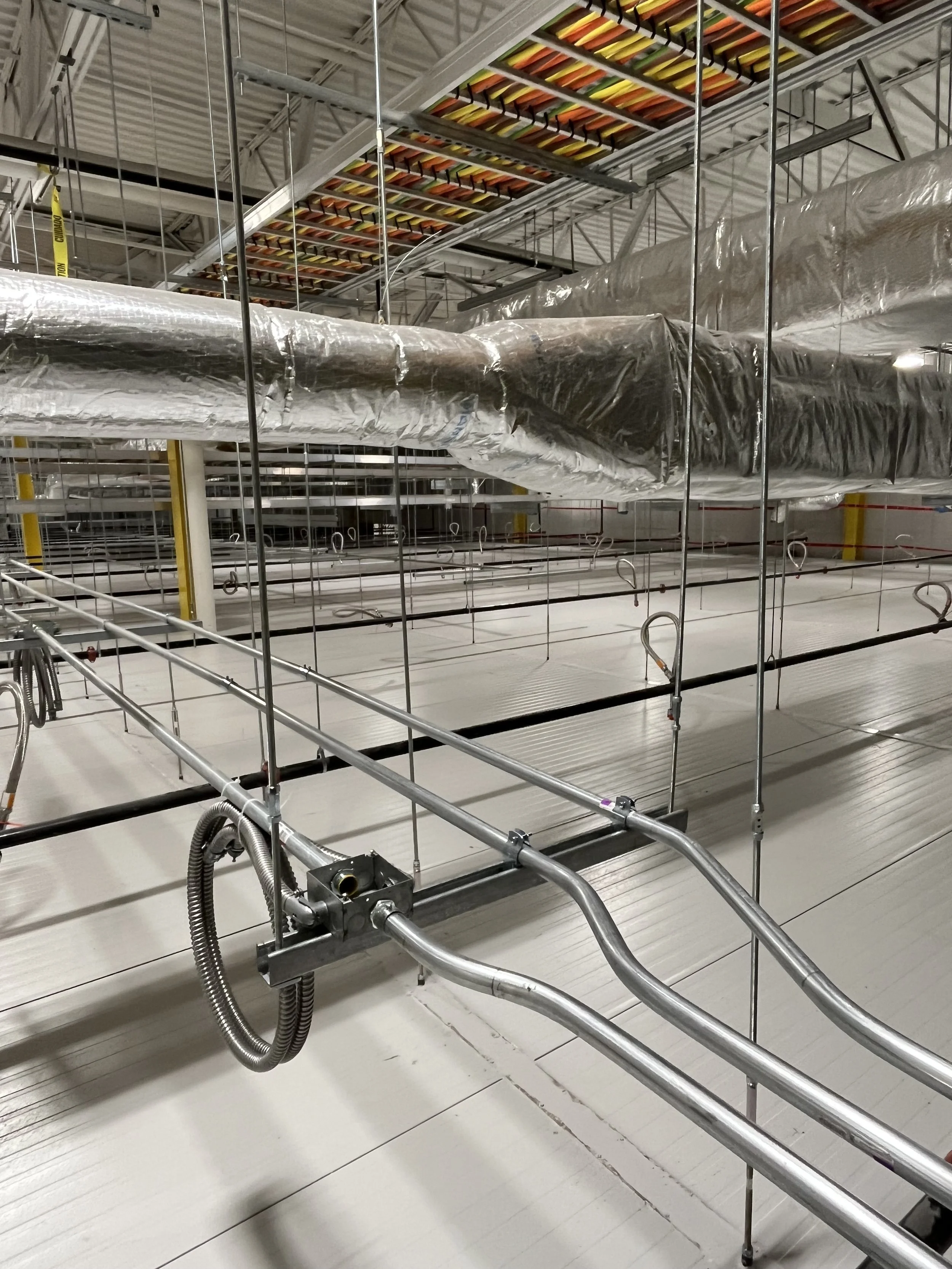
This image of a battery plant in Clarksville, TN shows the final product of months of coordination between the IMP ceiling design and other trades. In this image you can see all the ceiling rods and trapezes that were required to work with the other trades. Image: Case Engineering
Stephen J. Sacco, PE, senior principal/structural engineer at Case Engineering, is co-author of this piece.
In today’s world, where the use of artificial intelligence (AI) and data centers is increasing exponentially, so is the need for cleanrooms and dryrooms (CRDR) that support these facilities as well as other types of manufacturing and operations requiring controlled environments.
The surge for clean/dryrooms is driven in part by the rising demand for:
Precise humidity control in manufacturing sensitive components such as lithium-ion batteries, electronics, medical-grade devices, pharmaceuticals, and automotive hybrid materials
Enhanced contamination control used in highly controlled manufacturing, research, and testing environments
Temperature-control in manufacturing sensitive pharmaceuticals such as vaccines and biological samples
CRDR design is governed by strict requirements related to employee safety and environmental controls to ensure product efficacy and quality. While both cleanrooms and dryrooms require controlled environments, cleanrooms prioritize sterility and particle control, while dryrooms prioritize extremely low humidity for moisture-sensitive operations. The choice depends on the specific requirements of the operation and the sensitivity of the materials or processes involved.
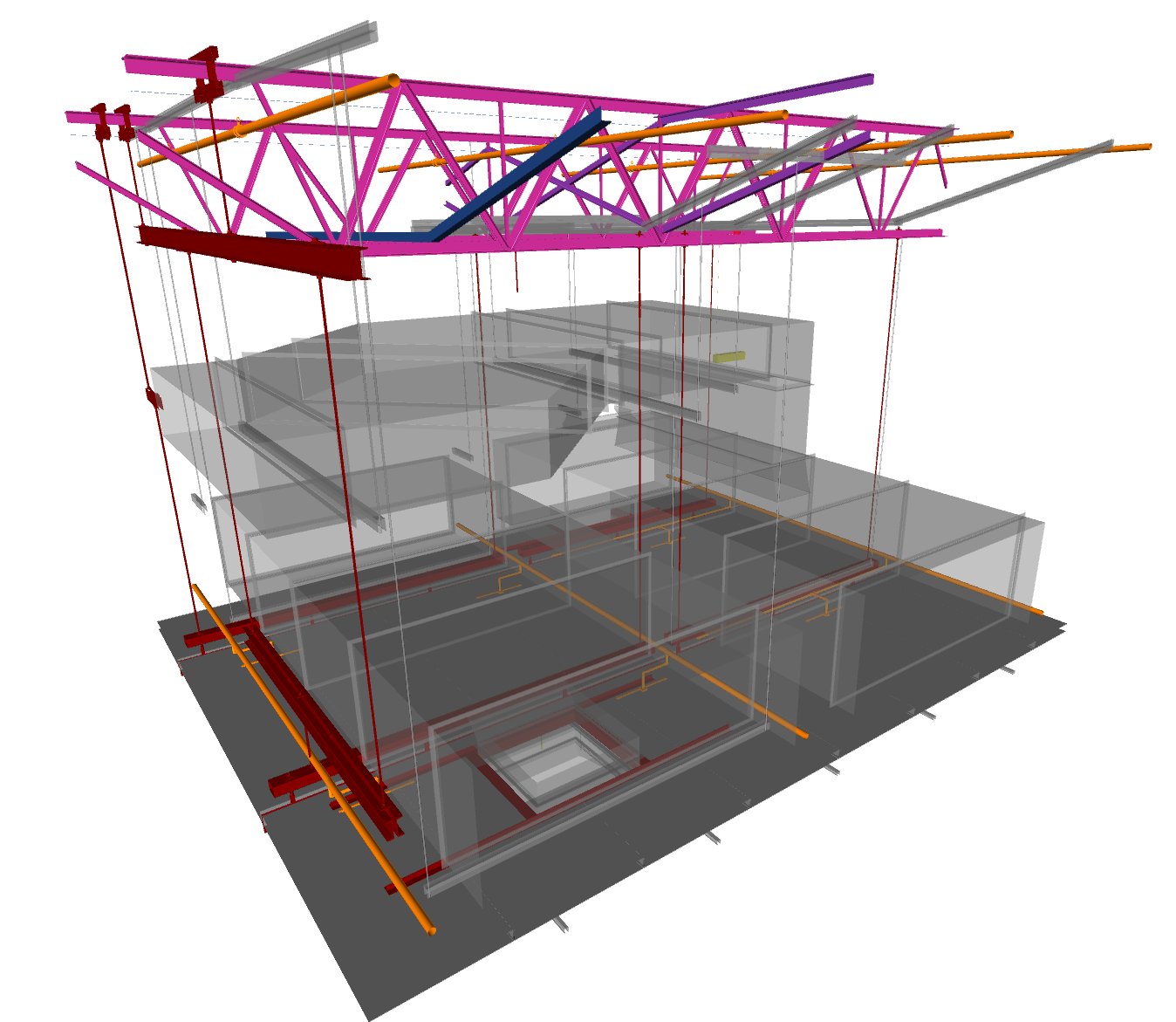
This image shows a unique situation in which the HVAC system clashed with all of the ceiling support rods. Case had to come up with a unique trapeze solution to get around the ducts and attach to the existing structure above. Image: Case Engineering
Controlling humidity plays an important role in many types of manufacturing. For example, lithium-ion battery production requires dry rooms where relative humidity is kept at extremely low levels, typically below five percent. Since lithium reacts violently with water vapor, even a single drop of sweat or moisture particles found in exhaled breath can create a safety risk.
However, not all CRDR projects are alike and the distinctions between these applications require different design considerations. Mission-critical data centers that support essential operations ranging from large-scale facilities such as Meta Platform data centers used to power social media and expand AI capabilities to 911 call centers, hospital systems, military facilities, and government institutions all operate under environmental conditions that are nearly opposite from those of battery manufacturing facilities. Instead of ultra-low humidity, these spaces rely on precise humidity controls to sustain a relative humidity that is high enough to prevent electrostatic discharge (ESD) and low enough to prevent corrosion, generally between 40 to 60 percent.
Sealed and seamless construction is often recommended for clean/dryrooms to prevent moisture ingress, reduce particle generation, and maintain stable interior conditions.
Due to their prefabricated design, integrated insulation core, and interlocking joint systems, Insulated Metal Panel (IMP) systems are commonly used to help achieve sealed, seamless construction in CRDR facilities.
Some key benefits of using IMP systems for clean/dryrooms include:
Energy efficiency: IMPs are composite building materials made up of two rigid metal skins with an insulated foam core between them. Often designed with a high insulation value exceeding R-7 per inch, IMPs help to reduce heat transfer and maintain a consistent indoor temperature.
Durability: The construction of IMPs provides excellent resistance to moisture, UV exposure, fire, and physical impacts, making them an ideal, low maintenance option for harsh environments.
Rapid installation: A single, pre-fabricated panel comes integrated with insulation, vapor control and cladding to significantly reduce installation time and labor costs.
Design flexibility: IMPs are available in numerous finishes and colors and can be installed both horizontally and vertically to create a variety of architectural designs.
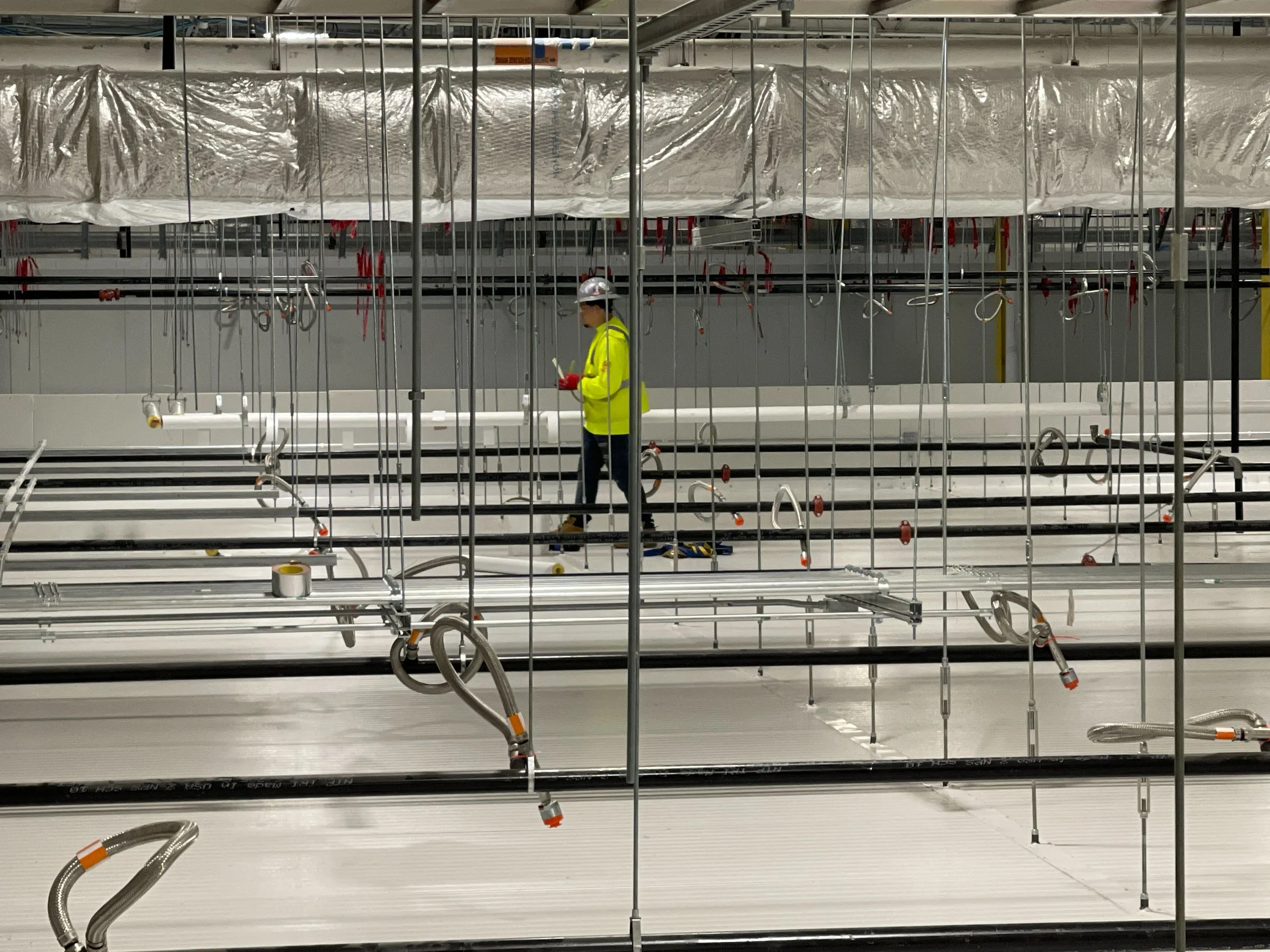
Walkable ceilings allow installers and facility staff to access areas above the ceiling that otherwise would not be accessible once the ceiling is installed. Image: Case Engineering
IMP wall panels require structural steel backing to ensure that the walls can resist interior and exterior wind loads, as well as temperature variations between production rooms, which, if not taken into consideration, can cause walls to buckle and become unstable. Large openings in IMP walls necessary for vehicle access, air showers, or other purposes also require structural engineering.
IMP panels are also a viable option for walkable ceilings in clean/dryrooms due to their modular capabilities for rapid installation and thermal properties that support environmental control. Walkable ceilings, which are generally suspended from an existing structure with threaded rods and supported by tees or channels, allow facility managers easier access to utilities above the ceiling than conventional ceilings.
Threaded rod placement must be carefully coordinated with mechanical, electrical, and plumbing trade partners to avoid conflicts with ductwork, piping, conduit, and other critical building systems located in the ceiling.
To better protect employees and the sensitive technology used in clean/dryrooms, fire-rated panels are often specified. IMP panels are available in 1hr, 2hr, and 3hr ratings for walls and 1hr and 2hr rating options for ceilings.
The use of fire-rated IMP panels requires an extra level of coordination between the architect, the product manufacturer, and the structural engineer. Architects are typically most knowledgeable about local building and fire codes, while manufacturers provide tested assembly data, and engineers evaluate structural integration. In situations where penetrations, joints, or connection details differ from tested assemblies, an engineering judgment may be required to verify that the fire-resistance rating can still be maintained.

Stephen J. Sacco, PE, co-author of this piece, is senior principal/structural engineer at Case Engineering.
The demand for clean/dryrooms will continue to increase across multiple sectors due to the growing need for precision manufacturing, product safety, and quality control. According to industry studies, the global cleanroom technology market is projected to grow from $10 billion in 2025 to $14 billion by 2030. Engaging experienced CRDR designers early in a project can help optimize costs, compliance, and operational efficiency.