
How One Biotech Start-up Approached Its First Laboratory
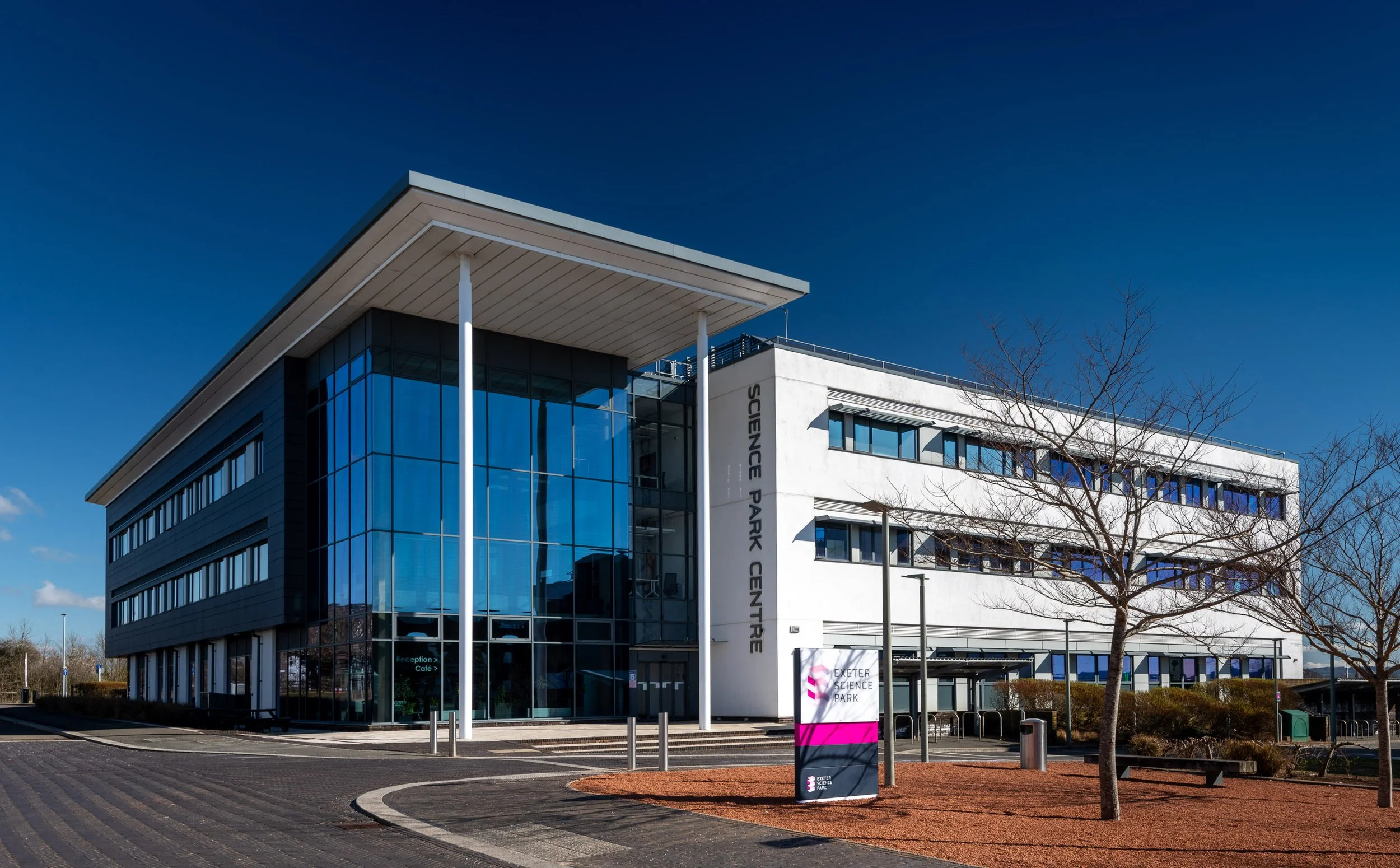
HyphaPRO’s first laboratory at Exeter Science Park was designed for affordability, flexibility, and rapid startup, supporting early proof-of-concept work in fungi-based precision fermentation. Image: Courtesy of Exeter Science Park, Photo by Sarah Birbeck
For early-stage biotech companies, the first laboratory is rarely about perfection. It’s about momentum—finding a space that is affordable, adaptable, compliant, and close to the people and infrastructure that can help the science mature quickly. That balance is exactly what guided HyphaPRO’s decision to establish its first laboratory at Exeter Science Park (ESP) in Exeter, UK, where company founder Dr. Andy Foster is laying the groundwork for fungi-based precision fermentation research with an eye firmly on future growth.
HyphaPRO is a newly launched biotechnology start-up focused on producing high-value food proteins using fungi as a fermentation platform. The company’s initial proof-of-concept targets include ovalbumin and ovotransferrin—proteins traditionally sourced from eggs but increasingly vulnerable to supply disruptions. While the science is ambitious, the lab strategy behind it is deliberately pragmatic.
Choosing a site that supports early growth
Location was a defining factor in HyphaPRO’s lab selection process. According to Foster, Exeter Science Park offered a rare combination of infrastructure, academic proximity, and start-up-friendly culture.
“The location of the science park is fantastic,” he explains. “There’s the University of Exeter, where there’s a great biosciences department, and there are close links to air and road connections. That there is a lot of support for new businesses and a community feel to the campus is a huge bonus for us.”
The community component is a factor worth considering for early-stage companies with limited staff and capital. Access to peer organizations, shared resources, and on-site expertise can make day-to-day operations more manageable during the first year.
Defining non-negotiables for an early-stage lab
HyphaPRO’s research focus—fungal genetics and precision fermentation—directly shaped its lab requirements, but those needs were intentionally kept lean. Rather than overbuilding, Foster prioritized flexibility and affordability.
“The lab had to be affordable for a new start-up, with room for the necessities for the first year,” he says. “A sink was essential for the kind of work we do. We really needed options to change the layout if required, too.”
That emphasis on adaptability reflects a reality familiar to lab designers working with start-ups: workflows evolve quickly, especially during proof-of-concept phases. Fixed casework, highly specialized utilities, or overly prescriptive layouts can quickly become liabilities.
The Science Park Centre lab space itself required minimal base-building modifications, which proved to be an advantage rather than a limitation. “A sink was installed, otherwise it was a blank slate to work with,” Foster notes.
From there, customization focused on biosafety and containment. As HyphaPRO plans to work with genetically modified fungi, the space needed to support regulatory compliance and safe handling from day one.
“We have to think of containment if we plan to work with genetically altered fungi, so it was important that we could install a Class II microbiological cabinet and also the necessary safe storage for chemicals and reagents,” he explains.
Budget constraints also influenced design decisions. With new equipment often cost-prohibitive, the ability to freely configure the space made it easier to integrate previously used assets. This underscores the value of providing open, utility-ready spaces that can accommodate non-standard equipment footprints and incremental upgrades.
“That we have been able to have total freedom over the layout was a positive, because our limited budget means we have had to purchase several secondhand items, the new equivalents being prohibitively expensive,” says Foster.
Designing with an eye on the future
Even at this early stage, HyphaPRO’s lab planning accounted for what comes next, and what won’t happen in-house right away.
“We have in mind that year two onwards would likely require moving to a larger unit and fermentation might be too expensive for us to undertake in-house in year one, even if we could accommodate a bioreactor,” Foster says.
Staff growth and fermentation scale-up were considered during site selection, with the expectation that the current lab will be temporary.
“We consider it highly likely that we will outgrow the current space in 12 to 18 months. This, of course, is also a consideration in the fit-out, which we have selected to be very portable should we secure a greater amount of funding down the line.”
Portability—both in equipment and layout—is a recurring theme, and one that science parks and landlords can actively support through flexible lease structures and expansion pathways.
Balancing speed, budget, and compliance
For start-ups, speed to operation often competes with regulatory and safety requirements. Foster credits early planning—and prior lab management experience—with helping HyphaPRO navigate that tension. Purchasing secondhand equipment and other items offered his team “the luxury of a couple of months to purchase the equipment well before the move, and this allowed us to be operational within six weeks of the lease start.”
At the same time, compliance considerations were addressed upfront.
“The regulations around GM work and use of particular chemicals and reagents and their safe storage was considered from the outset,” Foster notes. “Having worked in lab management previously, I am very mindful of health and safety around the work we do—not just for HyphaPro, of course, but for the other users of ESP and the local environment.”
On-site support played a role as well. “It’s also helpful that the Science Park has an on-site facilities manager and access to workshops and training, including health and safety.”
For fungal genetics and precision fermentation work, containment is not optional—it is foundational. This reinforces the importance of designing start-up lab spaces that can support regulated activities without extensive retrofits.
“Total containment is a non-negotiable, not just for strain purity and to avoid cross contamination, but also for HSE regulated GM work compliance,” Foster says. “We plan to apply to do this work in the coming two to four months.”
Leveraging academic proximity
HyphaPRO’s proximity to the University of Exeter adds value that extends beyond talent recruitment and hiring pipelines. Foster has drawn on his connection to his alma mater for guidance and credibility as the company gets off the ground.
“As a University of Exeter graduate, it is invaluable to have this link not just for the company’s credibility but also as a source of talent for us down the line,” Foster explains. “Knowing many academics at the university, I have been able to have access to expert advice.”
There is also potential access to shared resources. “There is also the possibility of access to equipment we couldn’t realistically buy or accommodate in the unit.”
Looking back, Foster offers a candid perspective on early lab investments.
“I would say that although we have fitted out the lab very early in the company’s life, there could be an argument for securing more funding before lab lease and equipment purchase,” he says, while also acknowledging the trade-offs. “That said, sourcing solid secondhand equipment for a great price is actually extremely satisfying!”
That need for adaptability is a consistent thread throughout HyphaPRO’s approach to its first lab. Foster notes, “I think that start up companies are very prone to expand and contract and pivot, so that flexibility in terms of leases and layout is a real plus for a young biotech company.”
HyphaPRO’s first lab may be modest in size, but its design strategy—portable, compliant, and ready to evolve—illustrates how early-stage lab environments can support scientific momentum without locking companies into spaces or investments they may quickly outgrow.