
Expanding Lab Capacity Through a Flexible Retrofit Strategy
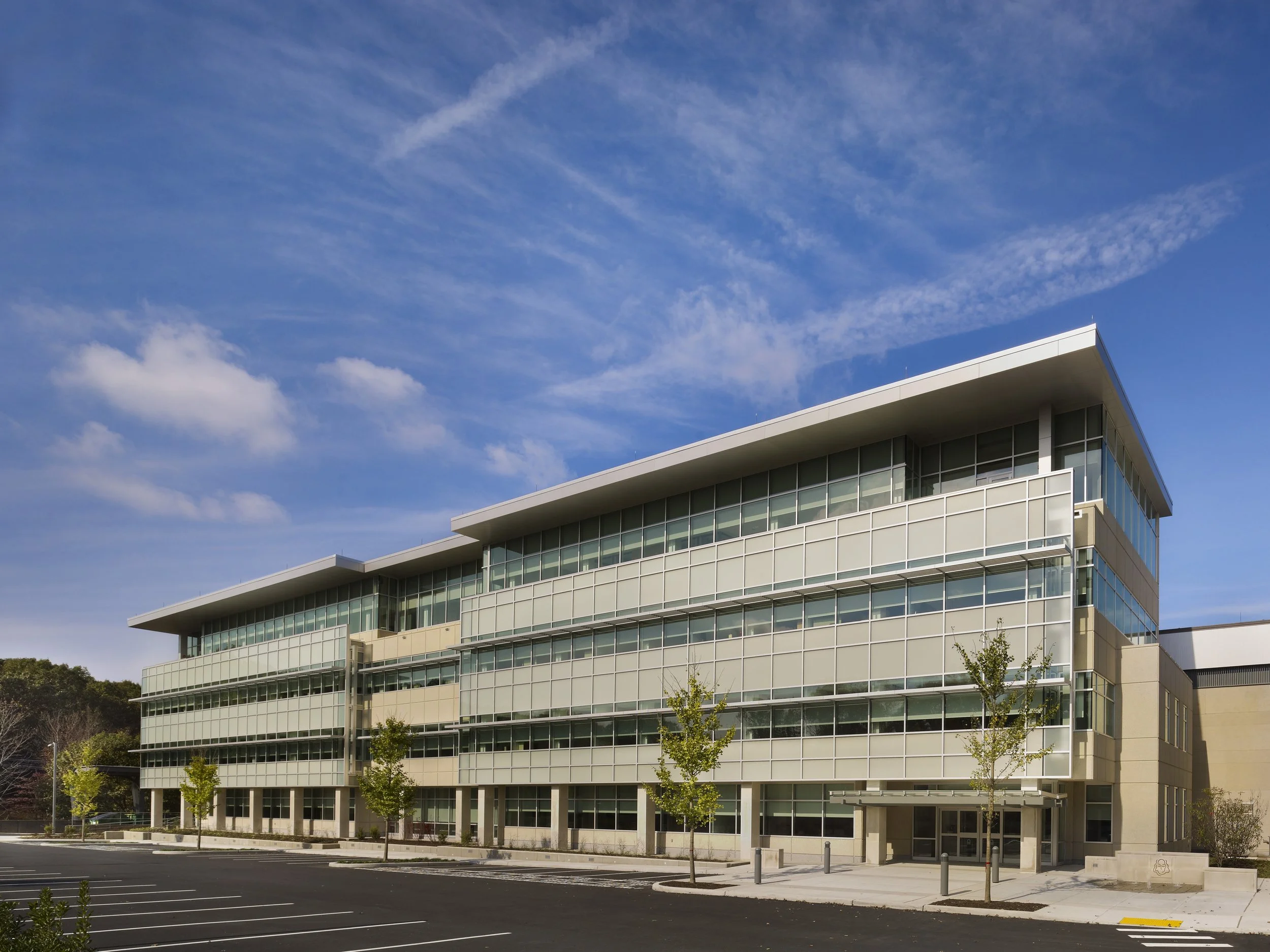
Ben Franklin TechVentures is expanding its Bethlehem facility by converting existing space into flexible wet and electronics labs to support growing demand from early-stage life sciences and microelectronics companies. Image: Courtesy of TechVentures
Ben Franklin Technology Partners of Northeastern Pennsylvania is advancing a major renovation at its TechVentures facility in Bethlehem, converting more than 10,000 square feet of existing space into additional wet labs and electronics labs.
Supported by $4.8 million in federal funding through the FY26 appropriations process, the project will increase lab capacity by more than 50 percent within the 129,000-sf facility at 116 Research Drive.
The project is notable not only for its program expansion, but for its retrofit-first approach—prioritizing reuse of an existing innovation ecosystem rather than ground-up construction.
Responding to cross-disciplinary lab demand
The decision to expand within TechVentures reflects both market pressure and a shift in how early-stage science and technology companies are defining lab space needs.
“The decision was driven by a clear market need,” says Angelo J. Valletta, president and CEO of Ben Franklin Technology Partners of Northeastern Pennsylvania. “For more than a decade, we have seen continued demand from early-stage companies in life sciences, microelectronics, and adjacent fields that need specialized lab space in order to grow. At the same time, we are also seeing more overlap between disciplines, particularly where biology and electronics intersect. Expanding lab capacity inside TechVentures allows Ben Franklin Technology Partners of Northeastern Pennsylvania to respond to that need in a way that is practical, timely, and mission-aligned.”
From a planning perspective, that convergence is driving demand for hybrid environments that can support both wet lab workflows and electronics-oriented R&D under one roof—an increasingly important consideration in speculative and incubator-style lab development.
Retrofit strategy over new construction
Rather than pursuing a new build, the project team is leveraging the existing TechVentures infrastructure, reinforcing a growing trend in lab development: adaptive reuse of purpose-built or semi-purpose-built facilities.
Valletta emphasizes the strategic advantages of building from an existing innovation hub: “Renovation makes sense at this stage because TechVentures already has the physical footprint, operating environment, and innovation ecosystem to support these companies. Rather than starting from the ground up, we are building on an established asset with a strong tenant community, shared resources, and a track record of helping startups scale.”
This approach underscores the importance of evaluating not just square footage potential, but also operational adjacency—shared equipment, tenant synergies, and existing support infrastructure that can reduce redundancy in new design interventions.
Designing for wet lab and electronics lab coexistence
One of the more complex design challenges in the expansion is accommodating wet lab and electronics lab environments within a flexible, shared facility—each with distinct requirements for HVAC, power stability, contamination control, and safety zoning.
“Scale, flexibility, growth capacity, and, most importantly, safety will define this reimagined space,” Valletta says. “We are thinking carefully about layout, infrastructure, and shared resources from the start. The design process is focused on accommodating both wet lab and electronics lab needs through thoughtful adjacencies, adaptable spaces, and infrastructure that can support a range of use cases over time.”
This signals an emphasis on zoning strategies that separate incompatible processes while maintaining proximity where cross-disciplinary collaboration is beneficial—particularly in emerging fields like photonics, advanced materials, and semiconductor-adjacent biotech.
Infrastructure upgrades: designing the backbone for flexibility
At the core of the renovation is a comprehensive upgrade to building systems that support lab performance and long-term adaptability. HVAC, electrical capacity, utilities, and environmental controls are being prioritized to accommodate a broad spectrum of early-stage research activities.
“Our overall priority is to create robust core infrastructure that can support a diverse tenant base,” Valletta says. “That includes careful attention to HVAC, power capacity, utilities, environmental controls, and other building systems that are foundational to safe and functional lab operations. Because early-stage companies often evolve quickly, it is important that the upgraded infrastructure can support both current uses and future reconfiguration.”
This reinforces the importance of over-specifying base building systems in incubator environments, particularly where tenant turnover and rapid scaling are expected. Flexible infrastructure becomes a long-term asset rather than a fixed-cost constraint.
Planning through institutional knowledge and tenant feedback
Unlike many speculative lab developments, TechVentures benefits from more than two decades of operational experience with startup tenants. That history is directly informing layout decisions and shared space planning.
“We are drawing from years of ongoing interaction, operational learning, and consistent input from companies that have worked in the facility over time,” Valletta says. “That history gives us a clear sense of what tenants value most, including functional layouts, access to shared resources, room for growth, and spaces that can adapt as technical needs evolve.”
From a user-experience standpoint, this feedback loop is especially valuable in shaping lab adjacencies, shared instrumentation zones, and circulation patterns that support both collaboration and containment requirements.
Modularity as a long-term design driver
Although still in early design stages, the project is being guided by a modular planning philosophy intended to preserve future adaptability as tenant needs evolve.
“We are still very early in the design process at this time,” Valletta says. “We are planning for modularity and infrastructure that can support multiple configurations rather than locking spaces into highly specific uses. The long-term value of this expansion will come from its ability to accommodate change.”
This approach aligns with best practices in flexible lab design, such as using demountable partitions, reconfigurable utilities, and scalable support zones that allow spaces to shift between wet lab, instrumentation, or hybrid uses without major renovation.
Delivering federally funded lab projects
The expansion also highlights the complexity of delivering lab projects supported by federal funding, where coordination across multiple stakeholders and compliance timelines becomes a critical part of project management.
“One early lesson is that federally supported projects require patience, alignment, and disciplined coordination,” Valletta says. “Funding support is essential, but it also comes with timelines, processes, and stakeholder expectations that require steady management.”
For development teams working in similar funding environments, early alignment on scope, phasing, and regulatory milestones is essential to maintaining both schedule integrity and design intent.
Strengthening the regional innovation ecosystem
Looking ahead, the expansion is expected to reinforce TechVentures’ role as a key innovation hub in Northeastern Pennsylvania, particularly for companies operating at the intersection of life sciences and microelectronics.
“This expansion has the potential to strengthen TechVentures’ role as a regional hub for innovation by increasing the kind of space that high-growth companies increasingly need but often struggle to find in our area,” Valletta says.
Ultimately, the project’s design success will hinge on how well it balances technical performance with long-term flexibility.
“Designing for flexibility, shared value, and long-term usability will have a major impact on tenant success, because it helps companies stay focused on innovation rather than infrastructure barriers,” Valletta says.