
Electrification of the Lab: Moving Away from Natural Gas
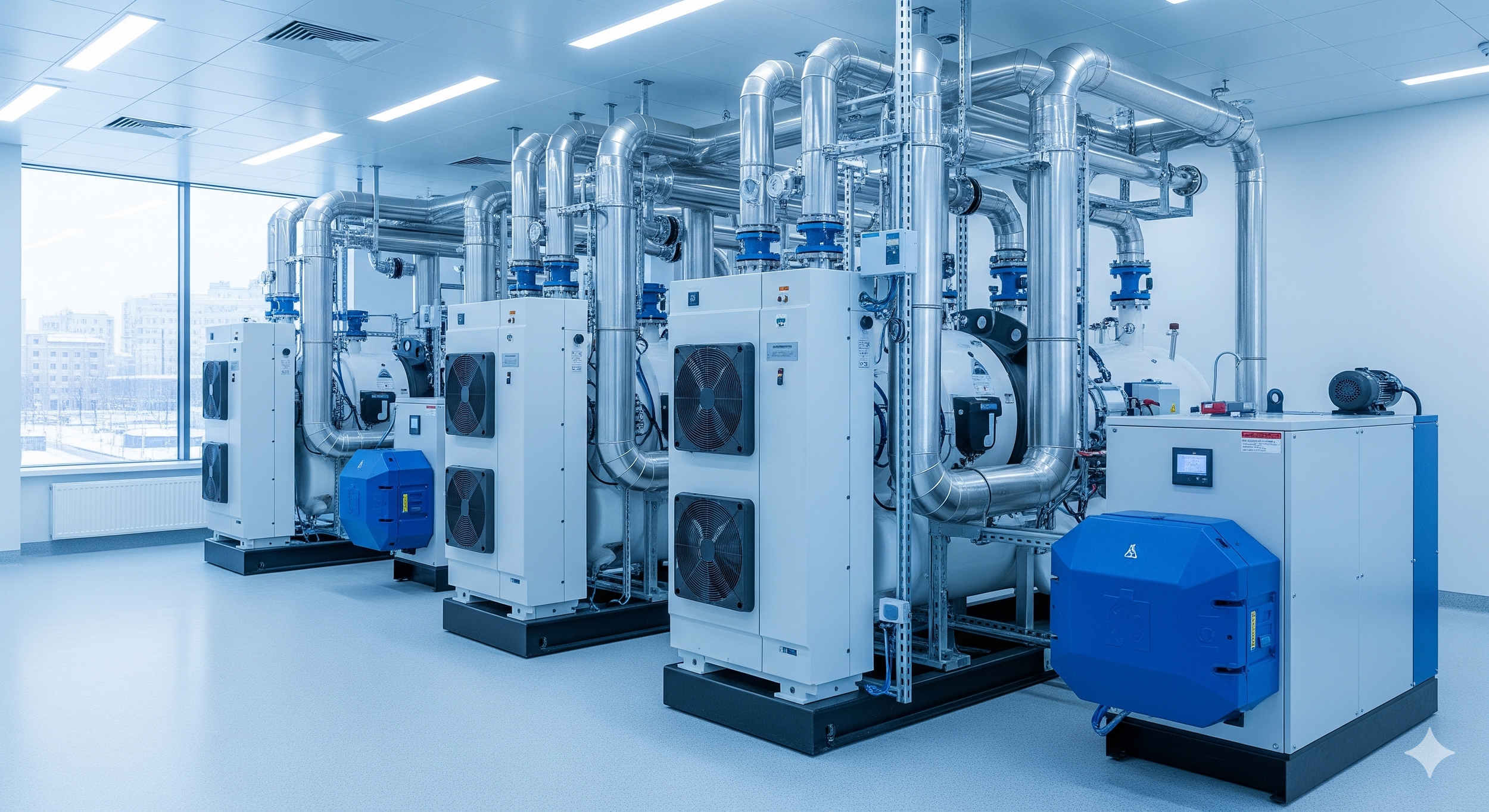
Can a Boston lab survive without natural gas? The engineering reality of full electrification.
Credit: Gemini (2026)
Introduction: ending the gas addiction
For a century, the life science industry has had a love affair with natural gas. It is cheap, energy-dense, and historically reliable. Gas-fired steam boilers have long been the muscle behind sterilization (autoclaves), humidification, and space heating for drafty, high-exhaust laboratories. In cold climates, the "blue flame" was seen as the only safety net against freezing pipes and failed experiments.
However, the regulatory and financial tide is turning aggressively. With cities like New York (Local Law 97), Boston (BERDO), and Seattle banning new gas hookups or imposing heavy carbon fines, and corporations committing to strict ESG goals, the mandate is clear: stop burning fossil fuels on-site. For the lab architect and engineer, this presents a massive design challenge. How do we replace the intense thermal power of a boiler with electricity without significantly increasing operational costs or risking resilience? As outlined in our comprehensive guide on net-zero lab design, electrification is the critical, non-negotiable next step in the decarbonization journey to avoid creating "stranded assets"—buildings that will become legally or financially obsolete in the next decade.
The thermodynamics of lab electrification strategies
The core problem is not just fuel; it is temperature physics. Traditional hydronic heating loops were designed to run at 180°F (82°C) to effectively combat the chill of 100 percent outside air ventilation. Old-school electric resistance heating (like a giant toaster coil) is technically possible to match this temperature but is financially ruinous due to the high cost of electricity per BTU compared to gas.
The modern solution relies on lab electrification strategies that leverage thermodynamics rather than brute force. This requires a fundamental shift from "High-Temperature Hot Water" (HTHW) to "Low-Temperature Hot Water" (LTHW) systems.
Heat pump technology: moving heat, not making it
Instead of generating heat through combustion, modern labs use industrial-scale heat recovery chillers (heat pumps). These machines act as thermal vampires. They suck waste heat out of the building's cooling loop—heat generated by ultra-low temperature (ULT) freezers, server rooms, and process equipment—and boost it to create heating hot water.
The Efficiency: A standard gas boiler has an efficiency of roughly 80 to 90 percent (COP of 0.8). A modern heat pump has a Coefficient of Performance (COP) of 3.0 to 6.0, meaning for every one unit of electricity put in, it moves three to six units of heat.
Simultaneous Heating and Cooling: Labs are unique because they often require cooling (for equipment) and heating (for make-up air) simultaneously. Heat recovery chillers exploit this balance, effectively heating the building for "free" using the waste heat from the cooling process.
The steam problem: electric boilers and humidification
While heat pumps effectively handle space heating (typically outputting 100°F to 130°F), they cannot generate the 300°F steam required for autoclaves, glass washers, and vivarium cage washers. This high-intensity process load is the hardest hurdle in decarbonizing pharma facilities.
The solution: Point-of-use electric boilers. Instead of building a massive central steam plant and piping high-pressure steam across a campus (which loses massive amounts of energy through radiant heat loss and steam trap failures), electrified labs use smaller, modular electric steam generators located directly next to the equipment that needs them. This allows steam to be generated on demand rather than keeping a massive system pressurized 24/7.
Humidification: Traditional labs inject dirty central steam directly into the ductwork to maintain humidity levels. Electrified labs utilize adiabatic humidification (high-pressure misting) or ultrasonic humidifiers. These systems use a fraction of the energy, require no heat source to vaporize the water, and use purified water, improving indoor air quality.
The cold climate reality
Can a heat pump handle a polar vortex? In climates like Boston, Chicago, or Montreal, air-source heat pumps lose efficiency and capacity as the outside temperature drops below zero.
The Hybrid Approach: For now, many "electrified" labs in cold zones employ a hybrid strategy to balance CAPEX and carbon. The heat pumps are sized to handle 90 percent of the annual heating load. A small, backup electric resistance boiler or a limited-capacity biofuel (renewable diesel) boiler kicks in only for the coldest 200 hours of the year. This prevents the mechanical plant from being massively oversized just for the peak winter day, optimizing both capital cost and grid impact.
Geothermal (Ground-Source) Options: Where land is available, ground-source heat pumps (geo-exchange) offer a superior solution. By using the constant temperature of the earth, geothermal systems maintain high efficiency regardless of how cold the air gets, eliminating the "polar vortex" penalty associated with air-source units.
Conclusion: the electric future
The all-electric lab is no longer science fiction; it is a code requirement in a growing list of jurisdictions and a prerequisite for top-tier tenants. By combining heat pump technology with aggressive heat recovery and point-of-use steam, engineers can design facilities that sever the gas pipe without sacrificing the science. The result is a building that is future-proof, compliant with upcoming carbon taxes, and ready for a fully renewable electric grid.
Frequently asked questions (FAQ)
Do electric labs cost more to operate?
Currently, yes, in many markets electricity is more expensive per BTU than natural gas. However, this simple calculation ignores efficiency. Because heat pumps are 300 to 500 percent more efficient than gas boilers, the operational cost gap is narrowing significantly. Furthermore, as carbon taxes are implemented and gas prices volatize, the cost of operating gas-fired equipment will likely exceed electricity within the lifecycle of the building.
Can you retrofit an existing lab to be all-electric?
It is difficult but possible. The main barrier is the building envelope and existing coils. Older buildings rely on high-temperature hot water (180°F) because they are leaky and poorly insulated. Heat pumps work best with low-temperature hot water (120°F). A successful retrofit often requires a "deep energy retrofit" first—improving glazing and insulation—and then replacing the coils in every air handler and VAV box to accept the lower water temperatures.
Are electric steam generators reliable for pharma?
Yes. Electric clean steam generators are already standard in the pharmaceutical industry for high-purity applications (Water for Injection - WFI). They are robust, precise, and cleaner than gas-fired options, removing the risk of combustion byproducts entering the cleanroom. They also offer better turndown ratios, meaning they waste less energy when demand is low.
