
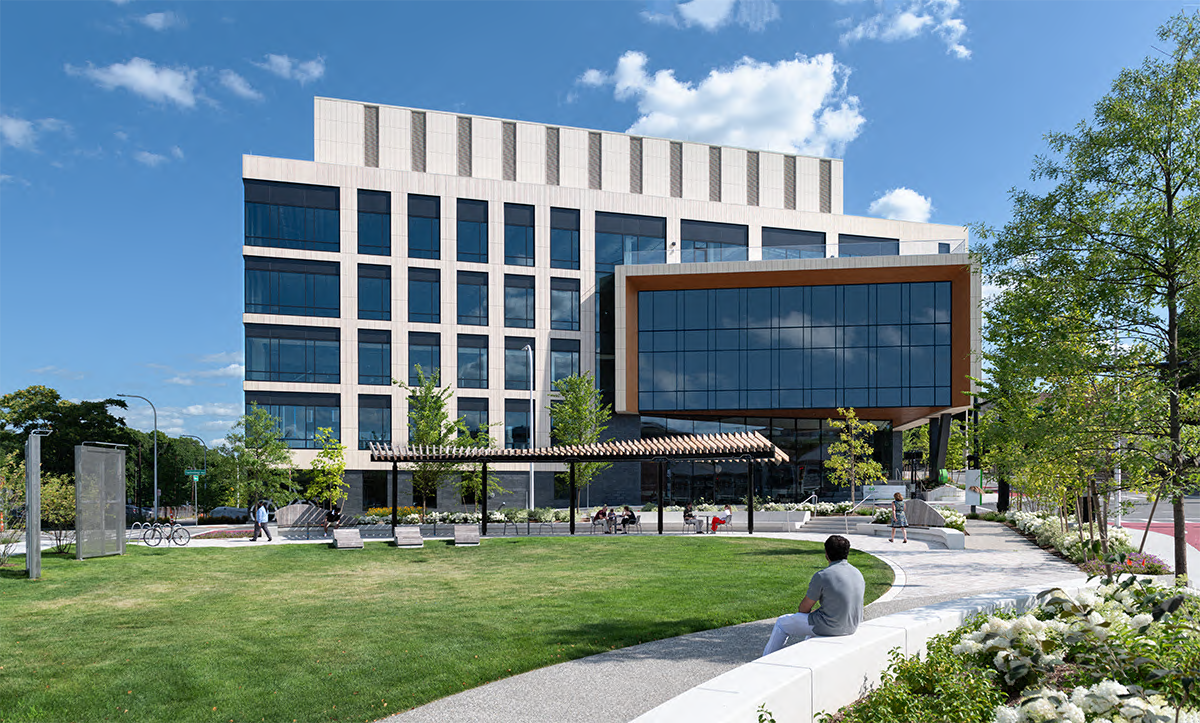
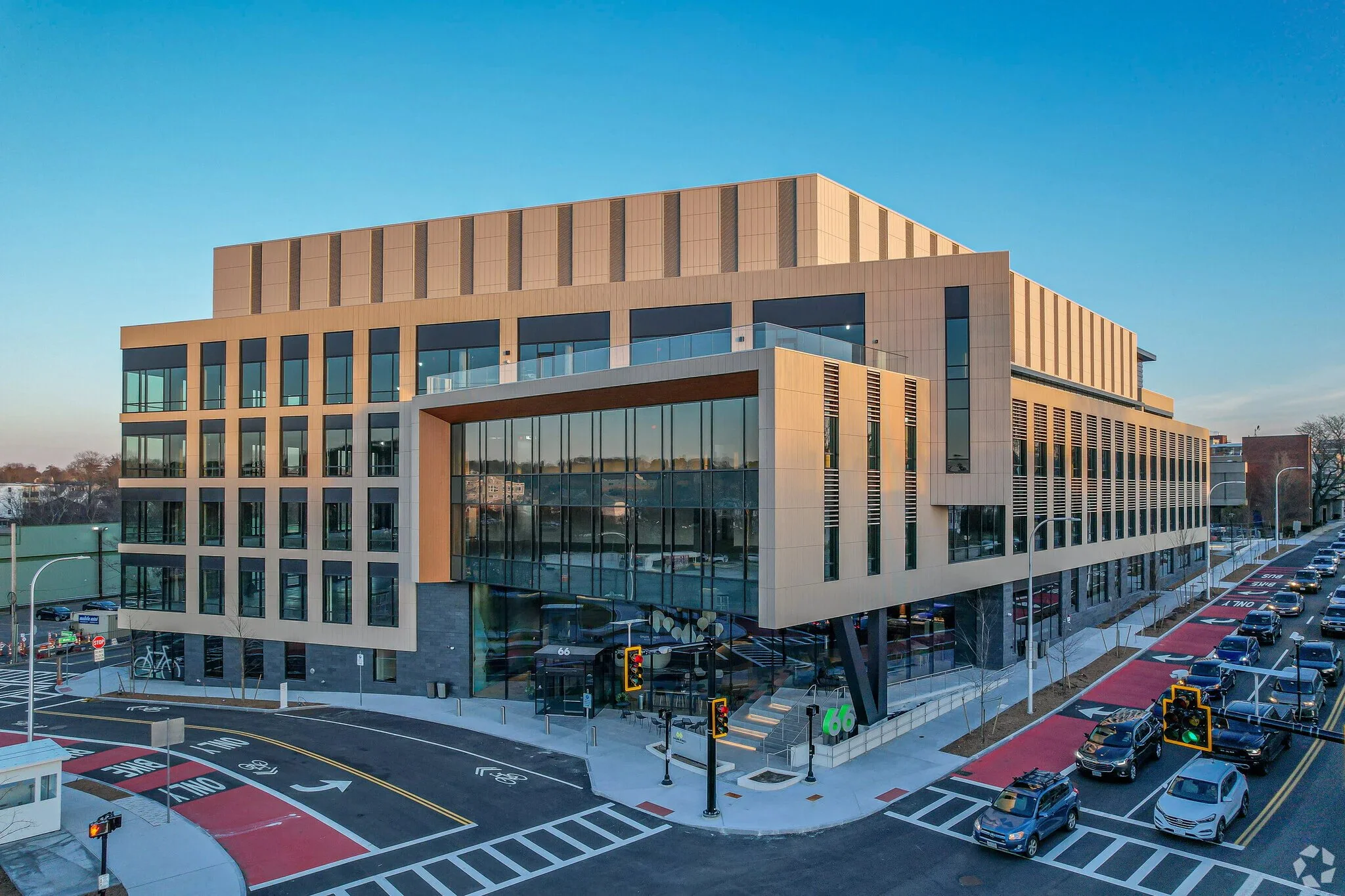
Labshares’ expansion at 66 Galen Street in Watertown, MA demonstrates how careful site selection, modular design, and operational planning support flexible, efficient research environments. Image: Courtesy of Labshares
As demand for flexible, capital-efficient research environments grows across Greater Boston, shared-lab operator Labshares is undertaking a significant expansion: a nearly 58,000-sf lease at 66 Galen Street in Watertown. The new site—opening in two phases across 2026—more than doubles the company’s footprint and reflects broader shifts in how emerging biotechs plan, operate, and scale their physical lab environments.
The expansion involves a careful, multifaceted process—evaluating potential sites, planning infrastructure, designing modular spaces, coordinating staff, ensuring regulatory compliance, and minimizing disruptions to ongoing workflows. For lab architects, planners, and scientific end users, it serves as a practical example of how shared-lab operators identify new locations and ready them for a flexible, fast-moving, and diverse set of users.
Finding the “Goldilocks zone”
Although Greater Boston currently shows vacancy rates exceeding 30 percent in some submarkets, not all empty lab buildings are created equal. According to CEO Philip Borden, the search for a new location was extensive and strategic: “We evaluated 23 potential locations, and while there’s plenty of vacant lab space available, this one stood out immediately.”
Location is more than a leasing decision—it is integral to how emerging biotechs operate. Borden explains that the team seeks sites in what they call the “Goldilocks zone” of the Greater Boston ecosystem: ideally positioned between the cost and congestion of Kendall Square and the distance of outer suburbs. “Going too far out reduces proximity to the talent, customers, and partnerships that make the Boston ecosystem the center of the biotech world,” he says. “Newton and Watertown sit right in that sweet spot.”
In choosing Watertown, the team also considered broader regional momentum. Borden notes that demand is shifting: “There’s no shortage of empty lab space on the market right now, but smart, capital-efficient biotechs are increasingly choosing Watertown. It offers access to the ecosystem without the friction and costs of the traditional hotspots.” At 66 Galen, the building’s amenities—parking, transit proximity, coffee shop, outdoor terraces, and high-end lab infrastructure—added compelling advantages.
The final selection balanced both hard infrastructure and the softer benefits of an active research community. “With Labshares, 66 Galen will be 95 percent leased by biotech companies, creating a vibrant environment. That’s huge—no one wants to be doing science in an empty building,” Borden says.
Designing for modularity and capital efficiency
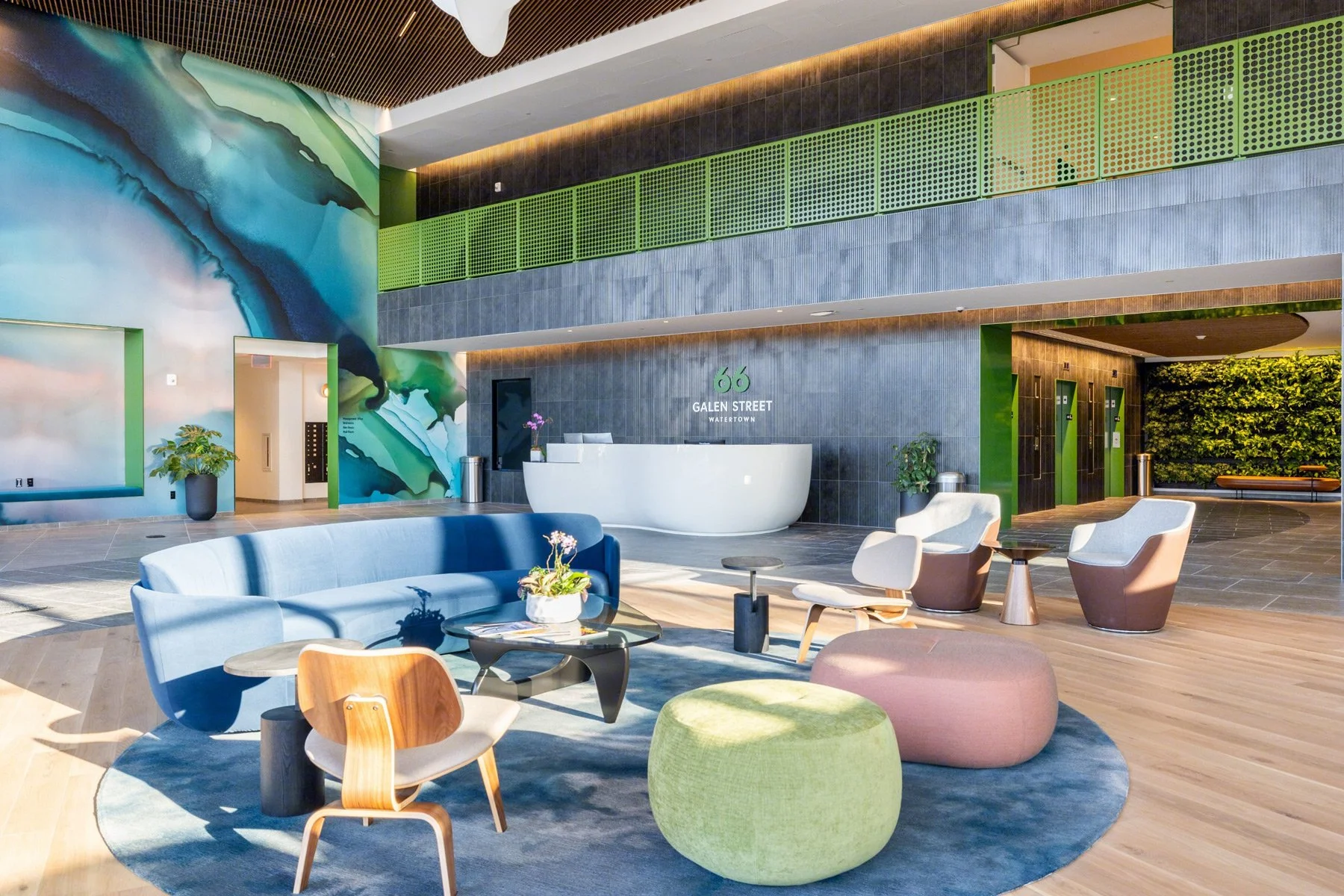
Modular lab design combines private workspaces with shared high-cost equipment, allowing small biotech teams to grow efficiently while adapting workflows with minimal disruption. Image: Courtesy of Labshares
Once a site was chosen, the next challenge was adapting a traditional single-tenant life science building to a shared-lab model. This involved configuration changes, workflow accommodation, and planning for varied scientific modalities.
“Flexibility is foundational to everything we build,” VP of operations David Baxley says. Modular private suites allow companies to expand without taking on large leases, and the physical space represents only a portion of the value. “We estimate that less than 40 percent of the value we deliver is in the physical lab space itself,” he says. “The remaining 60 percent or more comes from the millions of dollars of advanced shared equipment and the back-end lab services we provide.”
This balance—private workflow autonomy plus shared high-cost infrastructure—is increasingly important as biotechs streamline operations, incorporate AI into research programs, and pursue leaner headcounts.
Emma Orfanos, director of growth, explains how modularity translates into everyday support: “We regularly adjust bench layouts, reposition biosafety cabinets and incubators, and reconfigure suites to align with each company’s workflow.” The goal is to allow teams to evolve quickly while reducing downtime and limiting the need for major construction interventions.
For companies with fewer than 30 scientists—a threshold Borden has observed across many Series A and Series B biotechs—the model provides freedom to grow within the same facility. That continuity avoids repeated relocations that can disrupt research timelines and budgets.
Planning for operational continuity and equipment movement
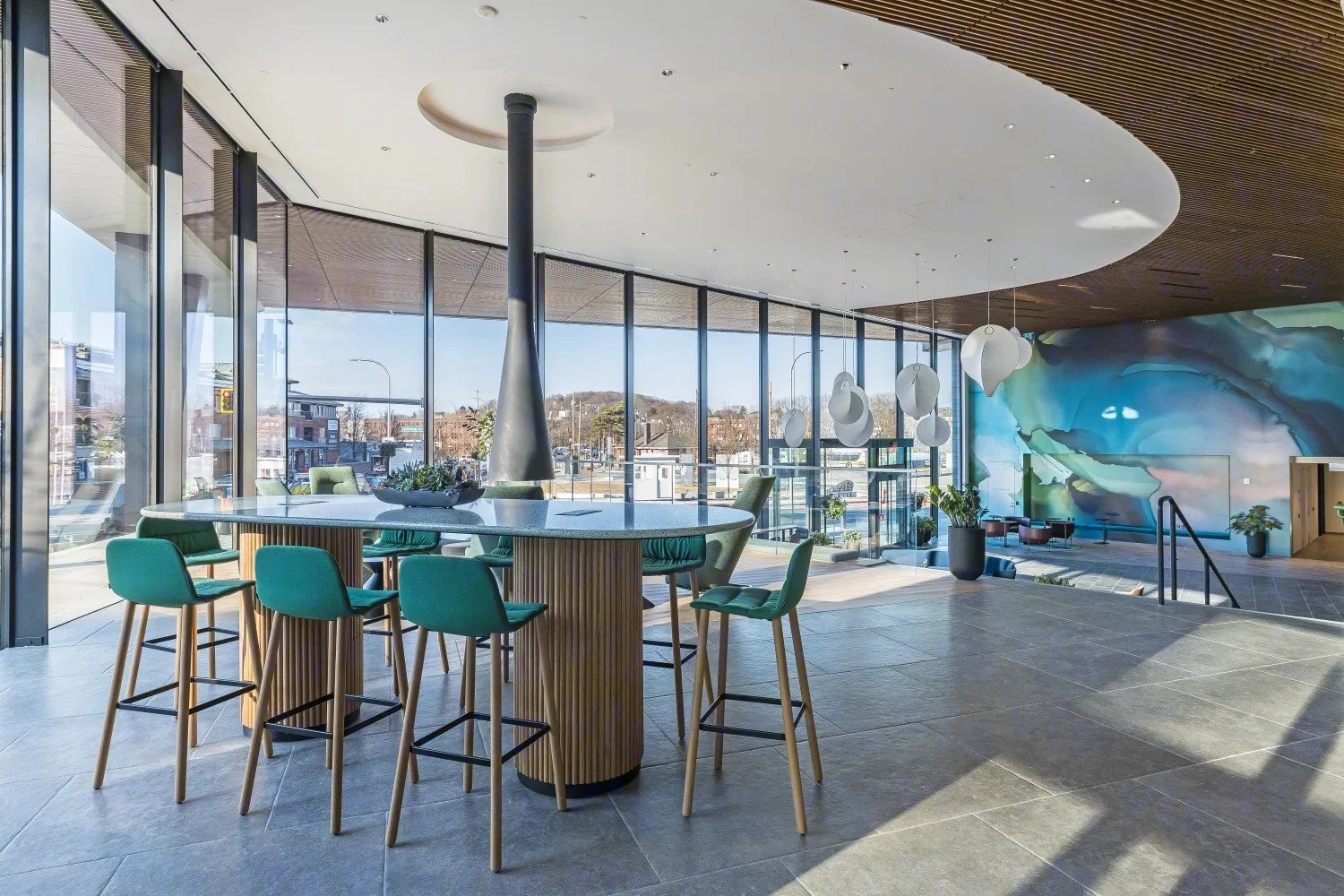
Careful operational planning, staff coordination, and regulatory support help shared labs minimize disruptions and keep biotech teams productive during expansions. Image: Courtesy of Labshares
Even when a new site represents expansion rather than relocation, experienced shared-lab operators know how to help tenants scale while minimizing disruption. Borden cautions that in biotech, “downtime-free moves simply don’t exist. Equipment can be damaged, experiments must be stopped and then re-validated, and permitting can slow everything down. Those delays are costly and can be destabilizing for emerging companies—the ‘soft costs’ of a move dwarf the actual moving costs.”
This perspective is useful for lab planners: any relocation can trigger a range of risk-management challenges, from equipment calibration to permit transfers and workflow interruptions. Experienced operators often focus on strategies that allow teams to scale internally rather than move between buildings. “Avoiding relocations keeps teams productive, minimizes disruptions, and preserves capital,” Borden adds.
When members do need help relocating equipment, Orfanos notes that they benefit from vetted partners and rapid onboarding. “We’ve had companies sign a license agreement on a Friday and begin conducting experiments by Monday,” she says. Their partnerships with specialized lab movers, she says, allow for smoother transitions and preferred pricing.
Opening a new site also requires careful staff deployment and attention to culture. As Baxley says, “We’re keeping our full operational team and adding additional staff to support our growth. Maintaining the culture our team has built is essential. We have to be laser-focused on our members.”
To support smooth operations during expansion, strategies such as staged activation, cross-training, and shadowing are often employed to maintain continuity of service. Regulatory compliance can be a major friction point for young biotechs, Orfanos emphasizes: “We hold umbrella permits—including fire, biological safety, and rDNA permits—so members can operate under our compliance framework from day one.” This approach can eliminate weeks or even months of waiting, providing a significant advantage for emerging companies under pressure to meet milestones, while operational support remains a key driver of success.
Lessons learned and best practices
Thoughtful lab design and operational planning—including right-sized infrastructure, flexible layouts, and strategic staffing—help emerging biotech teams grow efficiently while avoiding costly overbuilds. Image: Courtesy of Labshares
As Labshares completes its Watertown expansion, Borden offers three reflections that apply broadly across lab planning, design, and operations.
1. Build the right infrastructure from day one: “MEP systems—mechanical, electrical, and plumbing—are the backbone of any lab. If you underbuild or miscalculate here, you’re stuck with limitations that are costly to fix.” Purpose-built facilities provide the flexibility to accommodate a range of scientific workflows and evolve alongside advancing technologies.
2. Recognize that biotech teams now operate differently: “Many emerging biotechs, even those advancing multiple clinical programs, now operate efficiently with fewer than 30 scientists. With next-gen tools, AI, and outsourcing, teams can do more in less space.” Smaller footprints and flexible operating models are becoming the norm.
3. Avoid “biotech cathedrals”: “Flexibility beats grandeur every time.” Labs that are overbuilt and inflexible can saddle emerging life science companies with long-term costs for capacity they might never use.
For lab architects, planners, and facility stakeholders assessing similar projects, several best practices emerge:
Location strategy matters as much as design. Consider access, cost structures, parking, and proximity to talent—not just vacancy.
Design for iteration, not perfection. Modular suites, movable equipment, and adaptable layouts minimize future retrofits.
Shared infrastructure can accelerate science. High-cost instruments and specialized rooms enable capabilities most small teams cannot afford.
Expect regulatory drag—and plan ways to reduce it. Umbrella permitting frameworks or preapproved workflows dramatically shorten onboarding.
Staff planning is part of design. Culture, training, and continuity affect user experience just as much as facility layout.
Avoid overbuilding. Flexible, right-sized lab space supports long-term operational health better than expensive customizations.
As the Watertown project moves toward its phased opening, it illustrates how shared lab environments are evolving—and how thoughtful design and operational planning can help the next generation of biotechs work faster, smarter, and with fewer barriers.