
Faster Answers, Better Care: Inside Johns Hopkins All Children’s New Biochemical Genetics Lab
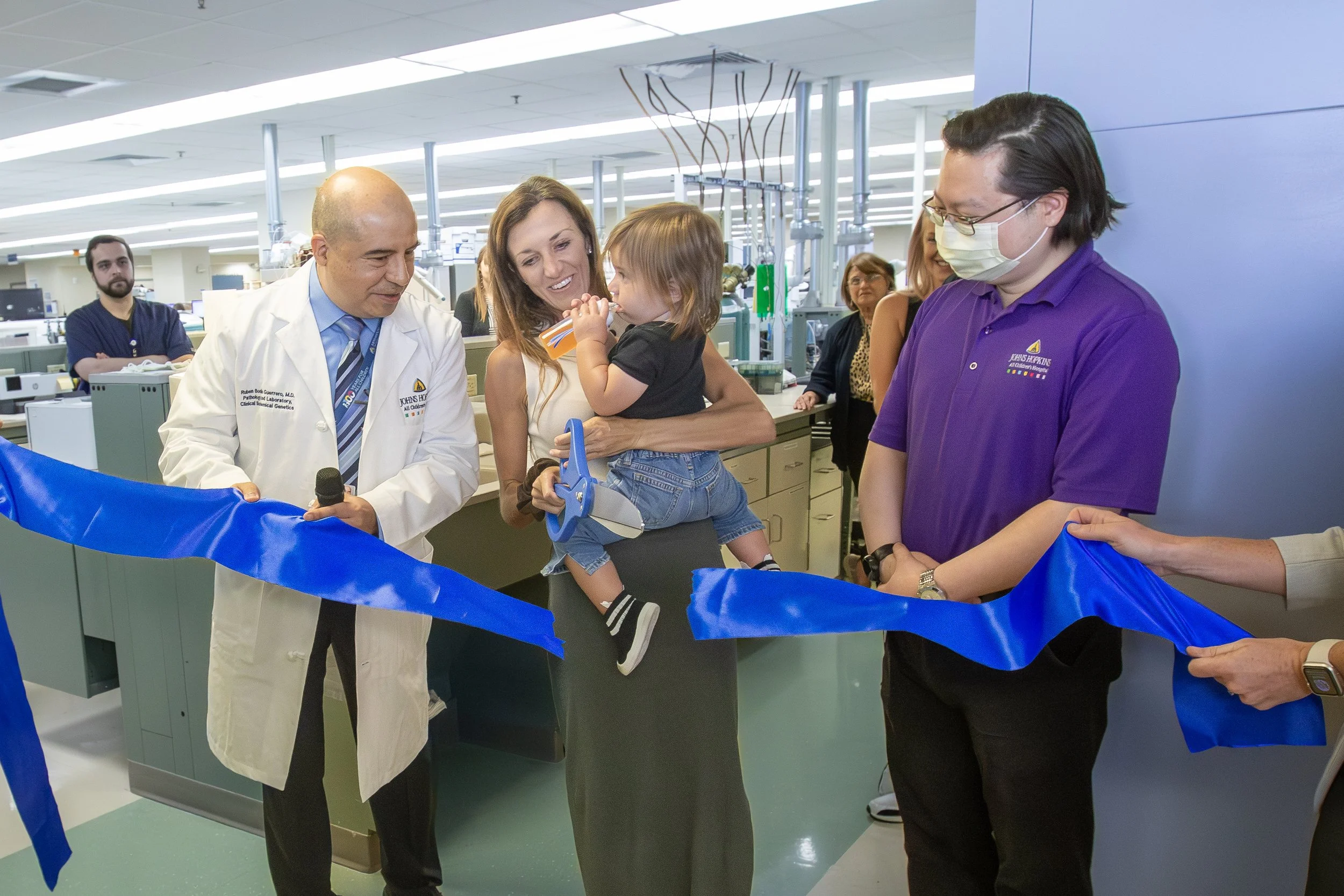
Pictured from left: Dr. Ruben Bonilla Guerrero, Bryanna Fox, and her 18-month-old son, Axl, a Johns Hopkins All Children’s patient. They represent one of the families who will benefit from the services provided with the new lab. On the right is Dr. Alexander Y. Kim, assistant professor of genetic medicine, Johns Hopkins University School of Medicine. Image: Courtesy of Johns Hopkins University School of Medicine
When every hour matters, waiting weeks for specialized laboratory results can delay critical treatment decisions. At Johns Hopkins All Children’s Hospital in St. Petersburg, FL, a new Clinical Biochemical Genetics Laboratory is changing that equation by bringing highly specialized metabolic testing in-house, dramatically reducing turnaround times and improving communication between laboratory experts and clinical teams.
The facility was designed to support the rapid detection, quantification, and interpretation of metabolic biomarkers used to diagnose and monitor patients with inherited metabolic disorders and other conditions affecting metabolic function. By eliminating the need to send samples to outside laboratories, the hospital has created a streamlined workflow that enables faster clinical action for some of its most vulnerable patients.
Rather than focusing on a single design element, the project team approached the laboratory as an integrated system where every step contributes to overall efficiency.
According to Ruben Bonilla Guerrero, MD, FACMG, FADLM, FRSM, MB(ASCP)CM, NY(CQ), CGMBS, Clinical Biochemical Genetics Laboratory Director, the design strategy centered on workflow optimization from beginning to end “by optimizing end-to-end logistics, from sample collection, analyzing and reporting.”
That philosophy influenced both laboratory operations and infrastructure decisions. The lab performs clinical biochemical genetics testing rather than DNA- or RNA-based genetic testing, relying on mass spectrometry and other analytical technologies to measure metabolic intermediates such as amino acids, acylcarnitines, and carnitine.
To accelerate turnaround times, the team focused on the entire testing pathway, from specimen collection through result reporting. Instrument selection, analytical methods, and information technology systems were all evaluated for their impact on speed and accuracy.
Designing around a high-acuity workflow
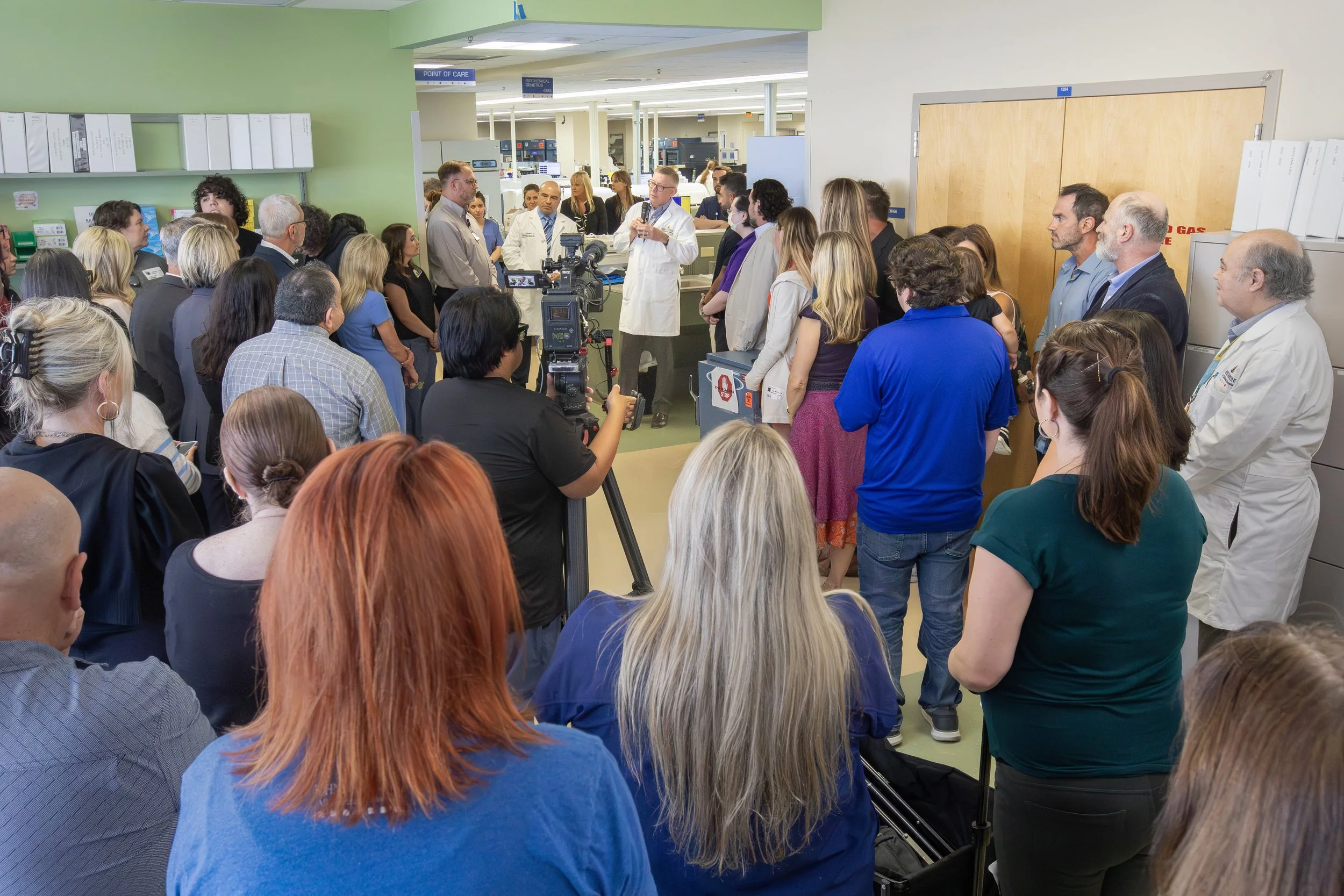
Designed to streamline every stage from sample accessioning through clinical reporting, the new laboratory keeps specialized biochemical genetics testing on-site, reducing delays and enabling closer coordination between laboratory experts and physicians. Image: Courtesy of Johns Hopkins University School of Medicine
The laboratory’s workflow follows a straightforward but highly coordinated sequence. Samples move through collection, accessioning, transport, laboratory section allocation, preparation, analysis, interpretation, and reporting.
While the workflow itself is relatively simple, the facility’s design helps ensure that each step occurs with minimal delay. Once samples reach the biochemical genetics section, laboratory staff prepare specimens for analysis, extracting the metabolites needed for testing before loading them onto specialized instruments.
A key differentiator is the interpretation stage. After analysis, results are reviewed by a board-certified clinical biochemical geneticist who provides actionable clinical interpretation before releasing results to physicians.
The transition from an outsourced testing model to an on-site laboratory required relatively few workflow changes but significantly altered how clinicians interact with the testing process.
“In terms of the workflow, it was a minor change, as rather than going somewhere else, the samples simply stay here,” says Bonilla Guerrero. “The dynamic with providers changed substantially as now they know when tests are performed and know when to expect results in order to act and or plan with their patients.”
Infrastructure built for speed
Several infrastructure elements proved critical to the lab’s performance, particularly in time-sensitive cases involving newborn metabolic disorders.
“All of them, but in particular the gas lines that feed the instruments with hydrogen as well as the IT infrastructure to move results from the instrument to the electronic medical record fast once they are interpreted,” Bonilla Guerrero says.
Reliable gas delivery systems support the mass spectrometry platforms at the heart of the laboratory’s testing capabilities, while robust IT integration enables rapid movement of data from analytical instruments to the electronic medical record. This seamless digital connectivity helps reduce delays between testing, interpretation, and clinical action.
The lab’s integration with hospital departments including the NICU, neurology, cardiology, gastroenterology, and dermatology further enhances responsiveness. Direct communication between laboratory specialists and care teams allows critical findings to be communicated immediately, supporting faster decision-making for patients requiring urgent intervention.
Planning for growth
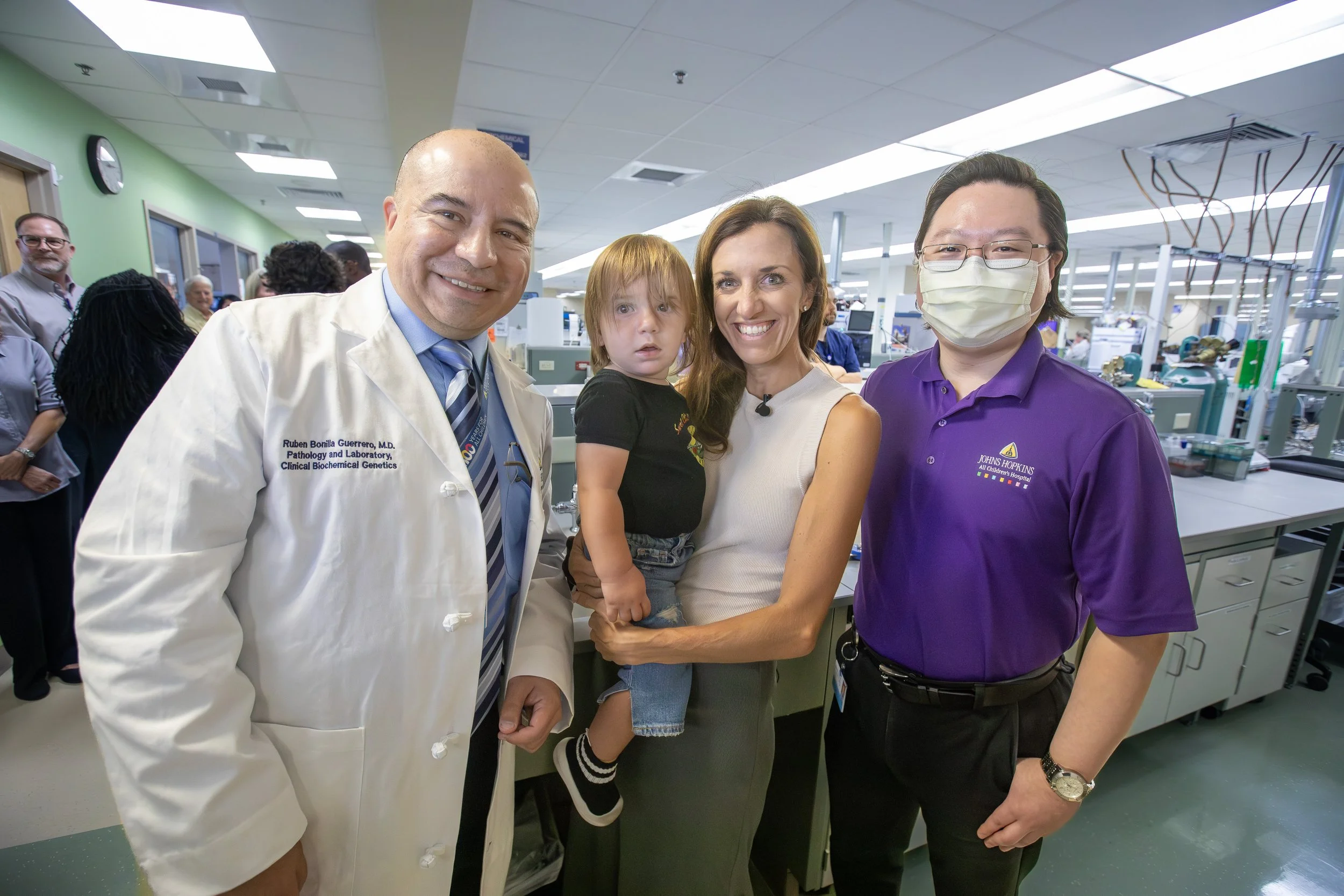
The laboratory was designed with growth in mind, modernizing an existing space with scalable infrastructure, flexible workflows, and new instrumentation that enable faster turnaround times and support increasing testing volumes. Image: Courtesy of Johns Hopkins University School of Medicine
Although the laboratory occupies a space that previously housed a smaller biochemical testing operation, the project team used the opportunity to modernize infrastructure and prepare for future expansion.
“The clinical biochemical genetics (not molecular genetics laboratory) was created from the start with design and operations mindset to grow, and volume has shown that already,” Bonilla Guerrero says.
The team optimized existing infrastructure while updating it to support new instrumentation and methodologies. Assays were designed to be efficient and scalable, with flexible batch sizes that can accommodate fluctuations in testing volume.
That emphasis on adaptability positions the laboratory to support growing demand while maintaining rapid turnaround times. For clinicians and patients, the impact is significant: testing that once required two to three weeks through outside laboratories can now be completed in days—and in some cases, hours—providing faster answers when treatment decisions cannot wait.