
Designing an Aseptic Simulation Lab That Mirrors Biomanufacturing Reality
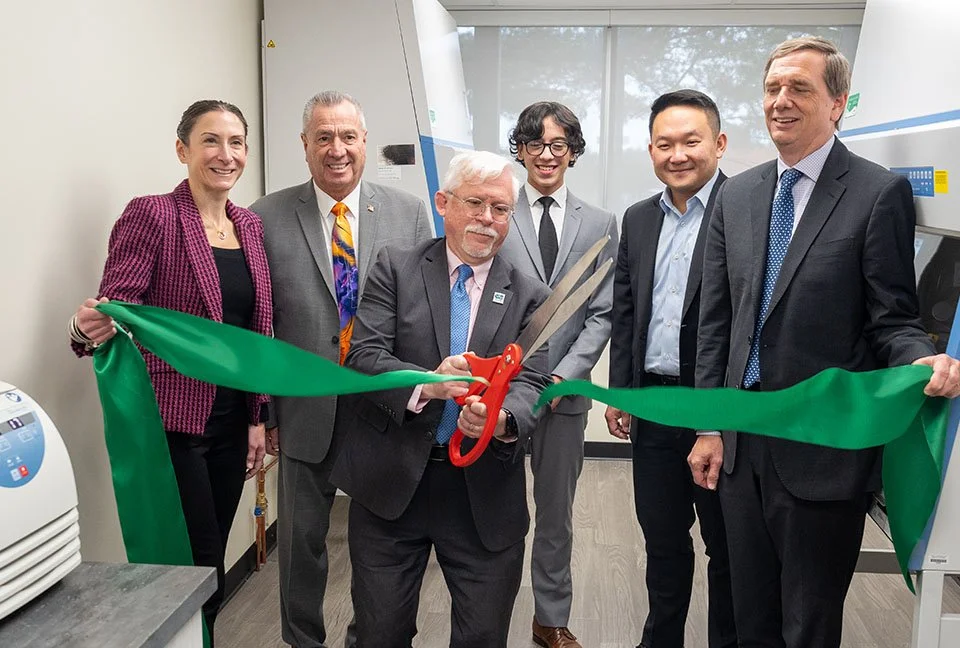
Pictured from left: Middlesex College Board of Trustees member Christine Buteas; Middlesex County Commissioner Director Ronald G. Rios; Middlesex College President Mark McCormick; Perth Amboy Magnet School Student and NJBioFutures Summer Experience Participant Jordanny Valdez; Johnson & Johnson Head of US CAR-T Operations William Zhou; New Jersey Council of County Colleges President Aaron Fichtner. Image: Courtesy of Middlesex College
When Middlesex College in New Jersey set out to build its new Aseptic Simulation Lab, the goal was not to create another flexible teaching laboratory. Instead, the institution aimed to design a space that would replicate the realities of professional biomanufacturing environments—down to personnel flow, equipment constraints, and contamination control—while still functioning within the physical and operational limits of a community college campus.
Supported by a $250,000 contribution from Johnson & Johnson, the facility offers a compelling case study in how design intent, industry partnership, and educational mission can align.
Opened in November 2025, the Aseptic Simulation Lab supports workforce development programs in cell and gene therapy biomanufacturing, a rapidly expanding sector in New Jersey and beyond. The lab is part of NJBioFutures, a public-private workforce development coalition supported by Johnson & Johnson and other industry partners to build a sustainable talent pipeline for advanced therapies.
Designing for realism, not flexibility
One of the most consequential early decisions was to abandon the multifunctional mindset common to academic teaching labs. “A standard teaching lab is designed in a way that safely accommodates around 20 students,” says Middlesex College’s Joanie Coffaro, vice president of external affairs, communication, and advancement. By contrast, “the Aseptic Simulation Lab will only accommodate eight students, who will work in teams of two at each of the units while two stand and observe, with additional classroom space for around 16 students.”
This reduced density was not a compromise—it was a requirement. The lab was “designed to maximize space for equipment and a layout that mirrors biomanufacturing environments,” with no attempt to make the space adaptable for unrelated coursework. “The Aseptic Simulation Lab has only one purpose: to replicate a real-world biomanufacturing environment,” says Coffaro.
When the goal is workforce readiness, realism often matters more than utilization efficiency. In this case, dedicating the space to a single use allowed the design team to prioritize circulation, zoning, and equipment placement over flexibility.
Unidirectional flow as a core design principle
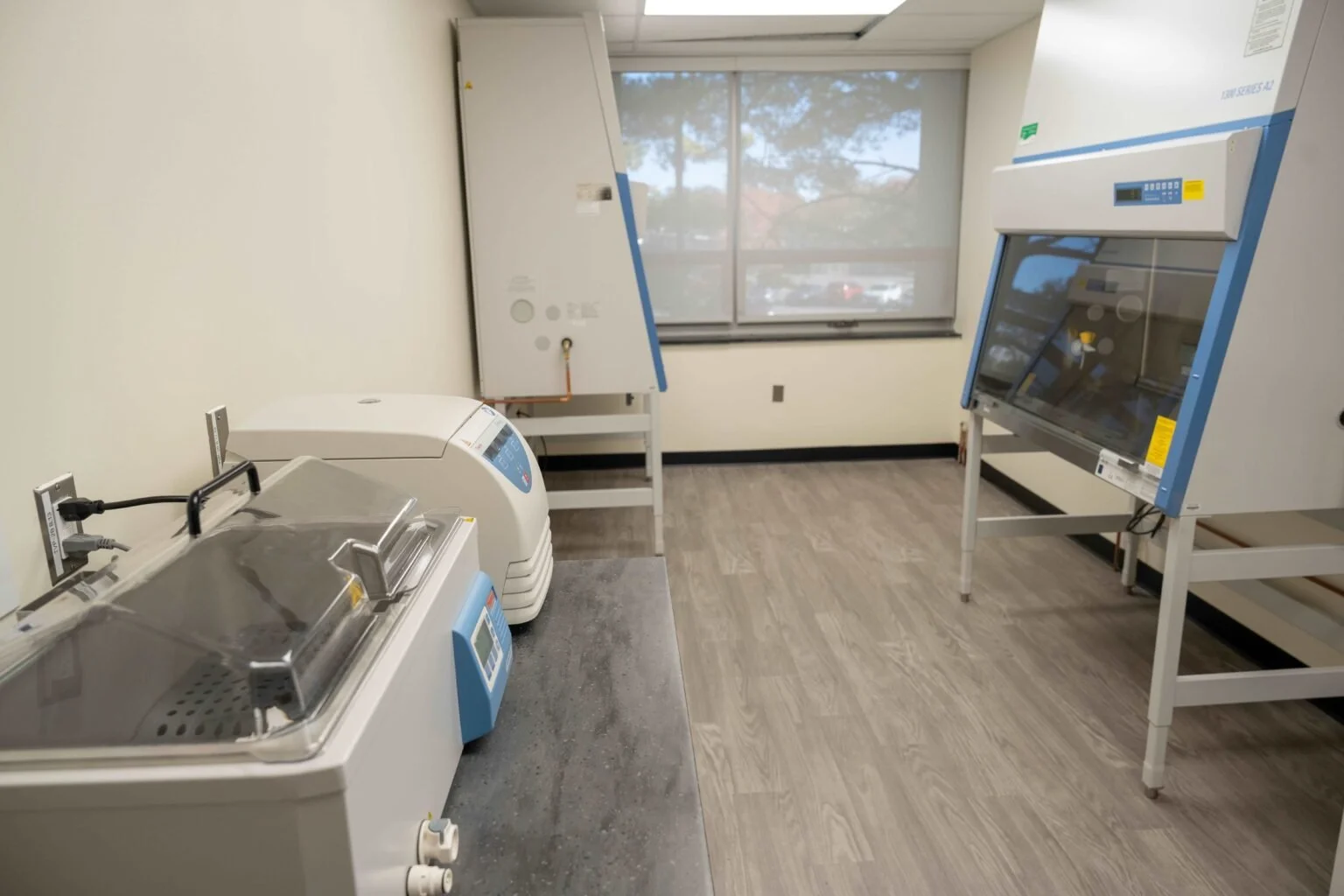
The Aseptic Simulation Lab at Middlesex College is purpose-built for workforce training, accommodating just eight students at a time to mirror real-world biomanufacturing workflows, rather than serving as a multifunctional teaching space. Image: Courtesy of Middlesex College
The most defining design feature of the lab is its floorplan. “The key design feature is the unidirectional personnel and material flow to prevent cross-contamination,” says Coffaro. The lab includes “segregated zones for the sequential steps necessary to enter a cleanroom, such as an area for gowning and de-gowning.”
This approach mirrors professional aseptic facilities, where flow discipline is fundamental to contamination control. There is “one entrance and unidirectional movement and materials; sequential zones for preparation, gowning, and equipment use; and clear demarcation of the various areas designated for specific techniques.”
For architects and engineers working within circulation, code, and programmatic constraints, the project reflects how cleanroom principles can be adapted to a smaller footprint without compromising instructional goals.
Strategic equipment selection
Equipment choices were guided as much by pedagogy as by realism. The lab “is a safe environment that allows our students to learn on equipment they will see in the workplace,” says Coffaro, including “a laminar airflow biosafety cabinet, specialized incubators, and sterilization procedures.”
At the same time, the design intentionally excludes certain high-end features common in production environments. “The main differences are the smaller size of the simulation room, and the lack of a few high-end features found in biomanufacturing sites, such as sterile transfer hatches, UV particle counters, etc.” These systems, while critical in production, were not necessary for training. “The missing features are related to monitoring various environmental variables and maintaining a specific ISO-classification, which is not necessary for training purposes.”
This selective realism offers a key takeaway for lab managers planning training or pilot facilities: fidelity should be focused on workflows and behaviors, not every layer of infrastructure.
Teaching cleanroom behavior, step by step
The lab is designed to support rigorous training in cleanroom protocols, beginning before students ever enter the main space. “Students will learn the full, step-by-step gowning sequence to enter cleanrooms without introducing contamination,” says Coffaro. This starts with pre-gowning preparation, including storage of personal belongings and clothing inspection.
The curriculum emphasizes precision. During gowning, “students will learn and practice a very specific and exact order by which to gown in order to maintain sterility as well as how to inspect their gowns for integrity,” says Coffaro.
Masking and sanitization protocols are treated with equal seriousness. Students also learn “cleanroom entry and exit, hand hygiene, and glove sanitation,” along with “laboratory work surfaces and equipment sanitization using a variety of sterilization agents, techniques, and equipment.”
Like many renovation and fit-out projects, the lab encountered practical challenges. One unexpected issue arose during installation, when Middlesex College discovered that the biosafety cabinets could not fit in the building’s elevator or pass through existing doorways. As a result, the team had to order smaller cabinets to accommodate these constraints. While the original cabinet size would have fit within the lab layout itself—which remained unchanged—the delivery limitations led to a delay of several additional months while the smaller units were procured.
For designers and lab planners, this highlights the importance of early coordination between equipment selection, logistics, and existing building infrastructure—especially in retrofit projects.
Industry partnership as a design driver
Johnson & Johnson’s role extended beyond funding. “They have trained our instructors, enhanced the curriculum, and provided funding to support our program.” Their involvement through NJBioFutures ensured that both the physical lab and the training delivered within it aligned with real employer expectations.
As the Middlesex team emphasized, “NJBioFutures is a true public-private partnership that supports three community colleges to standardize curriculum and engage employer partners to enhance the program and prepare them for work.”
Lessons for lab design professionals
Middlesex College’s Aseptic Simulation Lab offers several actionable takeaways:
Design for purpose, not flexibility, when workforce readiness is the goal.
Prioritize flow and zoning over square footage to reinforce correct behaviors.
Select equipment strategically, focusing on training value rather than full production equivalency.
Anticipate logistical constraints early, especially in existing buildings.
Engage industry partners to align design decisions with real-world expectations.
As the biomanufacturing workforce continues to grow, facilities like this demonstrate how thoughtful lab design can bridge the gap between education and industry—one unidirectional pathway at a time.