
Crime Lab Groundbreaking Brings Modern Forensics Closer to Southern Minnesota
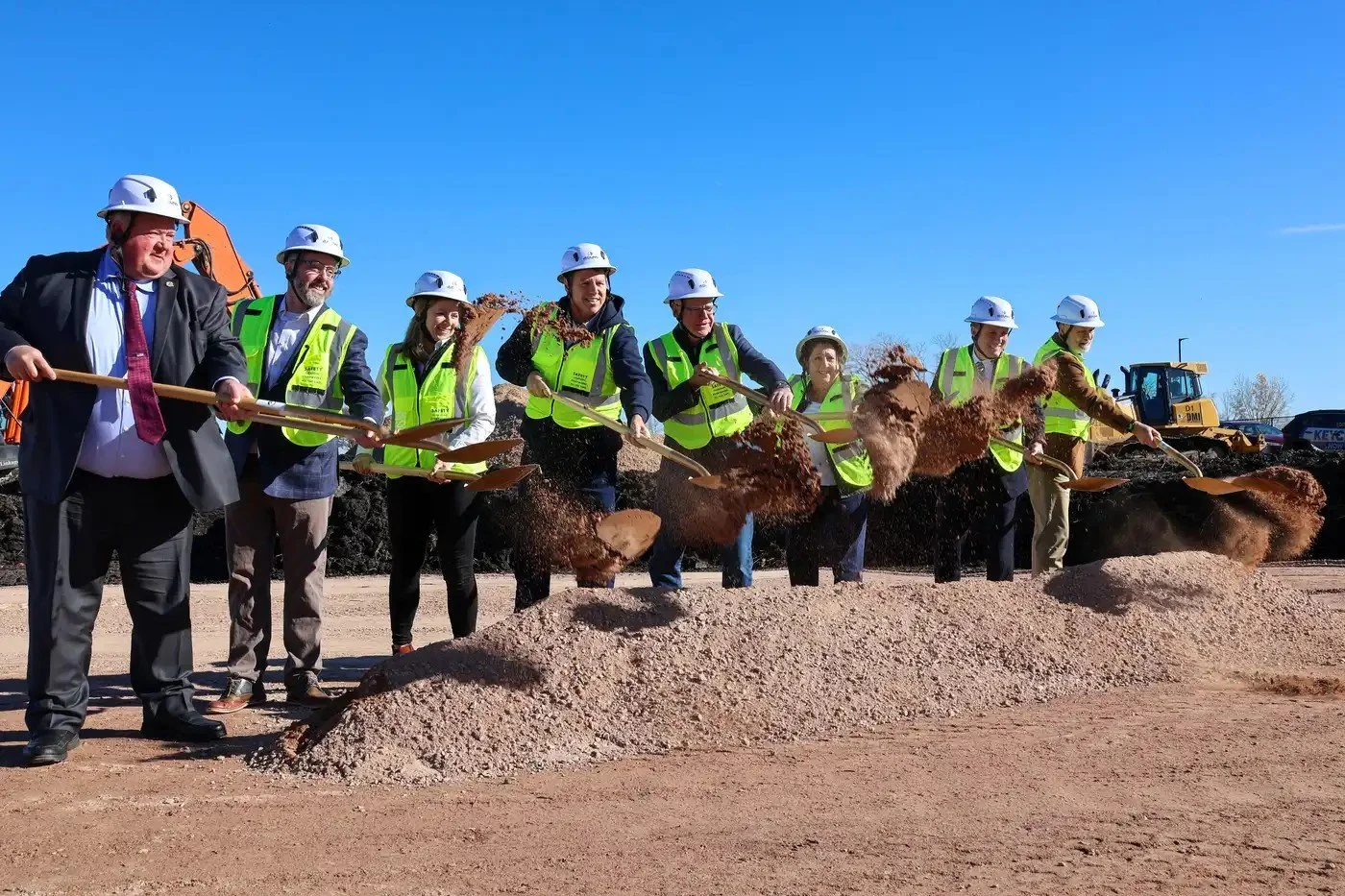
The new $67 million facility is meant to help process evidence and cases faster for regional law enforcement than having to travel to the Twin Cities crime lab. Image: Hannah Yang | MPR News
Minnesota leaders gathered in Mankato in early November 2025 to break ground on a long-anticipated regional headquarters and crime lab for the Minnesota Bureau of Criminal Apprehension (BCA)—a $67 million investment that is expected to transform forensic services across southern Minnesota. Set to open in early 2027, the new facility will sit adjacent to the Blue Earth County Justice Center, strategically connecting crime lab services, investigative resources, and regional law enforcement in a single, accessible hub.
The Mankato site will become the BCA’s third full-service crime lab and the first dedicated facility serving the state’s 43 southern counties. The expanded capacity comes at a critical moment: the BCA’s St. Paul headquarters is currently operating more than 200 staff above its original design limits, creating space constraints and growing pressure on turnaround times. The BCA says that the addition of a southern regional lab will have an immediate impact on evidence testing, response capabilities, and workflow efficiency. “The addition of the Mankato location will help to accommodate the current overflow of laboratory staff, as well as allow for the future growth needed to accommodate increasing demands for testing services,” Catherine Knutson, deputy superintendent of forensic science services, Minnesota Bureau of Criminal Apprehension, tells Lab Design News.
Engineered for long-term operational excellence
Planning for the Mankato facility centered on long-term performance, flexible growth, and a state-standard forensic environment. Emily Bolles, principal project manager, Minnesota Department of Administration, emphasizes that “focused efforts were made by the design team to provide a facility that will provide the highest level of operational success for decades to come.” That long-range strategy is evident throughout the program: lab spaces sized for current needs and future expansion, technology-ready layouts, and building systems engineered for increasingly sophisticated analytical equipment.
A key design decision places all laboratory spaces on the second floor. This layout supports proper airflow and exhaust control—critical factors for serology, controlled substances analysis, and other high-sensitivity forensic workflows. According to Bolles, “it was determined early on that the labs would be best located on the second level to allow exhaust to direct exit up and out through the roof,” with high-exchange labs placed directly adjacent to the main mechanical room to reduce duct lengths and improve efficiency.
The building will also prioritize natural daylighting and wellness-focused amenities—part of a statewide effort to support retention and well-being among forensic scientists and investigators. The design includes “a focus on staff wellness and wellbeing through natural daylighting and dedicated areas for respite and comradery,” says Bolles.
Purpose-built forensics infrastructure
Modern crime labs require highly specialized environments—strict air handling, durable and cleanable finishes, and adaptable casework systems capable of supporting rapidly evolving technologies. Mankato’s facility reflects those needs.
The building will house dedicated heating, cooling, and ventilation systems designed specifically for forensic science requirements. “Fresh outdoor air is constantly brought in to replace the air being removed by lab hoods, vents or general exhaust,” notes Bolles, with quick-acting airflow valves that modulate supply and exhaust in real time.
Material selections also reflect the realities of forensic work: terrazzo, tile, stainless steel, epoxy resin, quartz, and other durable surfaces designed for chemical resistance and easy sanitization. The lab casework will be mobile and modular to support reconfigurations as technology evolves. “The lab spaces themselves will have mobile casework, including flexible electrical and data equipment in the ceiling, to facilitate any new configuration in the future,” says Bolles.
This adaptability extends to the building’s structure: designers intentionally “upsized” a section of the roof and structure to accommodate a future second-floor expansion without disrupting ongoing operations.
The BCA is known nationally for adopting emerging forensic technology, and the Mankato lab is being built specifically to support next-generation tools. It will house advanced equipment for DNA analysis, controlled substance identification, and crime scene processing, while reserving space for new investigative models that deliver faster leads to law enforcement.
According to Knutson, the facility will include “front end forensic space for technology designed for that purpose,” including Rapid DNA systems, NIBIN terminal access for firearms investigation, and infrastructure for digital and multimedia evidence analysis—capabilities that will bring cutting-edge tools directly to the region.
Location and site planning for a regional hub
The new BCA facility’s placement next to the Blue Earth County Justice Center was intentional, streamlining collaboration and reducing response times for both local and regional agencies. Bolles says that the new Bassett Drive extension will “allow access to our building for general visitors, trainees, as well as multiple collaborating agencies,” and will eventually connect to Highway 12, creating direct access from major transportation corridors.
The two facilities will also be closely linked physically: “The west entry drive of the BCA was designed to align exactly with the future drive access of the Justice Center parking lot, creating easier connection between the facilities and agencies,” says Bolles.
For investigators, this adjacency is transformative. Southern Minnesota law enforcement personnel will no longer need to drive hours to the Twin Cities to deliver evidence or consult with forensic scientists—a burden that previously stretched investigations and delayed justice. Counties from Mankato to Albert Lea to Worthington will see faster testing and quicker access to forensic expertise.
Because 6,000 cases and up to 12,000 pieces of evidence per year will be processed in Mankato, the St. Paul laboratory—currently handling metro, central, and southern Minnesota—will see immediate workload relief. Knutson emphasizes that both St. Paul and Bemidji were built roughly 25 years ago, and although designed for growth, they cannot keep pace with the last decade’s surge in forensic demand. The new facility offers long overdue breathing room.
Reduced travel also accelerates investigations. Bolles says that “the location of the facility will significantly reduce driving time, and thus, processing time for evidence,” directly benefiting smaller towns and rural departments.
Beyond forensic analysis, the building will also serve as a regional training hub—supporting police departments, sheriff’s offices, and investigative teams across southern Minnesota. The design integrates a large 42-person training room directly off the west lobby, complete with a pre-function area, kitchenette, and outdoor patio to encourage interaction. West-side parking also includes dedicated evidence drop-off areas for local and visiting law enforcement.
This role as a collaborative center reflects a broader design goal: strengthening partnerships and building trust between the BCA and regional communities. “The location of the facility will significantly reduce driving time, and thus, processing time for evidence,” says Bolles. “The proximity to smaller cities and towns will help strengthen collaboration and trust with surrounding agencies and communities.”
Sustainability and public safety
Following Minnesota’s B3 Guidelines for sustainable design, the project targets an 80 percent reduction in energy use compared to baseline buildings—an ambitious benchmark supported by geothermal systems, a solar array, stormwater reuse for irrigation, heat recovery technologies, and biodiversity-focused landscaping. “Heat recovery coils capture warmth or coolness from the outgoing air and use it to precondition the incoming air,” says Bolles. “The special heat recovery chiller gets most of its energy from a geothermal system that exchanges heat with groundwater, saving about 30 percent of energy compared to a typical system.”
For the BCA, the Mankato regional lab represents both a practical solution to capacity challenges and a forward-looking investment in statewide public safety infrastructure. Designed for flexibility, scientific rigor, and collaboration, the new facility will bring modern forensic tools closer to the communities that need them—strengthening investigations, reducing wait times, and ensuring that law enforcement across southern Minnesota has direct access to timely, high-quality forensic science.
When it opens in 2027, the Mankato BCA headquarters is expected to function as a key component of the statewide system, with capacity to accommodate increasing caseloads, incorporate new technologies, and support service needs across Minnesota in the years ahead.