
Cleanroom Renovations to Support Groundbreaking Ancient DNA Research
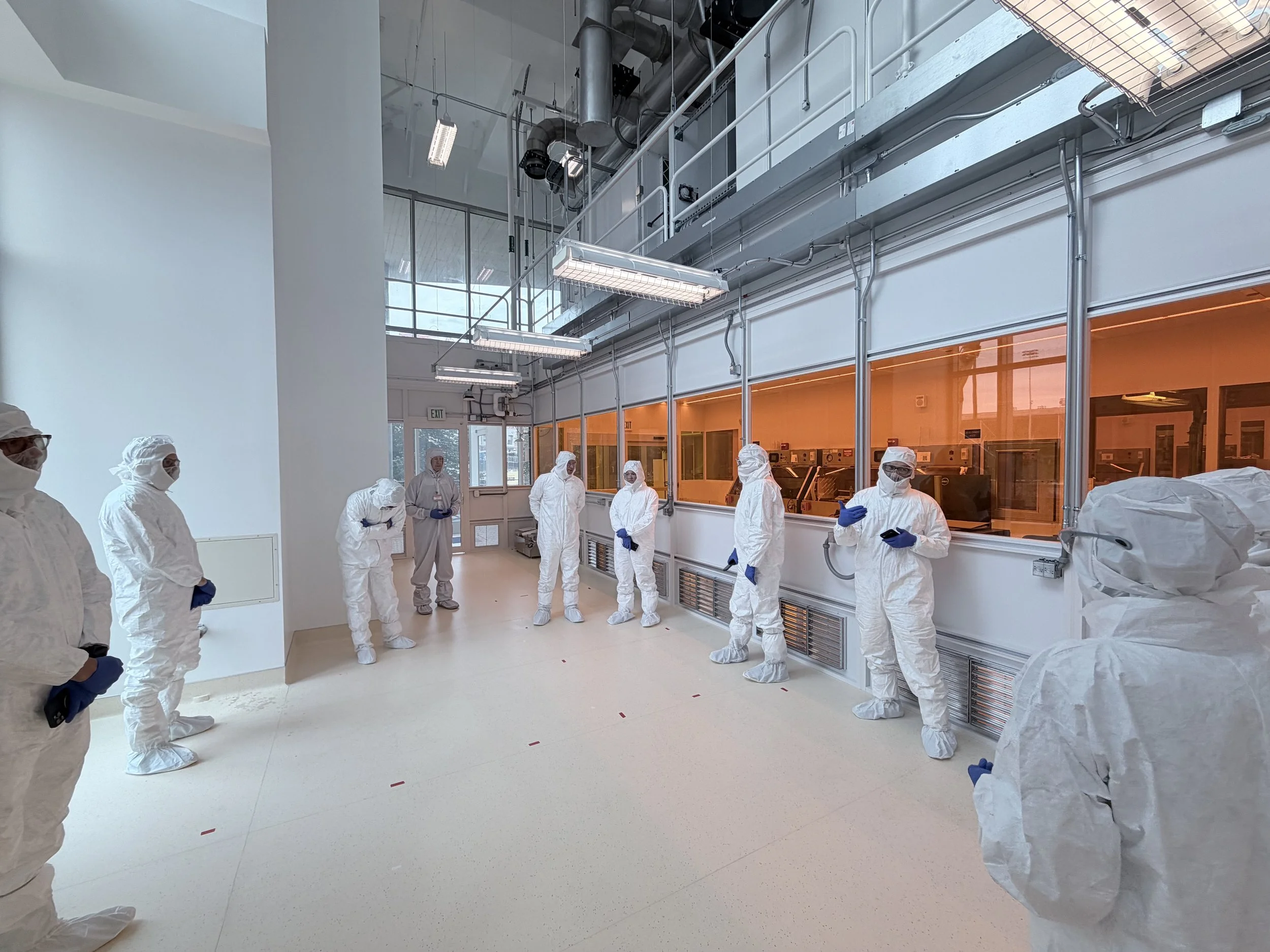
Renovations to the Vanderbilt Institute for Nanoscale Science and Engineering's BioBay will transform the space into a state-of-the-art ancient DNA laboratory within its existing cleanroom facility. Image: Vanderbilt Institute for Nanoscale Science and Engineering
The Vanderbilt Institute for Nanoscale Science and Engineering (VINSE) is expanding the capabilities of its renowned cleanroom facility with a unique renovation that bridges nanoscience and biomedical research. Renovations to the cleanroom's BioBay are transforming the space into a dedicated ancient DNA (aDNA) laboratory designed to analyze fragile historical genetic material in one of the cleanest research environments available.
Opened in late 2025, the laboratory supports the Vanderbilt Program in Health over Time (HoT), led by Katherine D. Van Schaik, MD, PhD, MA, with support from James Crowe Jr., MD, director of the Vanderbilt Center for Antibody Therapeutics. The interdisciplinary program seeks to understand how diseases have evolved over centuries by integrating ancient and historical human remains with modern clinical, imaging, and molecular data. By comparing historical specimens with contemporary health information, researchers hope to better understand the origins of conditions ranging from osteoporosis and metabolic bone disease to influenza and atherosclerosis—and ultimately inform future healthcare and pandemic preparedness.
For laboratory planners and designers, however, the project represents much more than a new research initiative. It demonstrates how an existing nanoscience cleanroom can be successfully adapted to meet the highly specialized requirements of ancient DNA research while preserving the rigorous environmental controls essential to cleanroom operations.
Designing a lab where contamination cannot be tolerated
The VINSE Cleanroom encompasses approximately 10,000 sf and is designed to support a wide range of advanced nanofabrication and materials research. Its processing areas include two ISO 5 (Class 100) lithography bays totaling 1,100 sf, as well as a separate 250-sf ISO 6 (Class 1000) enclosure for electron beam lithography (EBL) engineered to a Noise Criterion (NC) 25 for vibration- and noise-sensitive work. Two additional ISO 6 (Class 1000) bays, spanning approximately 1,400 sf, accommodate deposition, etching, and metrology processes.
The cleanroom maintains tightly controlled environmental conditions, with temperatures held at 68 ±2 degrees F and relative humidity at 44 ±4 percent through a dedicated make-up air system. Researchers also have access to a comprehensive suite of utilities, including high-purity nitrogen, compressed dry air, process vacuum, process cooling water, and ASTM Type E-1 electronics-grade water. Solvent and corrosive exhaust systems equipped with point-of-use scrubbers safely manage specialty gases used in research.
Designed with future growth in mind, the facility features a flexible bay-and-chase layout that can accommodate additional equipment and evolving research needs, including the potential to convert 500 square feet of chase space into a fifth processing bay. Located on the main floor of Vanderbilt University's Engineering and Science Building (ESB), the cleanroom also incorporates floor-to-ceiling windows that provide a safe, highly visible view of research activities for visitors, outreach groups, and passersby both inside and outside the building.
Unlike modern DNA research, ancient DNA analysis presents an extraordinary contamination challenge. Samples recovered from archaeological sites or historical pathology collections often contain only trace amounts of highly degraded DNA. Even microscopic contamination from modern human DNA can overwhelm authentic genetic material and compromise research results.
“Ancient DNA samples are scarce, often highly degraded, and extremely vulnerable to contamination from modern DNA,” Van Schaik says. “The central design challenge in our case was building a DNA-free laboratory that meets aDNA-specific standards for isolation and workflow inside VINSE's existing nanoscience cleanroom that was never built with that purpose in mind.”
Rather than constructing a standalone ancient DNA facility, the project team elected to leverage VINSE's existing cleanroom infrastructure—a decision that introduced both opportunities and design complexities.
Traditional ancient DNA laboratories prioritize preventing biological contamination. Cleanrooms, meanwhile, are primarily designed to control airborne particles that could interfere with semiconductor fabrication, nanotechnology, or other precision manufacturing processes. The renovated BioBay must satisfy both sets of requirements simultaneously.
According to Van Schaik, the project required the team to “reconcile two sets of requirements at once: particle-count standards typical of materials science cleanrooms, and the biological contamination controls that ancient DNA work demands.” Those requirements influenced everything from workflow planning and traffic patterns to the selection of materials and even acceptable packaging entering the laboratory.
Leveraging existing cleanroom infrastructure
The VINSE cleanroom offered several significant advantages that made it an ideal location for the new laboratory. Its sophisticated air handling system continuously filters incoming air through HEPA filtration before distributing it throughout the facility. The renovated laboratory will operate as a Class 100 cleanroom—equivalent to ISO Class 6—maintaining fewer than 100 particles per cubic foot of air. By comparison, outdoor air may contain hundreds of thousands of particles per cubic foot, many capable of carrying contaminating DNA.
Equally important, the space has never previously been used for polymerase chain reaction (PCR) work.
“Critically, the VINSE space has never been used for PCR work, a prerequisite for aDNA studies, since contaminating PCR products pose severe risks to our sensitive extractions,” Van Schaik says.
The facility's controlled access procedures and mandatory personal protective equipment (PPE) requirements also reduce the introduction of contaminants before researchers even enter the laboratory. Existing cleanroom utilities—including power distribution and water systems—could likewise be incorporated into the renovation rather than recreated from scratch.
To further tailor the environment for ancient DNA research, the renovation includes UV-C sterilization systems for work surfaces and equipment, providing another layer of contamination control while complementing the cleanroom's existing infrastructure.
Designing workflow around contamination prevention
Beyond the environmental systems, the laboratory's physical layout was carefully organized to minimize contamination risks through both architectural planning and operational protocols. The renovated laboratory is divided into three enclosed spaces that support a strictly controlled workflow: a gowning room, a sampling room where bone drilling, photography, and specimen preparation occur, and a dedicated extraction room for DNA extraction and library preparation.
Perhaps the most notable design feature is the pressure cascade established between these spaces.
“We implemented a pressure gradient in which each successive room operates a higher pressure than the previous one, with the gowning room less than the sampling room, which is less than the extraction space,” Van Schaik says. “This approach ensures that air flows out of the cleanest space, preventing contamination from ‘dirtier’ areas from migrating into sensitive work zones.”
The architectural strategy is reinforced by rigorous operational procedures. Personnel follow extensive PPE requirements that include full-body Tyvek suits, hoods, hairnets, shoe covers, face masks, face shields, and triple gloves. Separate supplies are maintained for sampling and extraction activities, equipment undergoes frequent decontamination, and staff follow strictly unidirectional movement through the laboratory, preventing anyone from returning to cleaner spaces after working in areas with greater contamination potential.
Together, these design and operational measures create multiple layers of contamination protection essential for recovering authentic ancient genetic material.
Creating opportunities for interdisciplinary research
While contamination control drove many of the design decisions, the renovation also advances VINSE's broader mission of interdisciplinary collaboration. Historically focused on nanoscale materials science and engineering, VINSE envisioned the BioBay as a future biological research space when the cleanroom was originally designed. The current renovation fulfills that vision by bringing molecular biology, genomics, archaeology, anthropology, radiology, history, and imaging science into the same research environment.
“Housing an ancient DNA laboratory within the cleanroom puts our interdisciplinary team of anthropologists, biomolecular researchers, archaeologists, historians, and imaging specialists under the same roof alongside VINSE's nanoscience community,” Van Schaik says. “We hope this arrangement will encourage exactly the kind of cross-disciplinary conversation and collaborative research that VINSE was built to support.”
Researchers anticipate opportunities for collaboration in areas such as filtration technologies, sample preparation, instrumentation, and contamination control—disciplines where materials science and molecular biology increasingly intersect. Daily proximity to cleanroom experts may also introduce new approaches that would be difficult to develop in more traditional biological research settings.
The design team also drew upon experiences from established ancient DNA laboratories worldwide. According to Van Schaik, visits to leading facilities and discussions with colleagues reinforced the importance of separating laboratory functions into distinct work zones to reduce contamination. Those observations directly informed the VINSE renovation, while practical considerations—including generous bench space, strategic equipment placement, and dedicated decontamination infrastructure—helped improve workflow efficiency and reproducibility.
The result is a laboratory that combines proven ancient DNA design principles with the environmental advantages of an advanced cleanroom facility.
Looking toward the future
Once operational, the laboratory will support Vanderbilt's long-term effort to build a resource connecting ancient skeletal remains with modern clinical and imaging datasets. Researchers hope those comparisons will provide new insight into how diseases have changed over time and what those changes reveal about contemporary health.
Beyond its own research program, the laboratory is expected to serve as a collaborative resource for investigators in paleopathology, anthropology, radiology, immunology, and bioarchaeology while providing training opportunities for students and residents working at the intersection of ancient biology and modern medicine.
For the laboratory design community, the project offers a compelling example of adaptive reuse within a highly specialized research environment. Rather than building a new facility, Vanderbilt has demonstrated how an existing cleanroom can be thoughtfully reconfigured to accommodate emerging scientific disciplines without sacrificing the environmental performance that makes such research possible.
As laboratory science becomes increasingly interdisciplinary, projects like the VINSE BioBay renovation illustrate how flexible infrastructure, carefully engineered workflows, and contamination-conscious design can support discoveries that span centuries of human history while helping shape the future of medicine.