
Building Better Labs Through Collaborative Discussion at the Lab Design Conference
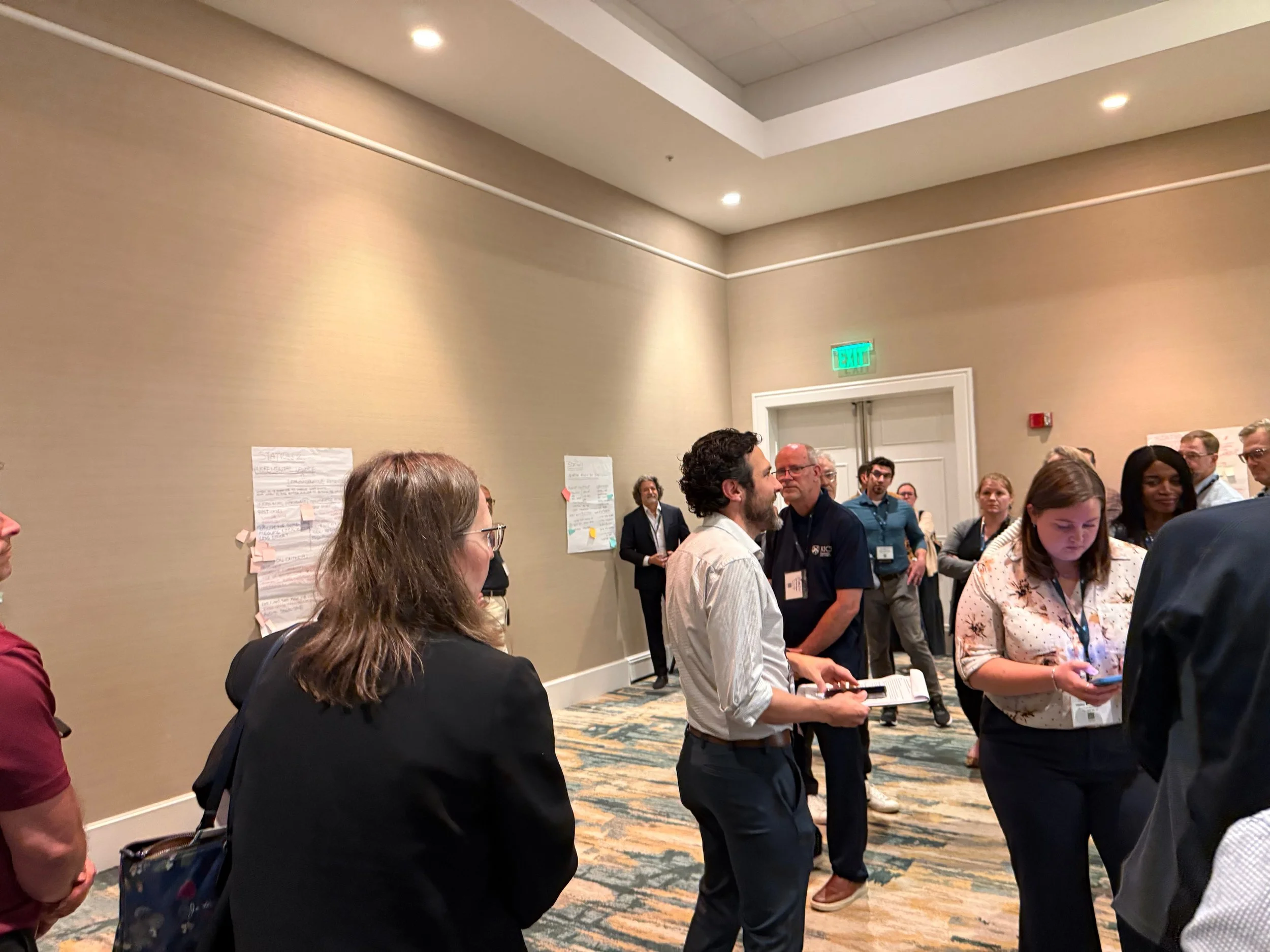
Juan Archila of Georgia Tech led an interactive roundtable at the 2026 Lab Design Conference that brought together laboratory owners, architects, engineers, and planners to exchange ideas and identify best practices for academic lab design.
One of the strengths of the Lab Design Conference is its ability to bring together laboratory owners, architects, engineers, planners, and industry partners to share ideas and learn from one another. That collaborative spirit was on full display during Juan Archila's interactive roundtable on academic lab design at the 2026 Lab Design Conference in Orlando, FL, where attendees worked together to explore common challenges facing colleges and universities.
Rather than searching for one “right” answer, participants pooled decades of collective experience to identify practical solutions, debate trade-offs, and crowdsource best practices that could be applied to future laboratory projects.
Archila, senior director of research infrastructure at Georgia Tech, organized attendees into rotating discussion groups focused on six key topics in academic laboratory planning: early stakeholder engagement; incremental upgrades versus transformative redesign; adaptive reuse and historic buildings; institutional identity and recruitment; vendor coordination and infrastructure; and flexibility and occupant well-being. The goal was to capture practical ideas, identify persistent challenges, and encourage participants to learn directly from one another.
As Archila explained at the start of the session, “I believe that there's probably a diverse group of stakeholders here at the table, and I think if we gather all the expertise that we have in this room … we might be able to find the best ideas to carry forward to our organizations.”
Exploring the trade-offs in academic lab design
Before participants broke into discussion groups, Archila led a “trade-off lineup” exercise, asking attendees to physically position themselves along a spectrum of agreement or disagreement with several provocative statements.
The first question asked whether most universities are better served by incremental upgrades than transformative renovations. Rather than splitting into opposing sides, many participants gathered near the middle, reflecting the reality that the answer depends heavily on institutional circumstances.
Archila noted that Georgia Tech frequently needs to renovate laboratories quickly to accommodate new faculty and research programs, making phased improvements attractive. At the same time, he acknowledged that repeated renovations can compromise the original building systems over time.
“If I think about maintenance and sustainability and all that stuff ... you’re basically doing a bunch of Band-Aid renovations,” he said. “So I can argue both ways.”
The discussion highlighted one of the recurring themes of the session: academic lab planning rarely presents clear-cut answers. Every renovation requires balancing budget, infrastructure, research needs, and long-term flexibility.
Historic buildings present both opportunity and challenge
Another discussion centered on whether historic buildings represent more opportunity than obstacle for laboratory design. Some participants argued that older buildings encourage creative problem-solving and often produce unique laboratory environments. Others pointed to the significant challenges of fitting modern research infrastructure into facilities never intended to support today's equipment and mechanical systems.
One attendee observed that renovating aging laboratories often requires accommodating scientific equipment and exhaust requirements that simply did not exist when many academic buildings were constructed. The conversation reinforced that adaptive reuse can preserve institutional character but often demands significant compromises, creative engineering, and additional investment.
Infrastructure often takes a back seat
Perhaps the strongest consensus emerged when Archila asked whether laboratory renovation projects are typically driven by proactive academic priorities rather than aging infrastructure.
Most participants agreed that research programs—not deteriorating building systems—usually determine when projects move forward.
Scott Hanton, editorial director of Lab Managerand moderator of the session, summarized the reality facing many institutions: "Program drives infrastructure, not infrastructure driving program."
Archila agreed, explaining that projects frequently proceed even when existing infrastructure is poorly suited to new research activities.
“We renovate or do something to a building, irrespective of the infrastructure that's there,” he noted. “So it becomes a square peg in a round hole.”
The discussion also revealed another common frustration: academic priorities may be documented internally but not effectively communicated to the entire project team until well into design, creating challenges for architects, engineers, and contractors.
Small groups capture practical experience
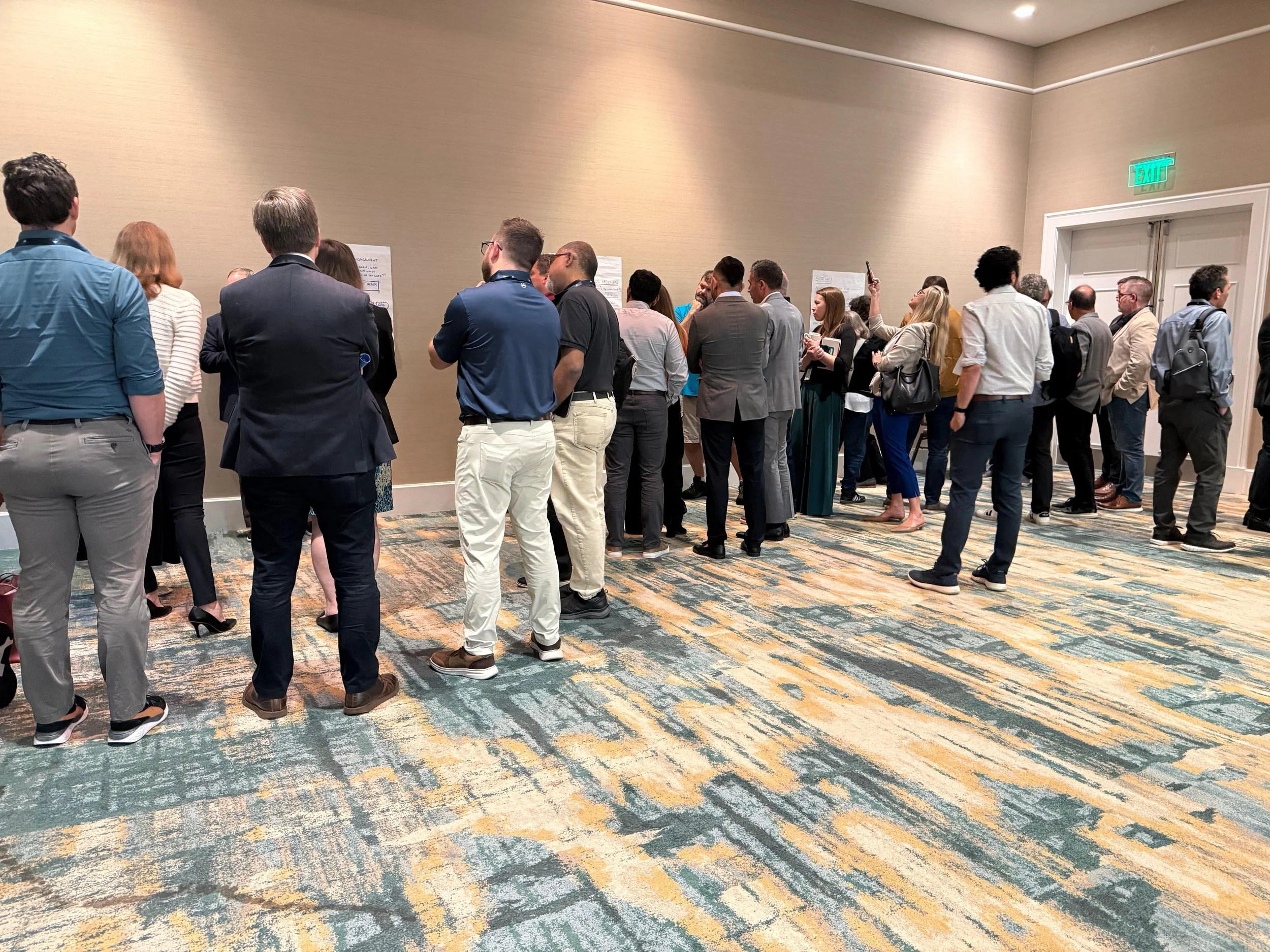
Participants reviewed each discussion board during a gallery walk, using color-coded sticky notes to highlight unresolved challenges, practical strategies, and ideas they planned to implement at their own institutions.
Following the opening exercises, participants divided among six facilitated stations, each focused on one of the major academic lab planning topics. Rather than formal presentations, the stations encouraged attendees to exchange experiences while facilitators documented key ideas on large posters.
Participants later rotated to a second station, building upon conversations started by earlier groups. Archila deliberately structured the activity to encourage attendees to meet new colleagues rather than remain with familiar collaborators.
The collaborative format generated so much discussion that organizers had difficulty ending conversations to stay on schedule. Hanton joked that stopping productive conversations was his “least favorite part” of the exercise, a sentiment Archila shared.
Identifying ideas worth taking home
To conclude the session, participants conducted a gallery walk, reviewing each discussion board and using color-coded sticky notes to identify key takeaways. Red notes highlighted unresolved tensions that continue to challenge academic lab projects. Yellow notes identified practical tactics participants found particularly useful. Green notes marked ideas attendees planned to implement at their own institutions.
Archila described the exercise by encouraging participants to identify “one of those that's just a huge thumbs up. This is an idea that you are going to borrow. You're going to steal that immediately.”
Among the recurring themes were the importance of coordinating vendors early, questioning assumptions rather than accepting every request at face value, and improving communication among project stakeholders.
Reflecting on his own experience working as an architect, project manager, college administrator, and research infrastructure leader, Archila acknowledged that determining which project requirements are fixed and which can be challenged remains difficult.
“It’s always hard to sort of read that,” he said. “Rethink things. Ask those questions. We don't mind being challenged.”
Collaboration as the biggest takeaway
By the end of the session, participants had generated pages of collective observations, with many photographing the discussion boards for future reference. The response confirmed Archila's belief that the greatest value of the roundtable was not any single recommendation, but the opportunity to tap into the collective experience of the laboratory design community.
“I figure we all have so much expertise,” he said. “We may as well talk to each other, harness it.”
Hanton echoed that sentiment, noting that the conference brings together an extraordinary concentration of expertise each year.
“There’s enough experience in this room that if we could harness it, any given hurdle in a project could be cleared,” he said.
Rather than offering definitive answers, the session demonstrated that successful academic laboratory design depends on thoughtful collaboration, open communication, and a willingness to learn from peers facing many of the same challenges. Those conversations, participants agreed, are just as valuable as any formal presentation.
The conversations at Archila’s roundtable underscored an important reality of academic laboratory design: Many of the most valuable solutions come not from a single expert, but from bringing different perspectives together. By sharing experiences, challenging assumptions, and discussing what has—and has not—worked on real projects, participants were able to turn common challenges into practical ideas they could take back to their own institutions.
Interested in more practical insights on laboratory planning, design, and renovation? Join architects, engineers, laboratory owners, facility managers, and researchers at the 2027 Lab Design Conference, taking place May 10-13 in Dallas, TX. The event will feature real-world case studies, expert-led educational sessions, interactive workshops, and opportunities to connect with peers who are tackling many of the same challenges.